Traveling to China in January: Weather, Ice Festivals & Crowds
January brings crisp crowd-free sightseeing in Beijing and Xi'an, frozen spectacles in Harbin, and warm beach weather in Sanya. How to plan around the Chunyun Lunar New Year rush.
· By Yunjie

January is a month of extremes in China: Harbin's Ice and Snow World is fully built and open at -20°C (-4°F), Beijing and Xi'an stay crisp, sunny, and uncrowded with low hotel rates, while Sanya and southern Yunnan offer warm 22–26°C (72–79°F) escapes. The single biggest planning rule is timing around Chunyun (the Lunar New Year travel rush)—the first two to three weeks of January are calm and cheap, while the final 10 days before Lunar New Year see nationwide train tickets sell out within minutes.
Winter Destination Guides: Visiting northern or central cultural centers in January? Discover crisp winter days and low crowds in our Beijing Destination Overview and Xi'an Destination Overview.
Unlike October's uniform autumn weather, January forces you to pick a climate lane—or pack smartly if you are crossing regions by bullet train. Done right, January delivers some of the lowest flight and hotel prices of the year alongside winter spectacles you cannot see in any other season.
China Weather in January by Region
China spans multiple climate zones. In January, the temperature gap between the far northeast and the tropical south routinely exceeds 45°C (80°F).
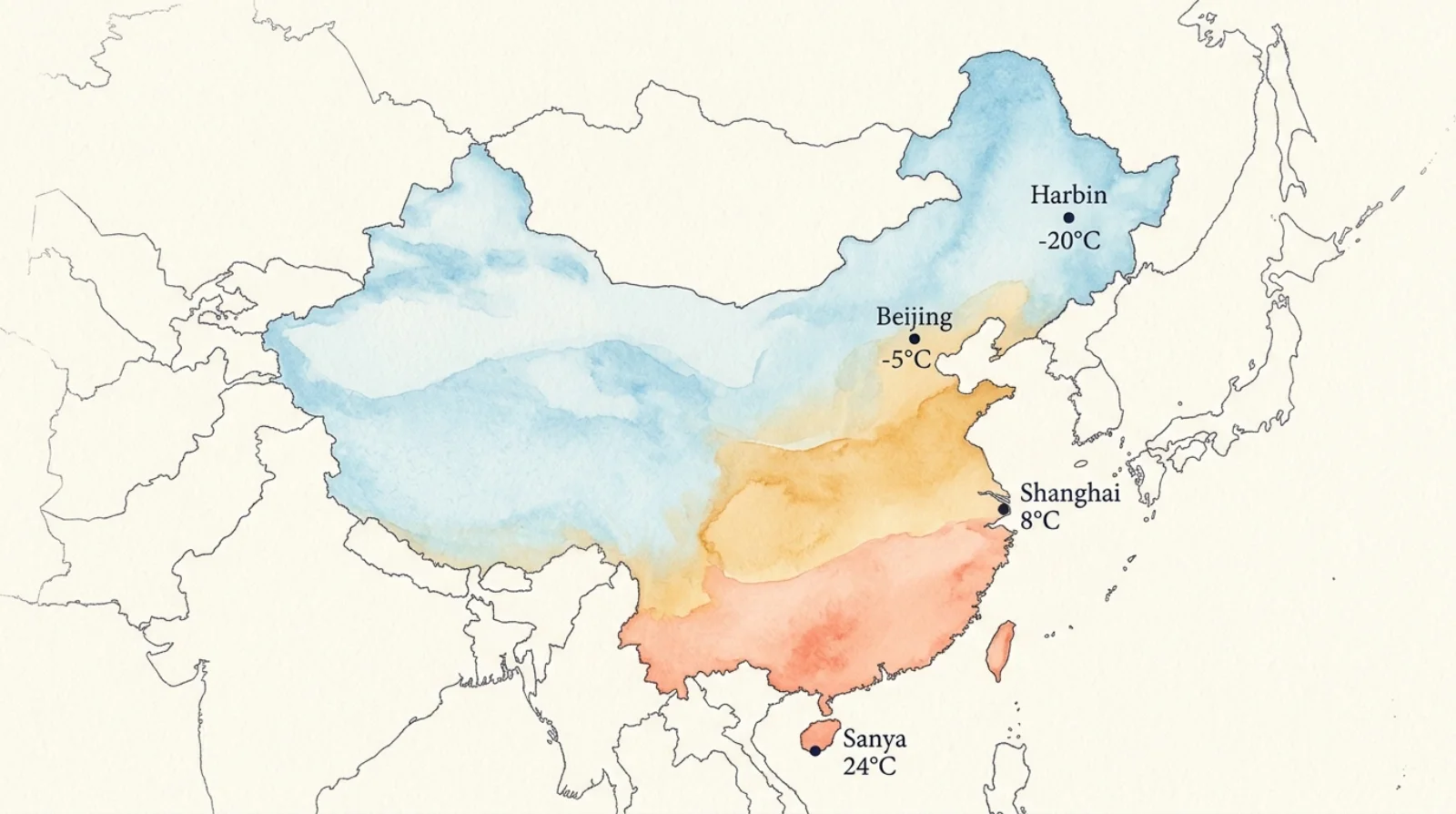
| Region & Key Cities | Typical January High / Low | Weather Reality | Indoor Heating | Best For |
|---|---|---|---|---|
| Far NortheastHarbin | -13°C / -24°C(9°F / -11°F) |
Deep dry freeze, guaranteed snow, ice sculptures stay crystal clear | Strong central heating (22–25°C indoors) |
Ice and Snow World, skiing, Russian architecture |
| North ChinaBeijing, Xi'an | 2°C / -8°C(36°F / 18°F) |
Cold, very dry, frequent bright blue skies, low rainfall | Full municipal central heating | Crowd-free Great Wall, Forbidden City, Terracotta Warriors |
| East & SouthwestShanghai, Hangzhou, Chengdu, Chongqing | 8–11°C / 2–5°C(46–52°F / 36–41°F) |
Damp coastal or basin chill, overcast skies, occasional drizzle | No municipal central heating (AC heat pumps only) | Museums, cafes, hotpot, off-peak Disneyland, panda bases |
| Southwest HighlandsLijiang, Dali, Kunming | 14–16°C / 0–3°C(57–61°F / 32–37°F) |
Bright intense winter sunshine by day, crisp near-freezing nights | Hotel AC / electric blankets | Snow-capped mountain views, ancient towns without monsoon rain |
| Tropical SouthSanya (Hainan), Xishuangbanna | 24–27°C / 18–20°C(75–81°F / 64–68°F) |
Warm, sunny beach weather, peak domestic winter escape | Not needed | Swimming, resorts, escaping winter cold |
The Golden Rule of January: Watch the Lunar New Year Calendar
Lunar New Year (春节) shifts between late January and mid-February each year. The Chunyun (春运) migration—the world's largest annual human movement—starts 15 days before Lunar New Year's Eve.
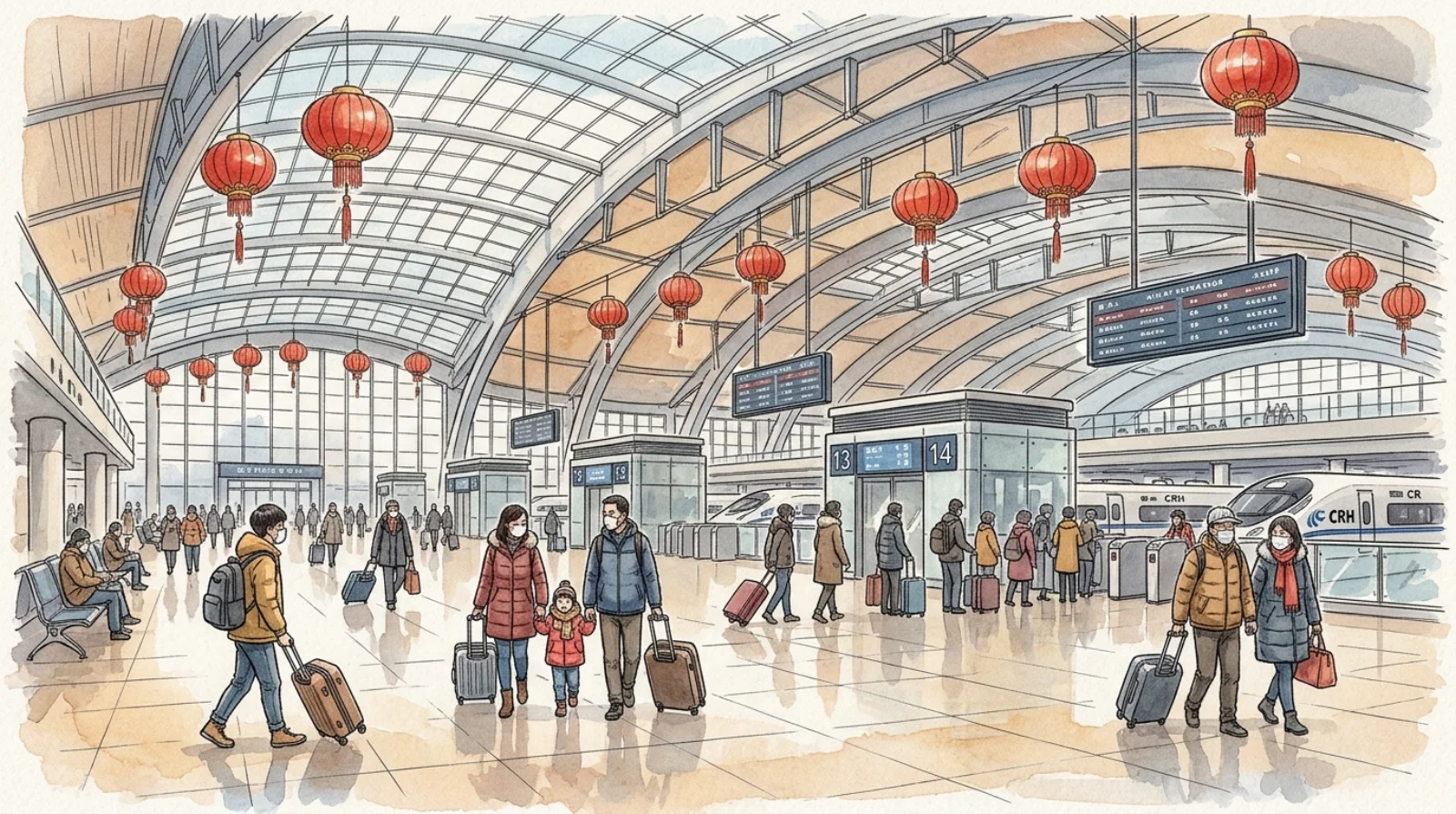
- Early to Mid-January (Best Window): Outside the January 1–3 New Year's Day holiday, the first two to three weeks of January are deeply off-peak across Beijing, Shanghai, Xi'an, and Chengdu. Hotels cost
30%–50%less than autumn rates, and attraction tickets are far easier to secure. - 10 Days Before Lunar New Year Onward: Train routes radiating out of Beijing, Shanghai, Guangzhou, and Shenzhen into inland provinces sell out the moment tickets release (
15 daysahead; see our China train ticket booking guide). - During Lunar New Year Week (if it falls in late January): Major sights and big malls stay open and decorated with red lanterns, though small family-run eateries close for 3–5 days and domestic resort prices in Sanya and Harbin surge.
Where to Go in China in January (4 Distinct Picks)
1. Harbin: Peak Ice and Snow Festival
January is the single best month for Harbin. By early January, the Harbin Ice and Snow World (冰雪大世界) is 100% built and illuminated, the Songhua River is frozen solid for ice slides, and temperatures stay cold enough to keep sculptures razor-sharp. Plan 3 to 4 days using our Harbin winter itinerary.
2. Beijing & Xi'an: Sunny Skies and Empty Landmarks
January is Beijing's coldest month, yet also one of its sunniest and driest. Walking the Mutianyu Great Wall in crisp winter air with a fraction of the spring crowds is well worth the cold—and because every museum, hotel, and restaurant in northern China runs powerful central heating, you are only cold during outdoor walks. Pair our 4-day Beijing itinerary with a 2-day Xi'an itinerary.
3. Yunnan (Lijiang & Dali) or Sanya: Winter Sunshine
If you hate sub-zero cold, head southwest or south. Lijiang enjoys crisp dry blue skies with clear views of Jade Dragon Snow Mountain, while Sanya on Hainan Island delivers 25°C ocean swimming (note that Sanya hotels reach peak winter pricing in January—book well ahead; see our ultimate Sanya travel guide).
4. Chengdu & Chongqing: Misty Winter Hotpot Season
Damp 6–10°C weather in Sichuan and Chongqing is prime season for bubbling red-oil hotpot, steaming tea houses, and active giant pandas—pandas dislike summer heat and spend far more time playing outdoors in cool winter mornings. Check our 3-day Chengdu itinerary and Sichuan and Chongqing food guide.
Packing Strategy for Multi-Region January Trips
Because China's January weather swings wildly by latitude, avoid stuffing your suitcase with single-use bulky coats if you plan to visit both North and South China:
- Base + Mid + Shell layering: Pack two sets of merino or synthetic thermals, a warm mid-layer sweater, and a packable windproof down jacket.
- Rent or buy extreme gear in Harbin: If Harbin is only 3 days of a broader 2-week China itinerary, buy affordable fleece-lined pants, heavy gloves, and stick-on heat packs (
暖宝宝) at Decathlon or Uniqlo in Beijing/Shanghai before flying north—do not haul polar gear to Sanya. - Moisturizer & lip balm: Northern China's winter air (plus indoor radiator heating) drops humidity below
20%. Pack heavy hand cream and lip balm. - Keep station arrival buffers: Winter security layers take longer to unzip and screen; allow extra time when boarding trains (see how early to arrive at China train stations).
Frequently Asked Questions
Is January a good time to visit China for first-timers?
Yes—especially January 4 through mid-January, when winter crowds are low, hotel rates drop, northern skies are clear, and Harbin's ice festival is in full swing. Just check the exact date of Lunar New Year before booking flights so you avoid peak Chunyun train bottlenecks.
What is the warmest place in China in January?
Sanya (southern Hainan Island) is the warmest major destination, averaging 24–27°C during the day with swimmable sea temperatures. Xishuangbanna in southern Yunnan is the runner-up (22–25°C days, cool 10–12°C nights).
Do attractions stay open in China in January?
Yes. Almost all major sights—Forbidden City, Great Wall, Terracotta Warriors, Shanghai Disneyland, Chengdu Panda Base, and Harbin Ice and Snow World—operate normally in January (note that the Forbidden City and many national museums close on Mondays year-round). Some high-altitude alpine trails in western Sichuan or northern Xinjiang close due to heavy snow.
Last checked: November 23, 2026.