Harbin Winter Itinerary: 3-Day Ice Festival Route & -25°C Survival Guide
Plan 3 days in Harbin between late December and mid-February: Ice and Snow World, Central Street, Sun Island, and frozen Songhua River, plus essential -25°C gear and phone battery tips.
· By Yunjie
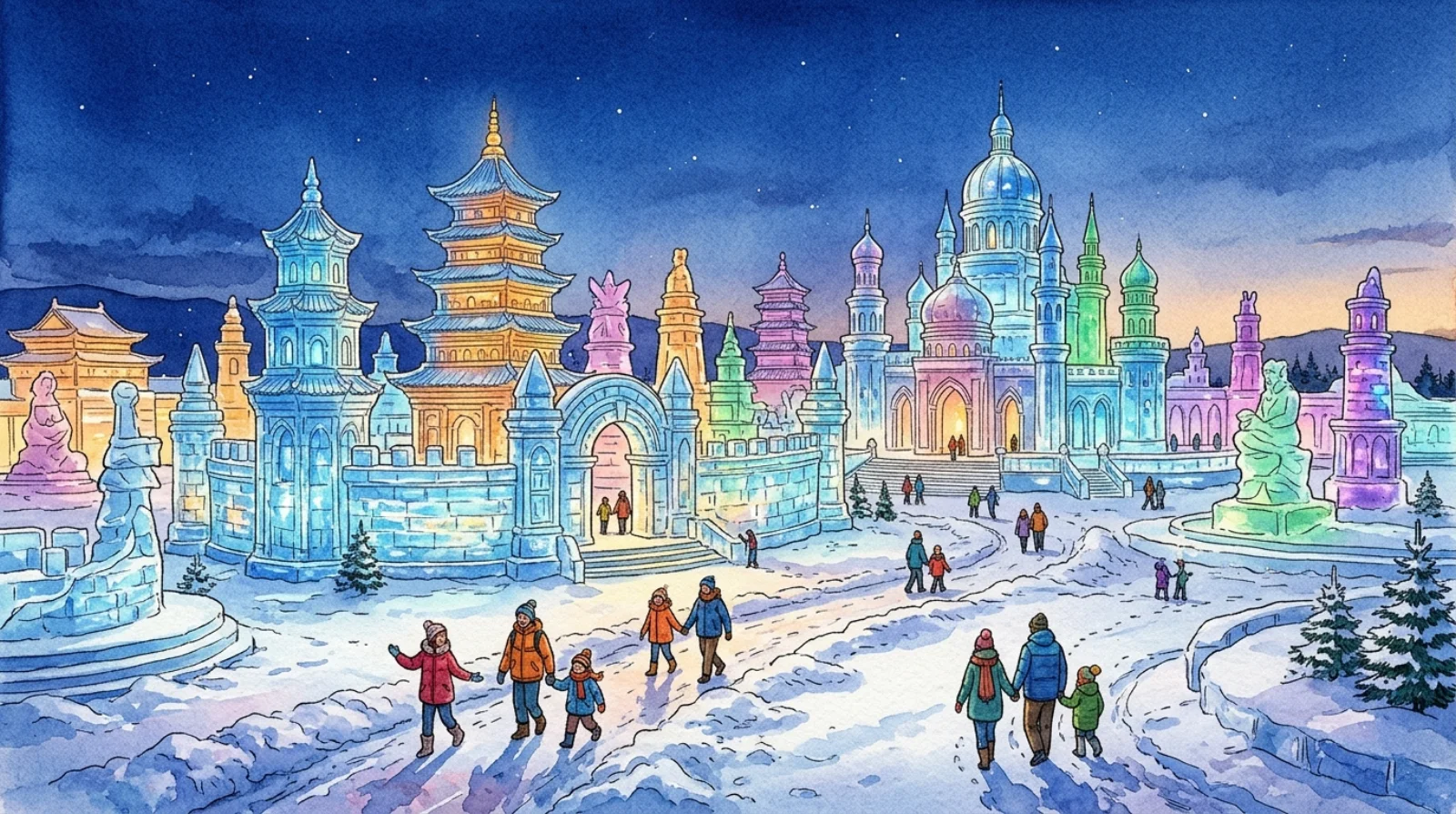
Plan 3 full days in Harbin between late December and mid-February: dedicate Day 1 to Central Street, Saint Sophia Cathedral, and the frozen Songhua River; Day 2 to Sun Island Snow Expo and Harbin Ice and Snow World (enter at 14:00 to see crystal daylight sculptures before the 16:00 illumination); and Day 3 to the Siberian Tiger Park or Unit 731 Museum before warming up over Dongbei stew. Pack adhesive heat packs for your smartphone—at -25°C (-13°F), unprotected batteries shut down in under 15 minutes.
Winter Route Connection: Most international travelers head to Harbin directly via high-speed train from Beijing—plan your capital transit with our Beijing Destination Overview.
Harbin is China's top winter destination, sitting just 4.5–5 hours northeast of Beijing by high-speed train. Because extreme sub-zero cold drains physical energy much faster than ordinary sightseeing, the secret to a great Harbin itinerary is short outdoor bursts paired with warm indoor breaks rather than cramming six stops into one freezing day.
Harbin Winter Trip: Quick Planning Facts
| Detail | What You Need to Know |
|---|---|
| Best Dates | Late December – Mid-February (Ice and Snow World typically opens around Dec 20–25 and runs until late February depending on thaw) |
| Typical Temperatures | -12°C to -25°C (10°F to -13°F); feels colder on the open Songhua River ice |
| How to Get There | Direct G-series high-speed trains from Beijing Chaoyang Station to Harbin West (哈尔滨西站) take 4.5–5 hours (~CNY 550–635 2nd Class); or 2-hour direct flights into HRB |
| Ideal Length | 3 days for city + ice festival; 4–5 days if adding Yabuli Ski Resort or Snow Town (雪乡) |
| Where to Stay | Near Central Street (中央大街) or Saint Sophia Cathedral (Daoli District)—walkable to food, Russian architecture, and Metro Line 2 straight to Ice and Snow World |
Day-by-Day 3-Day Harbin Winter Itinerary
Day 1: Russian Architecture, Frozen Songhua River & Dongbei Comfort Food
Ease into the sub-zero air with central landmarks that keep warm cafes and restaurants within 200 meters at all times.
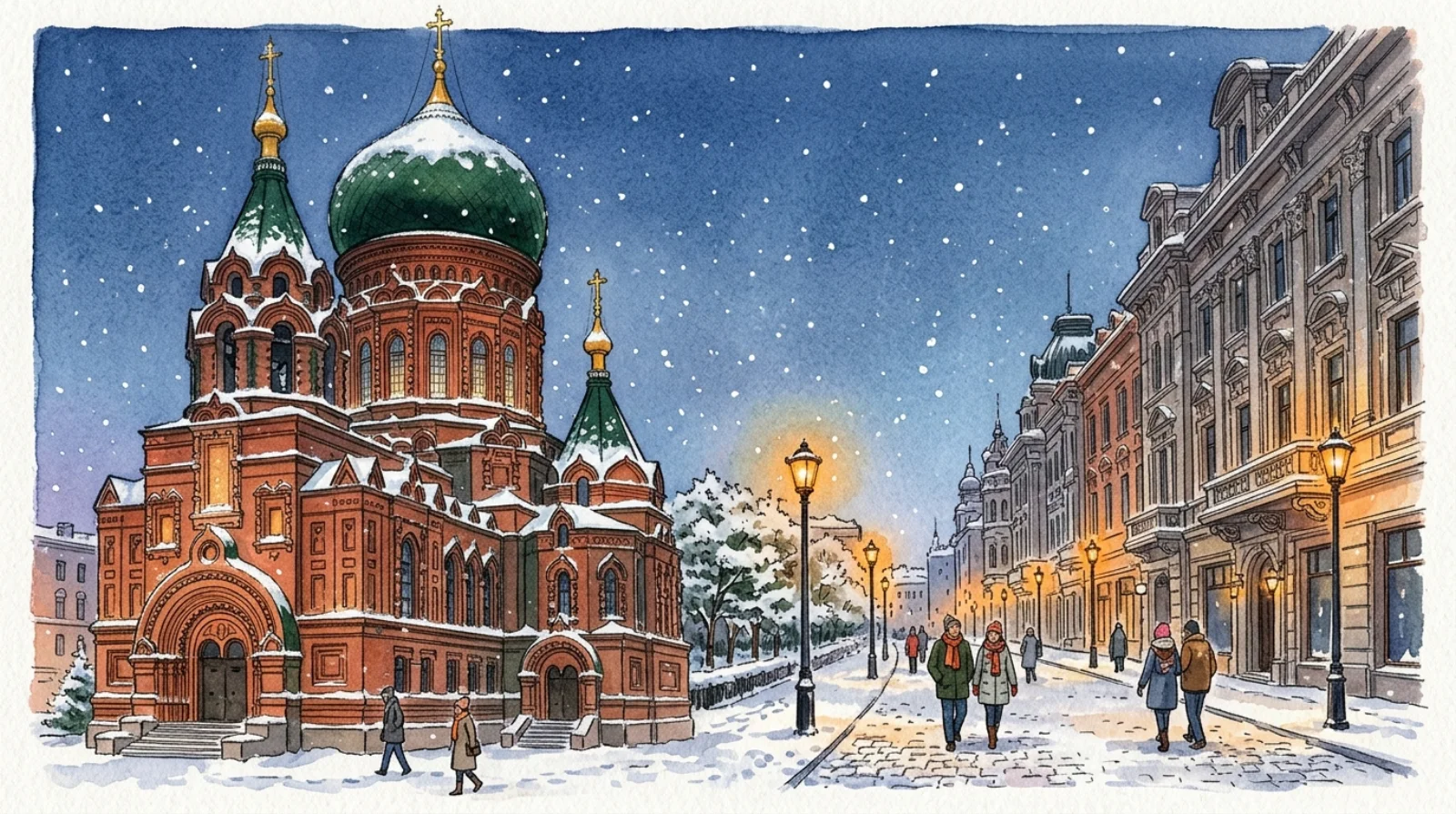
- 09:30 — Saint Sophia Cathedral (
圣索菲亚大教堂): Start outside for crisp morning light on the red-brick facade and green onion domes dusted in snow, then step inside (CNY 20) to warm up while viewing the historic architecture gallery. Return briefly after dark for illuminated photos. - 11:30 — Central Street (
中央大街): Stroll the 1.4-kilometer cobblestone pedestrian avenue lined with early-20th-century Art Nouveau and Baroque buildings. Grab a Madieer Popsicle (马迭尔冰棍, CNY 5) from the street window—eating vanilla ice cream at-18°Cis a local rite of passage. - 13:00 — Lunch (Guo Bao Rou): Duck into Lao Chu Jia (
老厨家) or a neighboring Dongbei restaurant for Guo Bao Rou (锅包肉)—crispy sweet-and-sour pork slices invented in Harbin—and warm sauerkraut-pork stew. - 15:00 — Flood Control Monument & Frozen Songhua River (
松花江冰雪嘉年华): Walk to the northern end of Central Street onto the solid frozen river for ice tubing, snowmobiles, and sunset views over the steel railway bridge (中东铁路桥). - 18:30 — Dinner: Warm up with Iron Pot Stew (
铁锅炖)—slow-simmered goose or pork ribs with corn flatbread baked onto the rim of a wood-heated pot.
Day 2: Sun Island Snow Expo & Harbin Ice and Snow World (Main Event)
Both headline winter parks sit on the north bank of the Songhua River along Harbin Metro Line 2 (which runs right to the Ice and Snow World gate—do not rely on taxis at closing time when queues stretch for an hour).
- 10:00 — Sun Island International Snow Sculpture Art Expo (
太阳岛雪博会): Ride Metro Line 2 toSun Island Station. Unlike the colored ice blocks at night, Sun Island features monumental pure-white carved snow sculptures best photographed in bright morning sun. Budget2.5–3 hourswith a hot tea break indoors. - 13:00 — Warm Lunch Break: Head back indoors for a hot noodle soup or hotel rest to recharge your body heat and phone battery before the main event.
- 14:00 — Enter Harbin Ice and Snow World (
冰雪大世界, ~CNY 328):- Why 14:00 is the exact sweet spot: You get 90 minutes of crisp daylight to appreciate the translucent Songhua River ice blocks and queue for the Super Ice Slide or Snowflake Ferris Wheel before crowds peak.
- 16:00 — Blue Hour Illumination: Sunset hits around
16:00in Harbin winter. All the full-scale ice palaces, pagodas, and bridges light up simultaneously in neon blue, amber, and magenta. - 18:30–19:30 — Exit by Metro Line 2: Temperatures plunge sharply after
18:00. Duck into the park's heated food pavilions (KFC, hot ginger tea) every 45 minutes, and ride Metro Line 2 back to Central Street before your toes go numb.
Day 3: Siberian Tiger Park, Morning Market & Historic Harbin
- 07:30 (Optional) — Hongzhuan Street Morning Market (
红专街早市): If you are up early, grab crispy fried sweet rice cakes (油炸糕), steaming pork buns (肉包), tofu pudding, and frozen pears (冻梨) alongside locals in thick fur hats. - 10:00 — Siberian Tiger Park (
东北虎林园): Ride the caged shuttle bus through snowy enclosures home to hundreds of Amur (Siberian) tigers—they are far more active in cold winter snow than in summer heat. - 14:00 — Choice of Afternoon Stop:
- History lovers: Visit the Museum of Evidence of War Crimes by Japanese Army Unit 731 (
侵华日军第七三一部队罪证陈列馆)—a sobering, well-curated museum (free entry, reserve passport slot in advance on WeChat, closed Mondays). - Architecture & photography: Visit Volga Manor (
伏尔加庄园) on the outskirts for quiet snowy Russian timber pavilions, or Laodaowai (中华巴洛克) for historic courtyard alleys.
- History lovers: Visit the Museum of Evidence of War Crimes by Japanese Army Unit 731 (
- 18:00 — Farewell Meal: Try authentic Russian borscht and bread at Huamei Western Restaurant (
华梅西餐厅) on Central Street, or a late-night Harbin BBQ (东北烧烤).
Extreme Cold Survival: What to Pack for -25°C
Ordinary European winter coats are not enough for three hours standing on open ice at Ice and Snow World. Follow this exact layering system:
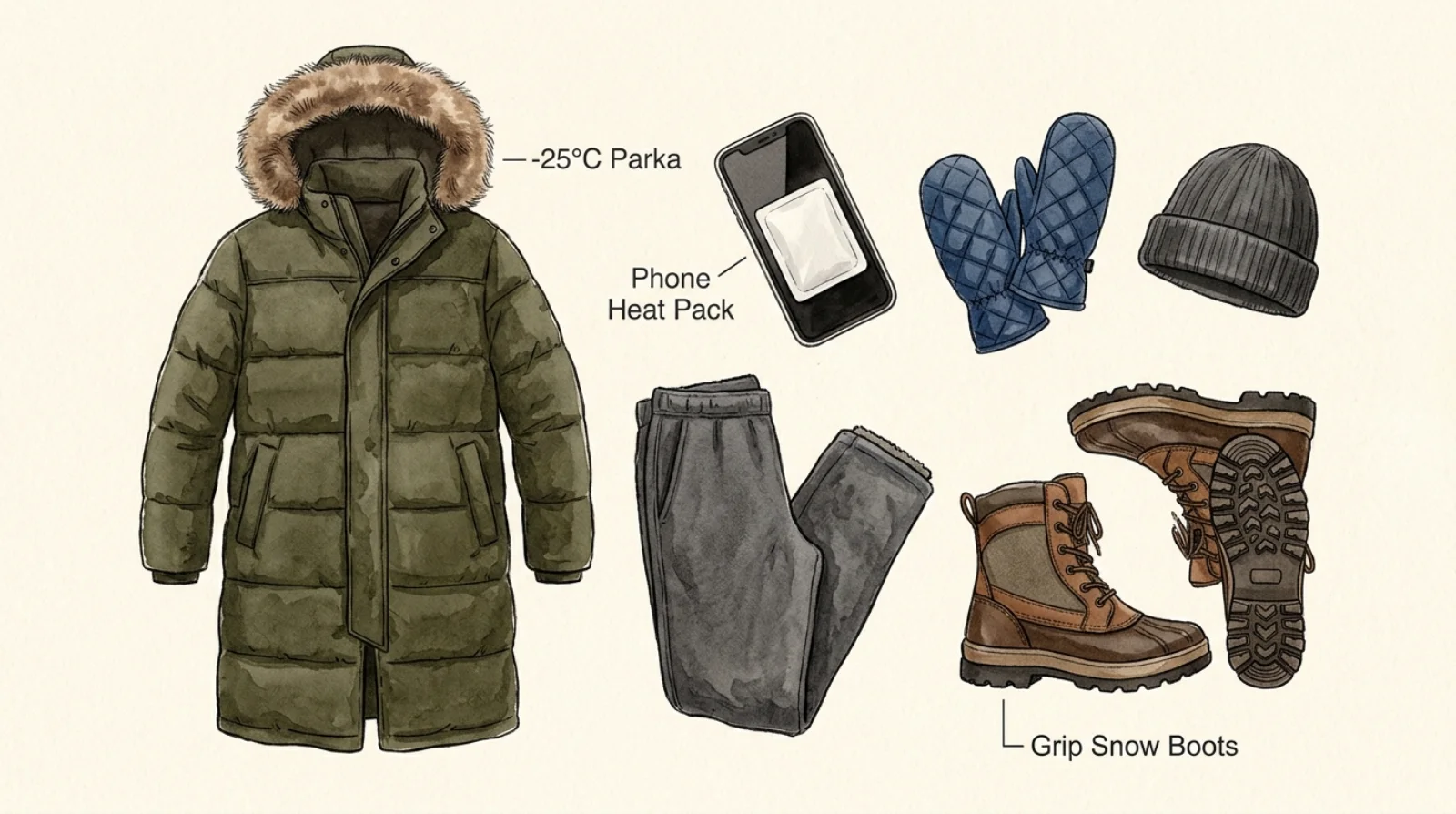
- Top (3–4 layers): Heavyweight merino or synthetic thermal base + fleece mid-layer + knee-length windproof down parka (rated for
-20°Cor lower, with a hood). - Bottom (Crucial): Thermal leggings + windproof fleece-lined pants (or ski pants for Ice and Snow World). Jeans alone freeze stiff in 10 minutes.
- Feet: Thick merino wool socks + insulated, waterproof snow boots with deep rubber tread + stick-on foot warmers (
足贴) stuck to the bottom of your socks. Hard ice paths are dangerously slick in smooth sneakers. - Hands & Face: Warm mittens (warmer than five-finger gloves) + thin touchscreen liner gloves for taking photos, plus a knit beanie covering your ears and a fleece neck gaiter/balaclava.
- Smartphone Survival Trick: Cold lithium batteries drop from
80%to0%instantly at-20°C. Stick a disposable adhesive hand warmer (暖宝宝) directly onto the back of your phone case, carry a10,000 mAhpower bank in your inner coat pocket, and keep your phone tucked inside your jacket between shots. (Ensure your power bank meets railway security rules—see our China train restricted items guide.)
Getting Around Harbin as a Foreigner
- Metro Line 2: Your best friend in winter—connects Central Street, Sun Island, and Ice and Snow World directly underground with zero traffic jams. Pay via Alipay Harbin Metro QR code (set up before landing with our Alipay and WeChat Pay guide).
- DiDi Ride-Hailing: Works well in town (see our DiDi in China guide), though expect long waits outside Ice and Snow World between
19:00and21:30—always take the metro out of the park first. - Train tickets: Book your Beijing–Harbin bullet train as soon as the 15-day window opens, especially near January holidays (see our China in January guide and China train ticket booking guide).
Frequently Asked Questions
When does Harbin Ice and Snow World open and close?
Construction begins in early December once Songhua River ice thickens, with the park typically opening around December 20–25 and closing in mid-to-late February depending on spring warming. January 1 through February 10 is the safest window for peak sculptures.
Can I buy extreme winter gear in Harbin instead of packing it from home?
Yes. If Harbin is a 3-day side trip inside a warmer 2-week China itinerary, you can buy affordable fleece-lined pants, snow boots, mittens, and packs of stick-on heat warmers at Decathlon, Uniqlo, or the underground shopping arcades near Central Street right after you arrive.
How do foreigners buy Harbin Ice and Snow World tickets?
Tickets can be booked via Trip.com (easiest with foreign cards and passport entry) or the official WeChat mini-program. Bring your original physical passport—staff scan it directly at the turnstiles for admission.
Last checked: November 23, 2026.