Four days is the sweet spot for a first visit to Beijing: enough time for the Forbidden City, a proper Great Wall day trip, one more imperial site, and at least one slower day for hutongs and food.
This is the day-by-day plan I hand to friends visiting Beijing for the first time — built for travelers who want to see the highlights without forced-marching through the city. It assumes a central hotel near Wangfujing, Qianmen, or the imperial axis.
One pre-trip step before you read further: book your Forbidden City ticket. Tickets are released 7 days in advance at 20:00 Beijing time on the official site ticket.dpm.org.cn. The Forbidden City is closed every Monday except on Chinese public holidays, so if one of your days falls on a Monday, put the Forbidden City on a different day. Ticket price: ¥60 peak season (Apr 1 – Oct 31), ¥40 off-peak. Your passport is your ticket — the passport number you book with must match at the gate.
What this itinerary skips (and why)
Four days covers every major imperial site in Beijing without rushing — but it doesn't cover everything in the city, and that's on purpose. Here's what got left off this plan and why it's not a mistake:
- Badaling. It's the name every travel site defaults to, but it's also the most crowded and most rebuilt-feeling section within day-trip range. This itinerary uses Mutianyu instead — see the full comparison if you want the case for Badaling anyway. Either way, don't try to fit two Great Wall sections into one trip; the transfer time eats a whole afternoon for very little extra payoff.
- Ming Tombs. Frequently bundled into Great Wall day tours as a two-for-one. Skip it on a first visit — the site is spread out, the extra transport adds hours to Day 2, and the payoff is much smaller than a comparable morning at the Forbidden City or Temple of Heaven.
- Lama Temple (Yonghe Temple) and Confucius Temple. A legitimate pair of sites, but not essential ones. They sit off the central axis this itinerary follows, and fitting them in means cutting time from somewhere else on Day 1 or Day 3. Worth it on a longer stay — see How Many Days in Beijing? for what an extra day or two adds.
- Olympic Park (Bird's Nest / Water Cube). Fine as a second modern stop if you're already at 798 on Day 4, but not worth carving out dedicated time for on a first visit.
None of this means these places aren't worth seeing — it means four days has room for the imperial core plus one flexible day, and stretching further turns Day 4 into a forced march instead of a buffer.
Day 1: Imperial core — Forbidden City and Jingshan Park
Morning: Forbidden City
- Arrive at Tiananmen East metro station (Line 1) by 8:30 AM
- Heads up: your palace ticket does not get you onto Tiananmen Square or through Tiananmen Gate — the square needs its own separate free reservation (book at least a day ahead; it can't be done same-day). Without it you can still reach the palace: walk up Nanchizi Street (南池子大街) east of the square and loop around the palace moat to the Meridian Gate. It works, but it adds a fair bit of walking — if you want the classic entrance through the square and over the Golden Water Bridges, book the square reservation alongside your palace ticket
- Entry is one-way: Meridian Gate (Wumen, 午门) in, Shenwumen (神武门) out — you cannot loop back
- Plan on 3 to 4 hours inside — this is not a 1-hour stop
- Stay on the central axis (main halls) first, then explore side galleries
- Add the Treasure Gallery (珍宝馆, +¥10) if you want jade and imperial artifacts — worth it for first-timers
Last entry is 16:00, everyone out by 17:00. Morning slots beat afternoon slots — the 10:00–11:30 window is the most crowded inside.
Afternoon: Jingshan Park
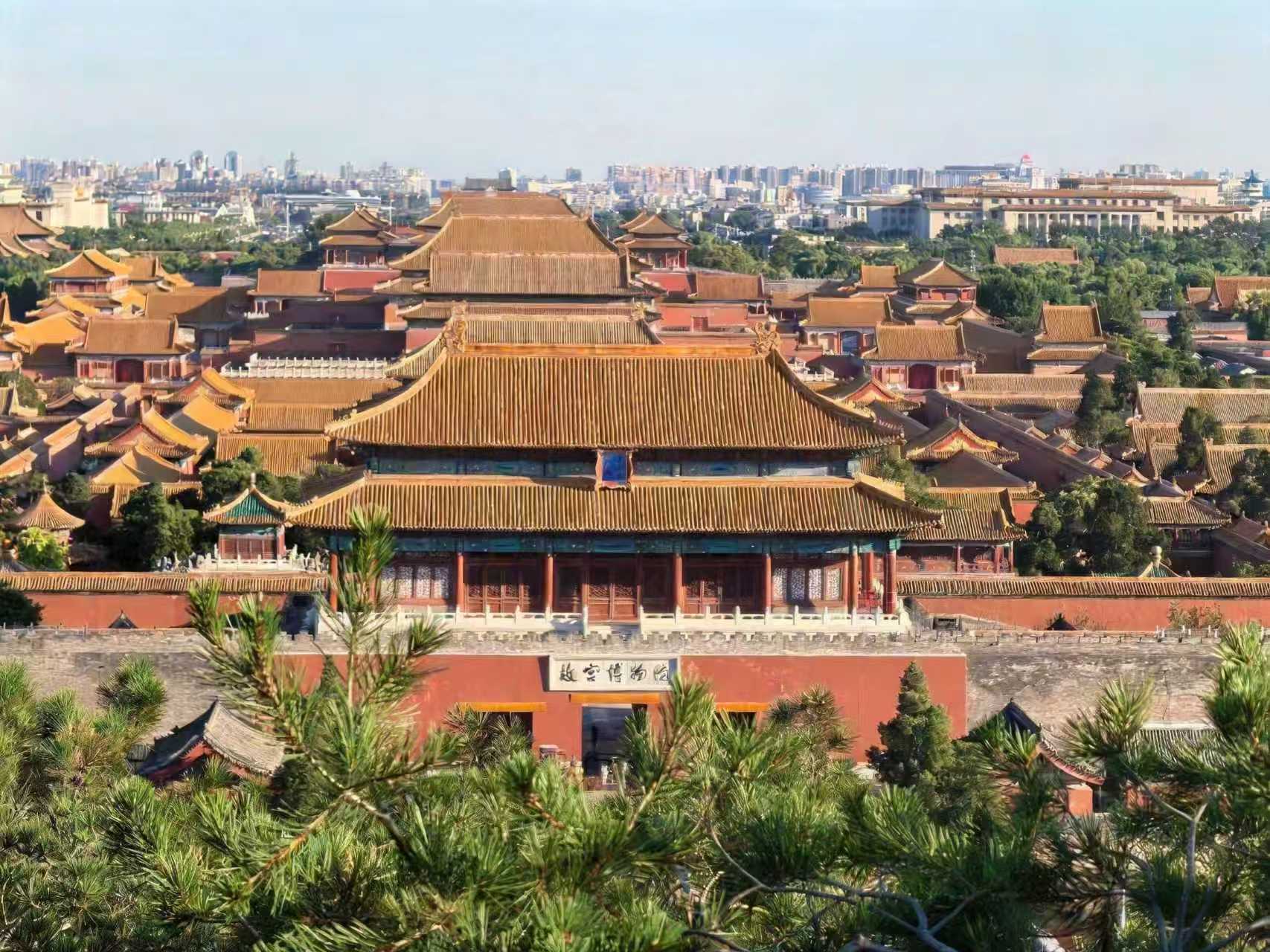
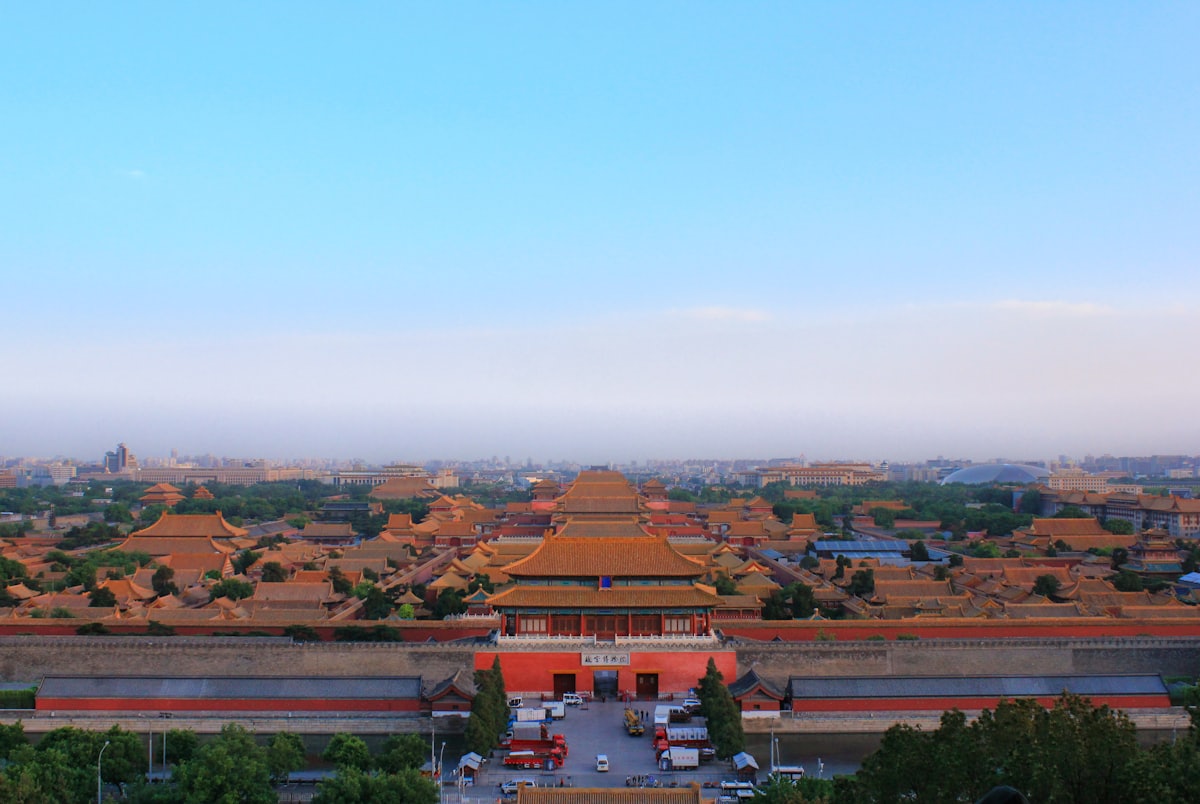
Cross the street from the Forbidden City's north exit (Shenwumen) and climb Jingshan Park. Admission is ¥10 in peak season (Apr 1 – Oct 31), ¥2 off-peak — pay at the gate, no advance booking needed. The 15-minute climb delivers the single best overview of imperial Beijing — the Forbidden City roofline, the central axis, and the distant Drum and Bell Towers.
Evening: first Peking duck
The honest version of this advice: opinions on the best duck in Beijing are all over the place. Every restaurant has fans and critics, and "authentic old Beijing duck" is a moving target. What I can share from personal experience:
- Siji Minfu, Forbidden City branch (四季民福烤鸭店 故宫店) — right next to the east gate of the Forbidden City, so it's the natural stop after a morning in the palace. Better value than Quanjude. I've eaten here and liked it. A Beijing friend of mine insists it's not "real old Beijing" duck — but personally I thought it was very good. Expect a wait, especially at dinner.
- Quanjude (全聚德) — the famous name. I've eaten here too. It's expensive and tourist-heavy, but the duck is fine and the brand is iconic if you want the classic version.
- Da Dong (大董) — the modern, plated presentation, if that's your preference.
Pick one that fits your route. Book ahead via Dianping for dinner. Don't expect the internet to agree on a "best."
Day 2 is a long day, so don't overdo the evening — but if you're not ready to call it a night, a walk along Qianmen Street after dark is a low-effort way to stretch it without wearing yourself out. The lantern-lit street and tea shops ask nothing of you; skip it without guilt if you'd rather just sleep.
Day 2: Great Wall day trip
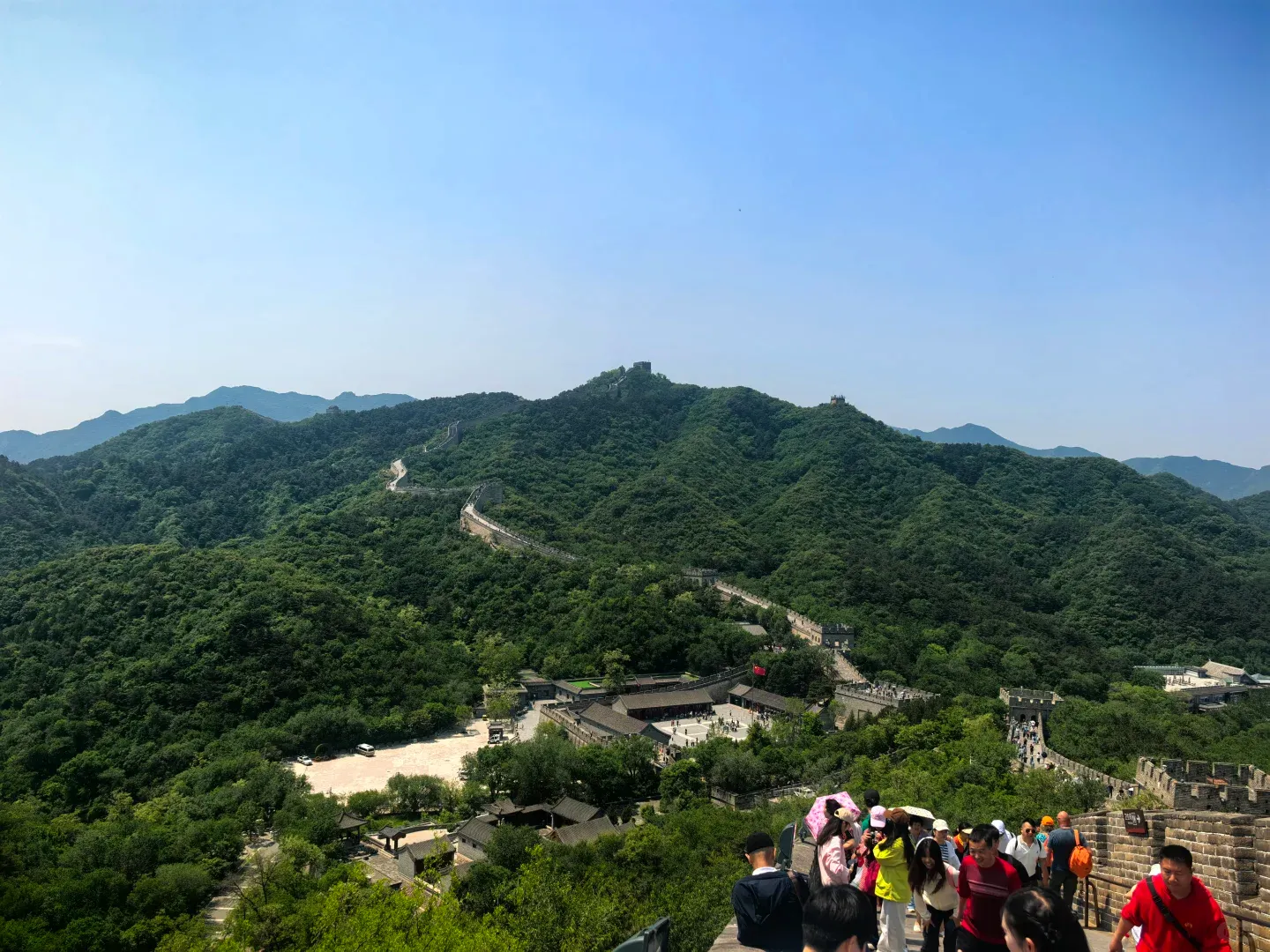
Treat the Great Wall as a full day, not a half-day. Transport is 1.5–2 hours each way, and the experience on the wall itself is worth 3–4 hours.
Which section and why
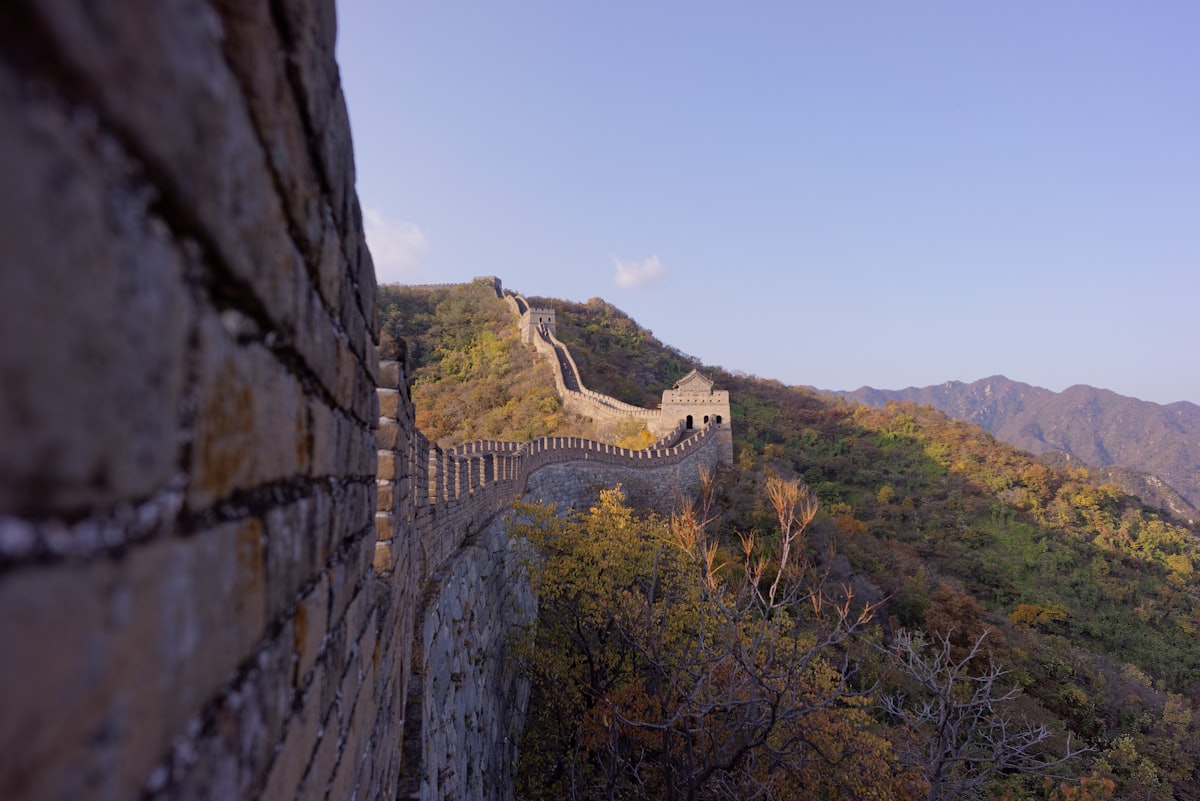
This itinerary assumes Mutianyu (慕田峪) — the default first-timer choice: restored but not overrun, cable car up, toboggan slide down, and about 1.5 hours from the city.
If you're considering Badaling or Jinshanling instead, see the full comparison with prices and tradeoffs in Best Great Wall Section for First-Time Visitors. Don't try to combine two sections in one day — the transfers will eat the afternoon.
Morning: head out by 7:30 AM
The simplest way to reach Mutianyu is a hotel-arranged driver or a small-group tour — door-to-door, no transfers, and you don't spend the morning figuring out logistics. There's also a tourist bus from the Beijing Tourist Distribution Center with tickets sold via a WeChat mini-program, but finding the distribution center without Chinese is its own exhausting project. If you're not comfortable reading Chinese signage, just pay for the car — you'll enjoy the Wall more.
Aim to be at the Mutianyu base by 9:30 AM — crowds and heat both build after that. The section guide linked above also covers the cheaper public-transport route via the 916 Express bus, if you'd rather not pay for a car.
Mutianyu tickets at a glance
- Entry: around ¥60 per person, daily visitor cap
- Cable car round-trip: around ¥140
- Where to buy: the official Mutianyu WeChat public account, Trip.com, or Meituan — book the day before at the latest
On the wall
Mutianyu has two aerial options up from the base: an enclosed cable car and an open chairlift. The cable car drops you in the middle of the restored section for the classic photo angle. The chairlift drops you near the top of the toboggan run, which is the fun way down. Most first-timers take the cable car up and the toboggan down — that's the standard loop and it works well.
Pacing notes most first-timers underestimate:
- Between watchtowers, the wall is not flat. Expect stretches of steep stone staircases with uneven step heights — some steps are shallow, the next one is knee-high. Good shoes matter more here than anywhere else in Beijing.
- A reasonable walk is 4 to 6 towers in either direction from where the cable car drops you. You don't need to "complete" the section. One direction, a handful of towers, and time to stop for photos is enough.
- The westward towers (toward the steeper slopes) give the most dramatic views. The eastward towers are usually quieter — less foot traffic, more space to breathe.
- Plan on 2.5–3.5 hours on the wall, including photos and rest stops. Pushing past 4 hours is punishing in summer.
Light, weather, and logistics:
- Morning light is better — air is clearer before midday, and afternoon haze can wash out the view of surrounding ridges. If you arrive by 9:30 AM, you're walking in the best conditions.
- Water vendors on the wall exist but charge steep tourist prices. Bring at least 1 liter per person, sunscreen, and a hat — there's little shade on the wall regardless of season. Add layers if you're going outside peak summer; ridgeline wind makes it feel colder than the city temperature suggests.
- There are restrooms at the cable car stations at the base, but none between watchtowers on the wall itself. Plan accordingly.
The toboggan down
The toboggan is a single-person metal track that runs from near the chairlift down to the entrance area. You sit in a small sled with a lever between your knees — push forward to speed up, pull back to brake. It's safe, clearly marked, and one of the small reasons Mutianyu beats Badaling for a first-timer. A relaxed ride takes several minutes and is genuinely fun.
If you don't want the toboggan, the cable car goes both ways. Skipping the toboggan is fine, but it is the signature Mutianyu moment.
Afternoon: lunch near the base
There's a small cluster of restaurants at the base of Mutianyu. The food is standard northern Chinese — noodles, dumplings, stir-fries, rice dishes — and prices are tourist-inflated, but after a morning of stone staircases you'll be glad for a hot meal. Nothing here is famous; pick a place that looks clean and has other diners. Budget 45–60 minutes for lunch and a rest before the drive back.
Some travelers prefer to head straight back and eat in the city. Either works — the village restaurants are a convenience, not a destination.
Return to Beijing
Even if you leave Mutianyu at 2 PM, the drive back hits late-afternoon traffic as you approach the city. Plan on 1.5–2.5 hours depending on the day and the direction you're entering from. If you booked a driver, confirm the pickup point with your hotel — "drop-off at the closest metro station" is often faster than going door-to-door through city traffic.
Evening
Aim to be back at the hotel by 6–7 PM. Eat close by — Wangfujing, Qianmen, and the hutong neighborhoods all have easy dinner options within a short walk. Keep it simple — you'll be more tired than you expect, and Day 3 picks the pace back up.
Day 3: Temple of Heaven and hutong afternoon
Morning: Temple of Heaven
Take Line 5 to Tiantan Dongmen and enter through the east gate. Any direction works for the walk — the complex is a straight north-south axis, so you can go either way and hit the same sights.
How the site is organized. Temple of Heaven is not one building; it's a large park with three ceremonial structures lined up along a central axis:
- Hall of Prayer for Good Harvests (祈年殿) — the iconic triple-roofed round hall in the north. This is the image most travelers come for.
- Imperial Vault of Heaven and the Echo Wall (回音壁) — the circular middle courtyard. The wall's acoustic effect is the classic tourist test.
- Circular Altar (圜丘) — a three-tiered open-air marble platform in the south. The simplest structure, and in some ways the most atmospheric.
Walking the axis from one end to the other is the point. The emperor once walked the same route once a year to perform the harvest ceremony, and you can still feel why the layout is shaped the way it is — sky in the north, earth in the south, one long path between them.
The surrounding park is where Beijing locals gather in the mornings. By 7–8 AM you'll see group tai chi, fan dancing, choral singing, card games, and retirees warming up on the fitness equipment. Arrive early and this part of the day can be better than the temples themselves. Come at 11 AM and you've mostly missed it.
Plan on 2–3 hours total, depending on how long you linger at each hall.
Temple of Heaven tickets and hours
- Main park ticket (大门票): ¥15 — lets you into the park.
- Combo ticket (联票) — covers the park plus the three inner ceremonial halls (Hall of Prayer, Echo Wall, Circular Altar). This is what first-time visitors actually want, since the signature halls are inside the separately-ticketed "park-within-a-park" (园中园). Check the current combo price on the official site when you book.
- Where to buy: the official Temple of Heaven booking site, Trip.com, or the WeChat mini-program. Most major Beijing sights follow the same pattern — a dedicated official site plus Trip.com and WeChat as foreigner-friendly alternatives.
Opening hours are split between the park and the inner halls, which trips up a lot of first-timers:
- Park — peak season (Apr–Oct) 06:00–22:00 (last entry 21:00); off-peak (Nov–Mar) 06:30–22:00 (last entry 21:00)
- Inner halls (园中园) — peak season 08:00–18:00 (last entry 17:30); off-peak 08:00–17:00 (last entry 16:30)
Practical takeaway: the park opens at dawn but the three signature halls don't open until 8:00. Arriving at 7:30 is great for the park atmosphere, but don't line up at the Hall of Prayer before 8:00 — you'll just be waiting.
Lunch: keep it simple
You're between Tiantan and the hutong district here, an area thick with cheap noodle shops, dumpling counters, and quick stir-fry spots — this isn't a neighborhood that needs research. Duck into whatever has a line of locals out front and keep it under an hour; save your appetite and your energy for the hutong walk this afternoon.
Afternoon: hutongs
Pick one area and walk slowly:
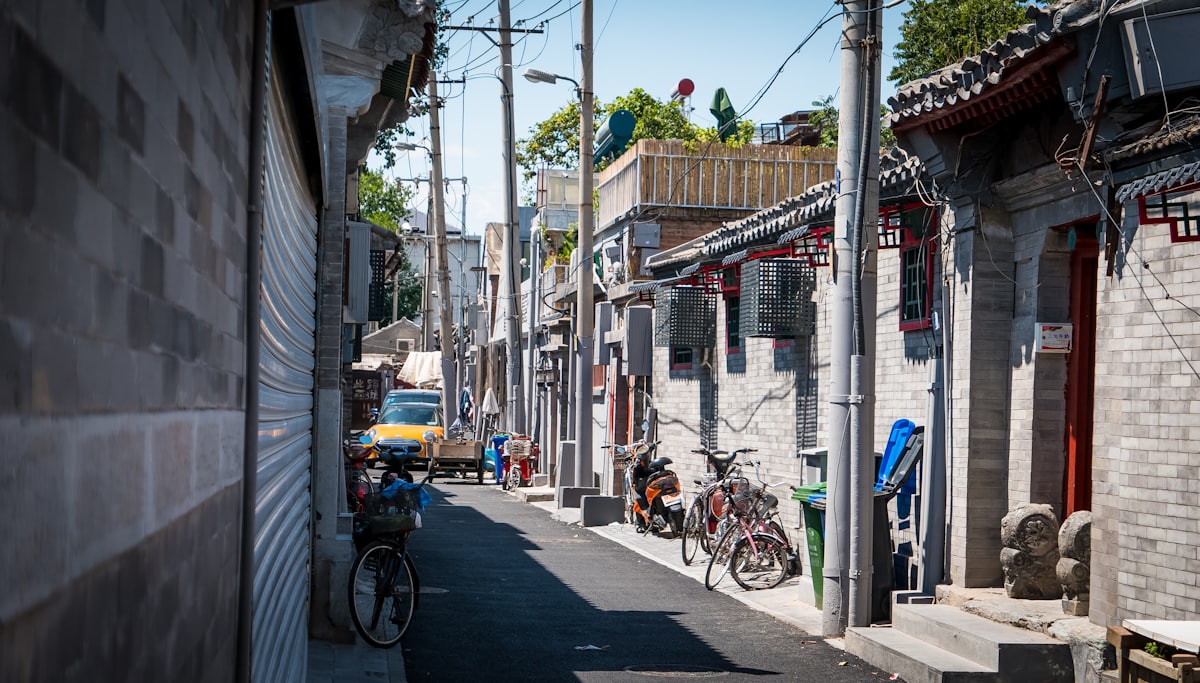
- Nanluoguxiang and Gulou — lively and touristy, rich in cafés
- Wudaoying Hutong — quieter, more independent shops
- Dashilan (south of Qianmen) — older feel
Duck into courtyard cafés, drink tea, and let the city slow down.
Evening: Drum and Bell Towers at sunset
The Drum Tower (鼓楼) and Bell Tower (钟楼) stand about 100 meters apart at the northern end of Beijing's central axis, a 10–15 minute walk from Nanluoguxiang or Houhai. For centuries they were the city's official timekeeping system: the bell rang at dawn, and drums marked the night watches. Standing between them now, you're at the historical "end of the line" that started at the Forbidden City.
Which to climb. Both towers are open to visitors.
- The Drum Tower still houses a set of reproduction drums, and staff perform a short drum demonstration roughly once an hour through the day (with a break around lunchtime). It's brief, loud, and surprisingly effective if you catch it. The view from the top faces south down the central axis.
- The Bell Tower is quieter — fewer tour groups, simpler interior, and views of the Drum Tower and hutong rooftops in the other direction.
Most first-timers do both since they're 2 minutes apart.
Tickets: around ¥30 combined for both towers — buy in person at the ticket window at the base. No advance booking needed on normal days.
The stairs are steep. Both towers have tall, narrow wooden-and-stone staircases with high risers. They're safe but genuinely steep — skip the climb if you have knee or balance issues.
Timing. Arrive about 30–45 minutes before sunset. The drum demonstration catches better inside the Drum Tower in the late afternoon, and from the top the hutong rooftops start turning gold as the light drops. A quiet, satisfying end to Day 3.
The square between the towers is worth standing in even if you don't climb. Local retirees gather here in the late afternoon — card games, quiet conversation, the occasional dance group — and the scene feels untouristy even when the towers are busy above you.
Day 4: Summer Palace, with a modern-Beijing alternate
Default to the Summer Palace — it closes out the imperial arc that started at the Forbidden City on Day 1, and it's the most scenic of the four major sites on this itinerary. Switch to the alternate below only if three straight days of temples and palaces is genuinely enough; there's no shame in swapping it out.
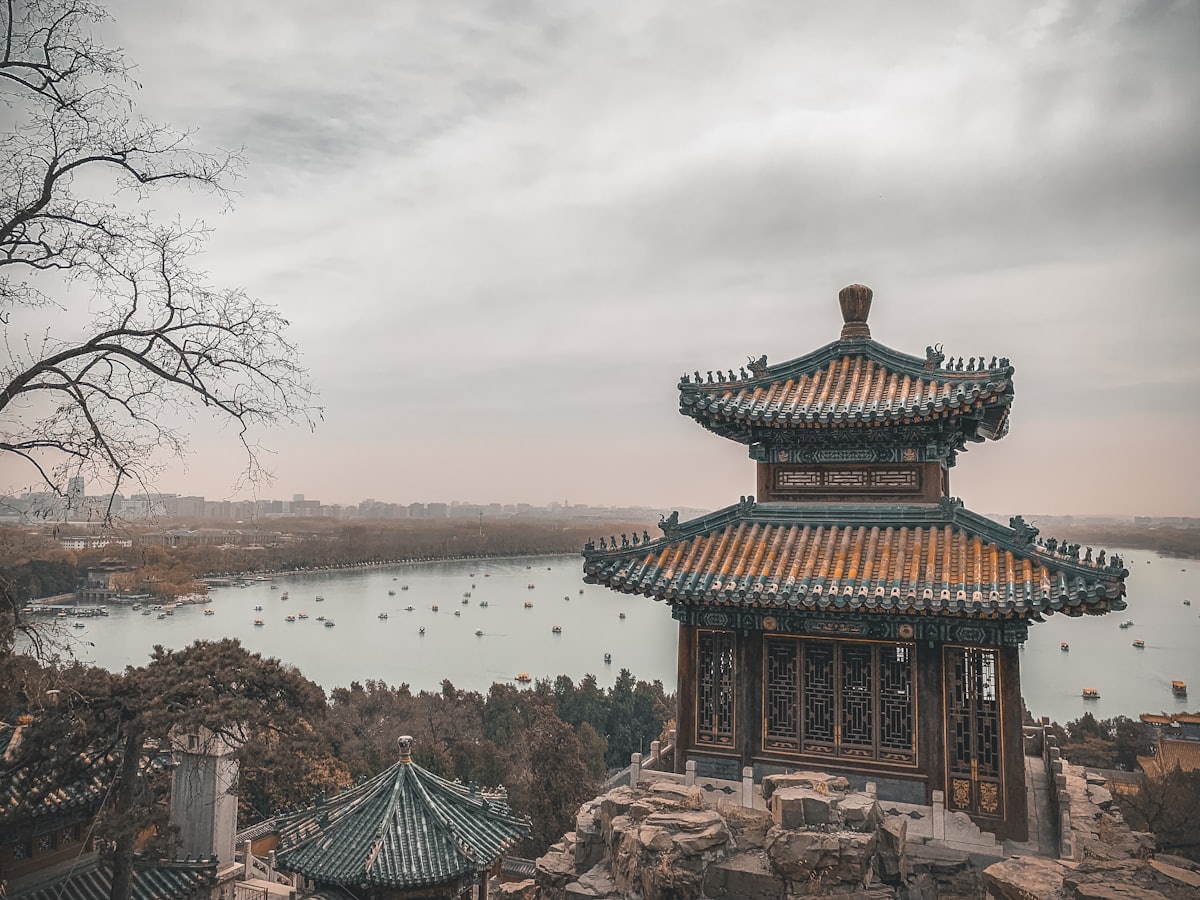
Default: Summer Palace
- Metro Line 4 to Beigongmen (北宫门) — it drops you at the North Palace Gate; aim to arrive by 9 AM
- Lakes, pavilions, and long walking paths — the most scenic imperial site on this itinerary
- Plan on 3–4 hours
- Tickets: ¥30 entry in peak season (Apr–Oct), ¥20 off-peak. The combo ticket (¥60 peak / ¥50 off-peak) adds the inner sights, but check what's actually open before paying for it — Suzhou Street has been closed lately, which cuts the combo's value; if you just want to climb the Tower of Buddhist Incense, you can add that at its gate for ¥10. Book in advance via Trip.com, the official Summer Palace WeChat mini-program, or Meituan — same-day at-the-gate is not reliable, the park caps daily visitors.
Alternate: modern Beijing
If three days of imperial sites is enough, swap in:
- National Museum of China at Tiananmen Square (free with passport, closed Mondays)
- 798 Art District for contemporary Chinese art — Olympic Park is a reasonable add if you're already out this way and want a second modern stop, otherwise skip it
- Sanlitun for shopping and contemporary food
Afternoon and evening
Either path leaves the rest of the day open. Use it for a second duck meal, souvenir shopping at Wangfujing, or an early return to the hotel if you're on a morning train out.
The shape of four days in Beijing
Day 1 anchors the imperial history. Day 2 is the Great Wall. Day 3 shifts to neighborhood pace. Day 4 closes the imperial arc or pivots to modern Beijing, depending on your energy. Four days fits every major imperial site — what's left out (see above) is better suited to a longer stay, not a first visit.
Continue planning
- Unsure if 4 days is right for you? Read How Many Days in Beijing?
- Want to choose between Great Wall sections? See Best Great Wall Section for First-Time Visitors
- Heading to Xi'an next? Read Beijing to Xi'an by High-Speed Rail
Back to the Beijing destination overview.