For most foreign visitors, the food in Sichuan and Chongqing is the most intense China experience on the trip — more disorienting than the Forbidden City, more memorable than the Shanghai skyline. It's also the part most under-explained by English travel writing, which tends to collapse into "spicy Chinese food" and stop there.
I live in Chengdu, so consider this the orientation I give every visiting friend before their first meal here. It covers what to order, how Sichuan and Chongqing food differ from each other, where to eat, and what foreigners typically get wrong. It's not a recipe book — the hotpot-ordering deep-dive (yuanyang, sauce dishes, what to drop in the pot) lives in the dedicated hotpot decoder.
Sichuan vs Chongqing: what's actually different
Chongqing was administratively part of Sichuan until 1997, so the two cuisines share roots. But the daily food in each city has split in clear directions.
Sichuan (Chengdu side) is the more refined, complex-flavored half. Sichuan cuisine traditionally has 24 distinct flavor profiles (味型) — not just spicy. Dishes can be sweet-spicy, sour-spicy, salty-aromatic, fish-flavored (without fish), tea-smoked, or "strange-flavored" (怪味 / guài wèi — sweet, salty, sour, spicy, numbing, and aromatic in the same bite). The cooking leans toward composed, careful, balanced.
Chongqing is the more direct half. The local descriptor for jianghu-style food (江湖菜, the home-style cooking that defines the city) is 霸道 — "overwhelming". Big portions, blunt heat, fewer flavor layers, more impact. Food that announces itself.
Put differently: Sichuan is the romantic version of spicy, Chongqing is the brutalist version. Most first-timers expect both cities to feel the same; by meal three you'll know the difference.
The mala you've heard of: it's not just "spicy"
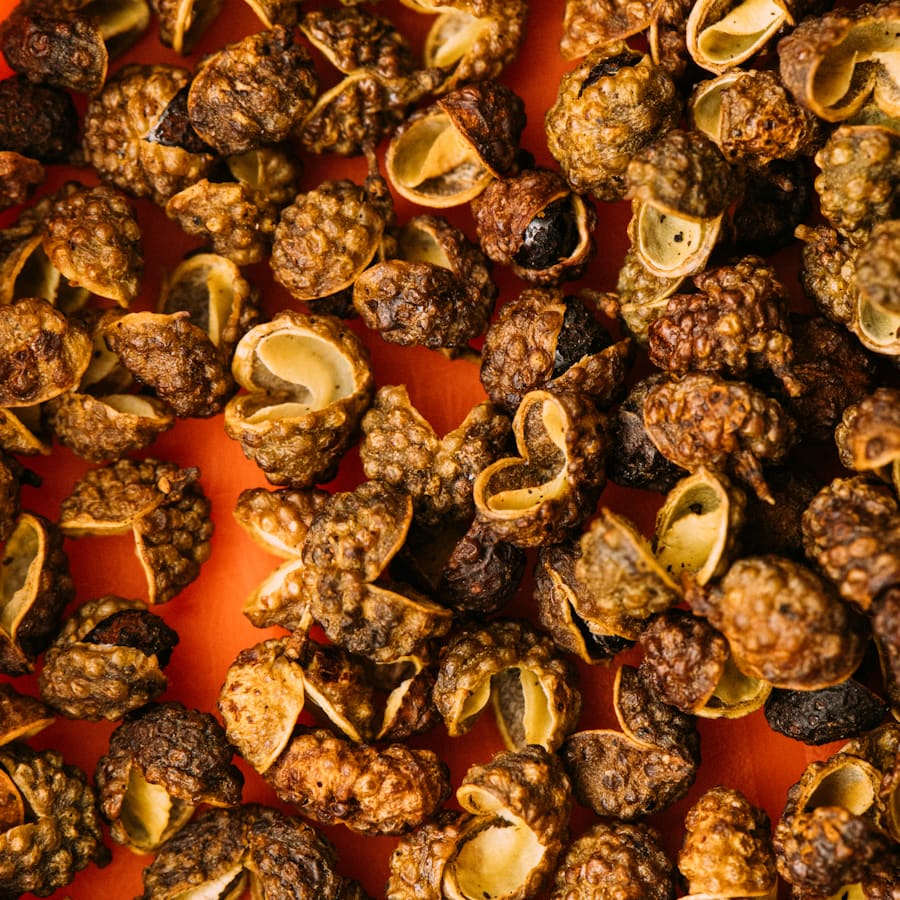
The single biggest gap between what foreigners expect and what they get is the word 麻 (má) — numbing.
- 辣 (là) = capsaicin heat. The burn you know.
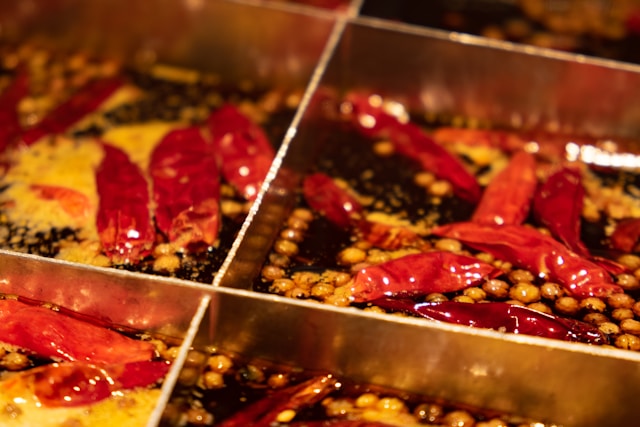
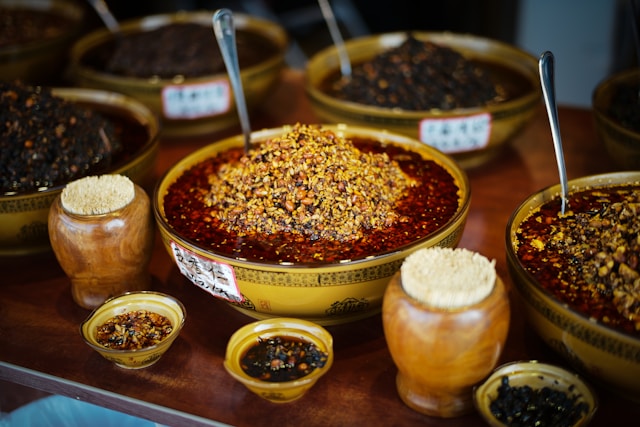
- 麻 (má) = the buzzing, fizzing, lip-tingling sensation from Sichuan peppercorns (花椒 / huā jiāo). It's not pain. It's closer to the feeling of mild electrical current on the tongue.
- 麻辣 (má là) = both at once. The two sensations stack and compound.
If you've eaten "Sichuan" food in the US, UK, or anywhere outside China, you've probably had the là without the má — most overseas Sichuan restaurants quietly reduce or omit the peppercorn. The numbing is the half of mala you've never tasted.
It also builds. The first 5 minutes of a mala hotpot feel approachable; the next 30 minutes are when the floor disappears.
What to order in Sichuan (Chengdu side)
The classics most foreigners have already heard of are all worth ordering at least once:
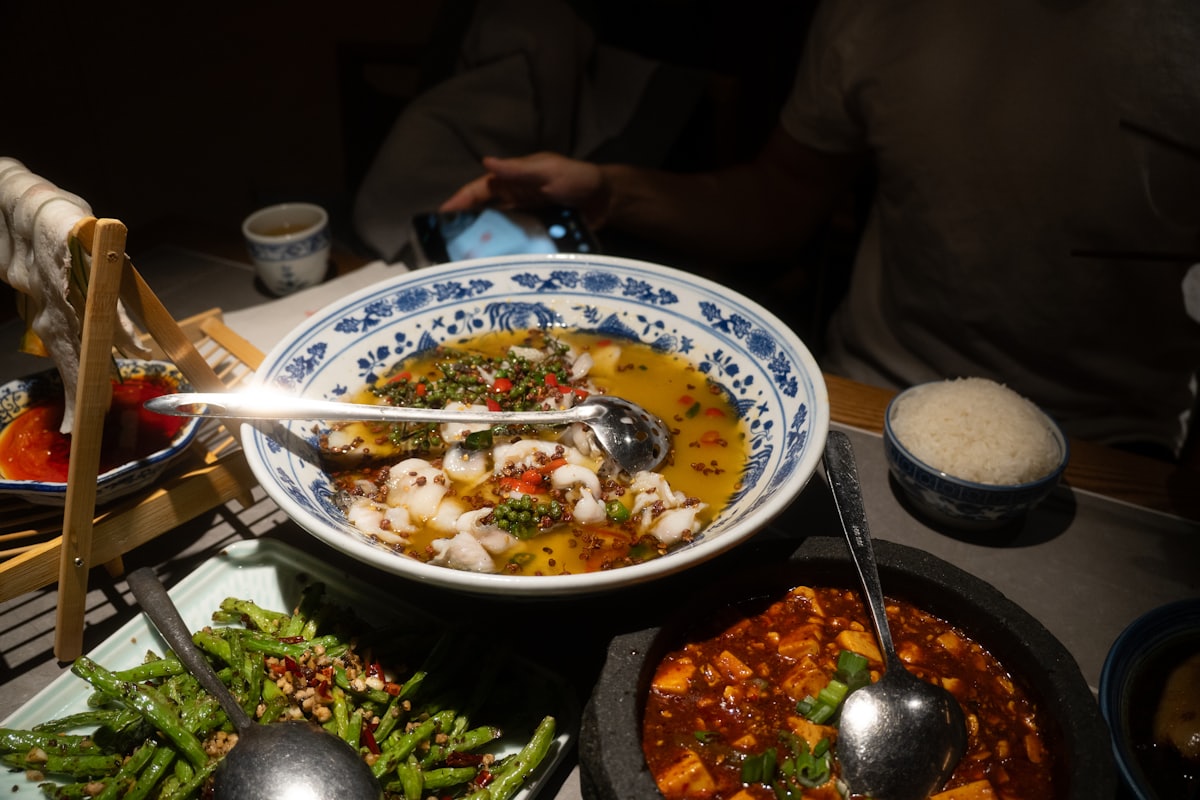
- Mapo Tofu (麻婆豆腐) — silken tofu in a numbing-spicy meat sauce. The original is at Chen Mapo Tofu (陈麻婆豆腐), founded in Chengdu in 1862; the chain now has multiple locations including the airport. A real test of how you handle mala — eat with rice.
- Kung Pao Chicken (宫保鸡丁) — diced chicken with dried chilies, peanuts, Sichuan peppercorns. Not as spicy as it looks; the dominant note is sweet-sour-numbing. The version you've had abroad is usually 30% of the strength of the real thing.
- Yuxiang Shredded Pork (鱼香肉丝) — "fish-flavored" pork with no fish in it. Sweet-sour-spicy with a fermented chili base. A good benchmark for whether a Sichuan restaurant knows the 24 flavor profiles or only does mala.
- Twice-Cooked Pork (回锅肉) — pork belly first boiled, then stir-fried with leeks and broad-bean chili paste. Salty-spicy, deeply savory, not numbing. Locals' household comfort food.
- Fuqi Feipian (夫妻肺片) — sliced beef and offal in chili oil with peanuts. Cold appetizer. Spicier than it looks; portion-controlled.
- Dandan Noodles (担担面) — small portions of noodles in a peppercorn-sesame-chili sauce. Snack-size, not a meal. The ¥6 dandan stall in Chengdu Tianfu Airport has quietly become a local food-blog favorite — yes, even airport-sized portions here are genuinely good.
Order ratio for a first meal of 3–4 people: one mapo tofu, one kung pao or yuxiang pork (sweeter / less mala), one twice-cooked pork (savory), one cold appetizer (fuqi feipian or pickled vegetables), and a vegetable. Rice for everyone. Skip ordering five spicy dishes in a row — your palate dies by dish three.
About Long Chao Shou (龙抄手) and Zhong Dumplings (钟水饺) — these are the old-Chengdu names you'll see on every travel guide. They're still serviceable, but I can't remember the last time anyone local suggested going to one; Chinese travel posts have a whole subgenre titled some variant of "once-famous, now nobody bothers." Eat at them if convenient, don't make a special trip.
What to order in Chongqing
Chongqing's restaurant scene is dominated by two categories: hotpot and 江湖菜 (jianghu cai — "rivers and lakes" cooking), the no-frills home-style food the city actually lives on.
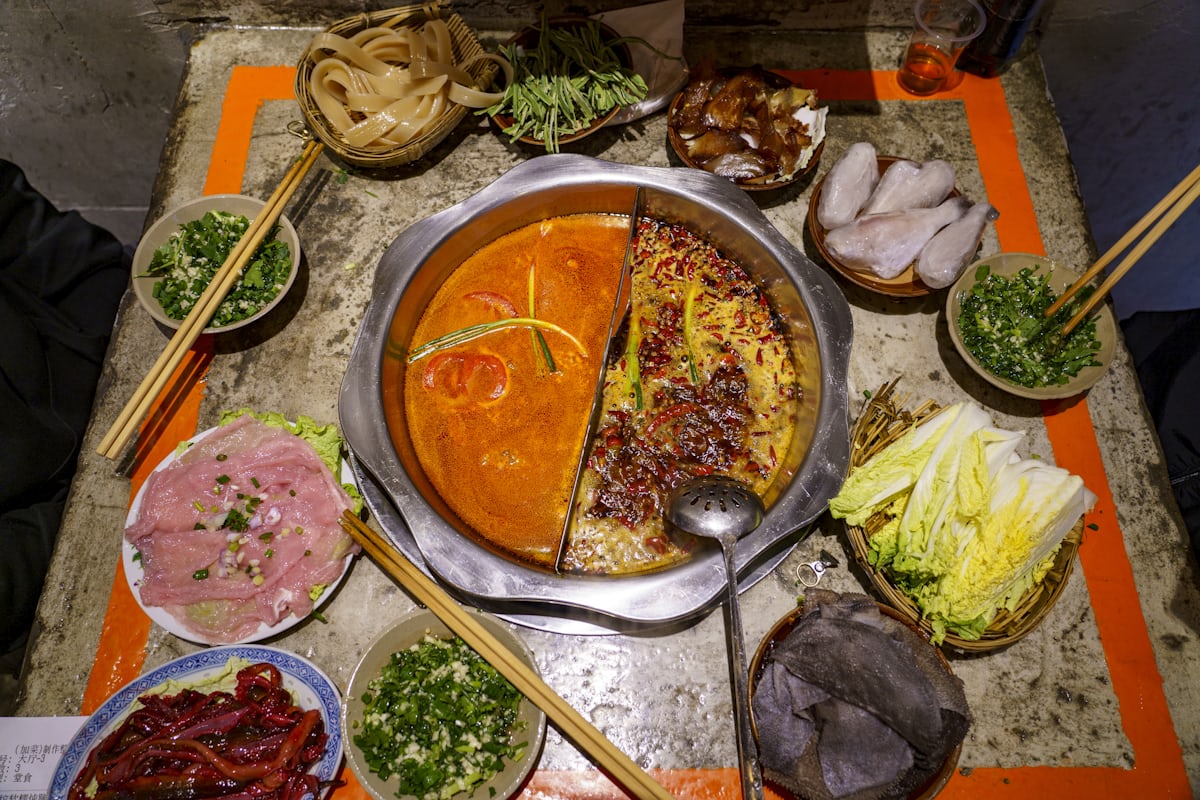
Hotpot has its own dedicated article — the hotpot decoder covers the full ordering mechanics (yuanyang vs full mala, what to drop in, sauce dish composition, when to start eating beef tripe). The short version: pick a 鸳鸯锅 (yuanyang) on your first meal, don't go full red broth on day one, and use the sesame oil + minced garlic sauce dish to cool the heat.
Jianghu cai is what you eat between hotpot meals. The defining dishes:
- Spicy Diced Chicken (辣子鸡 / là zǐ jī) — small cubes of fried chicken buried in a small mountain of dried red chilies. You hunt for the chicken in the chilies. The chili-to-chicken ratio looks insane and is exactly the point.
- Mao Xue Wang (毛血旺) — a spicy stew of duck blood, offal, beef tripe, eel, in red oil. Often the most ordered dish in a jianghu restaurant. Not for everyone, but it is the dish.
- Shuizhu Yu (水煮鱼) — fish fillets poached in chili oil. Less aggressive than its reputation; the fish is actually delicate. A starter dish for foreigners who like spicy but find hotpot too much.
The geography to know: Jiefangbei (解放碑) and Guanyinqiao (观音桥) are the two jianghu-cai-dense neighborhoods. Both are known among local food writers as "民间米其林" (people's Michelin) zones. For your first jianghu meal, either area works.
For lighter or street-food meals: 小面 (xiǎo miàn) — Chongqing's breakfast noodles in a chili-and-peppercorn broth, eaten standing up — and 酸辣粉 (suān là fěn) — slippery sweet-potato noodles in a sour-spicy soup. Both are best from small shops, not from sit-down restaurants.
Two cities, two eating rhythms
Where you eat shapes what you eat, and Chengdu and Chongqing have opposite eating cultures.
Chengdu = teahouse pace. The afternoon ritual is gaiwan tea (盖碗茶) at a teahouse — most famously Heming Teahouse (鹤鸣茶社) inside People's Park (人民公园). ¥30 buys you a cup, a thermos refill, and the right to sit there an entire afternoon while old men play mahjong and tea servers do flame-pour refills from a long-spouted copper kettle. This is the local pace. Sichuan food matches it — small plates, multiple flavor profiles, slow.
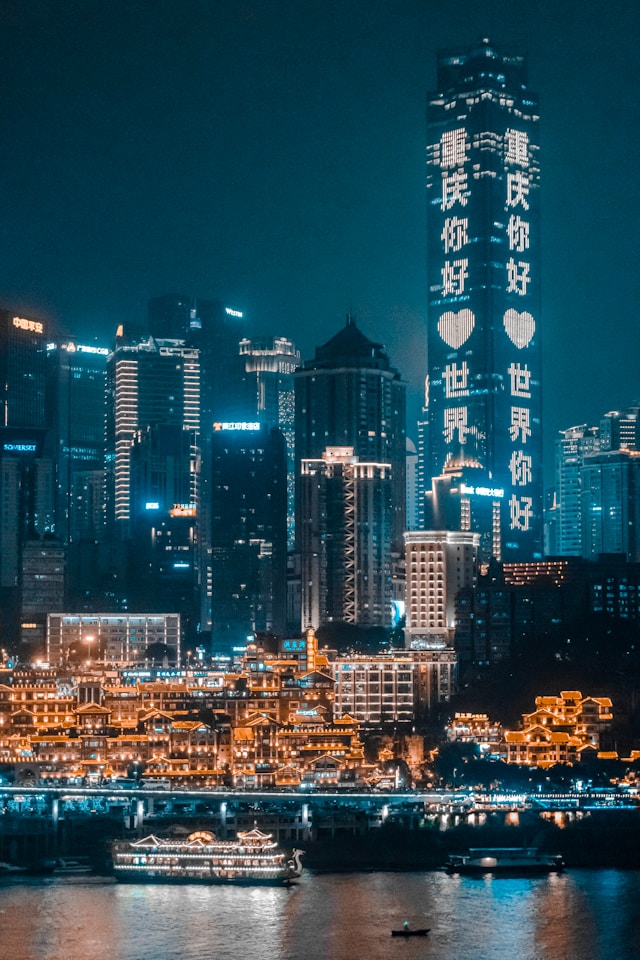
Chongqing = riverside-after-dark pace. The local equivalent is 江边大排档 (riverside dapaiqiao) and 夜啤酒 (night beer) — open-air food stalls along the Yangtze and Jialing waterfronts, plastic stools, charcoal grills, beer crates. The newer cluster locals like is Xiahao Li (下浩里) on the south bank. The vibe is fast, loud, sweaty. Jianghu food matches it — big plates, in-your-face spice.
If you want to feel the difference between the cities in one move: spend a slow afternoon at Heming Teahouse, then take the high-speed train to Chongqing and eat hotpot riverside the next night. Same broad cuisine, completely different temperature.
How to find a good local place
The signal-to-noise ratio on restaurants in both cities is brutal. Three rules:
- Use Dianping (大众点评), the Chinese Yelp, inside Alipay. Filter by district, sort by rating, then ignore the absolute top results — those have become Instagram destinations. Look at the 4.6–4.8 range with comments ending in "本地人" (locals).
- An English menu is a warning sign, not a help. The places with the best food rarely translate. If you can't read, use Google Translate's camera mode in offline-translation mode.
- Watch for the local shorthand in Chinese review-site comments: "小破店" (xiǎo pò diàn, "small shabby place") and "民间米其林" (mín jiān Mǐ qí lín, "people's Michelin"). Both signal a tiny, beat-up storefront that locals love — almost always reliable.
Three things to avoid:
- Anything with "网红" (wǎng hóng, "internet famous") in the description. By the time a place is Instagrammed, the kitchen has scaled and the flavor has compromised.
- Restaurants in the immediate pedestrian zone of Jiefangbei, Chunxi Road, or anywhere within 100m of a major monument. Rents force shortcuts.
- The biggest, loudest storefront on any food street. Chinese food bloggers' "红黑榜" (red-and-black list) posts roast them weekly.
Things foreigners often get wrong
- Ordering a full red broth at your first hotpot. Real mala builds slowly and then catastrophically. Order yuanyang (split pot) at meal one, switch to full red on meal two if you're ready.
- Assuming "Sichuan food" = "everything is spicy." Kung pao is mildly sweet. Twice-cooked pork is salty-savory. Sichuan has 24 flavor profiles; mala is only one. A restaurant that only does spicy is not a good Sichuan restaurant.
- Assuming Chengdu spice = Chongqing spice. Chengdu mala is layered and complex; Chongqing mala is straight, blunt, and stronger. The number-of-chilies test fails — Chengdu uses fewer-looking chilies but more peppercorns; Chongqing uses an avalanche of chilies and ratchets the oil harder.
- Thinking you've eaten Sichuan food because there's a Sichuan restaurant in your home city. Overseas Sichuan is almost universally de-mala'd — the peppercorn is reduced or omitted because non-Chinese diners react badly to the numbing. The real version on Sichuan soil is a different food.
- Skipping the sauce dish at hotpot. The sesame oil + minced garlic mixture isn't optional decoration — it's a heat moderator and flavor lifter. Locals use it on every bite.
Final notes
This is the orientation version: enough to walk into your first Sichuan and Chongqing meals without flying blind.
Continue planning
- Chongqing Hotpot Decoder — the full first-timer's ordering guide: broths, sauce dish, what to drop in and when
- The Perfect 3-Day Chengdu Itinerary — pandas, teahouses, and where these meals fit into a trip
- The Perfect 3-Day Chongqing Itinerary — the riverside-city side of the food story
- Destination overviews: Chengdu and Chongqing