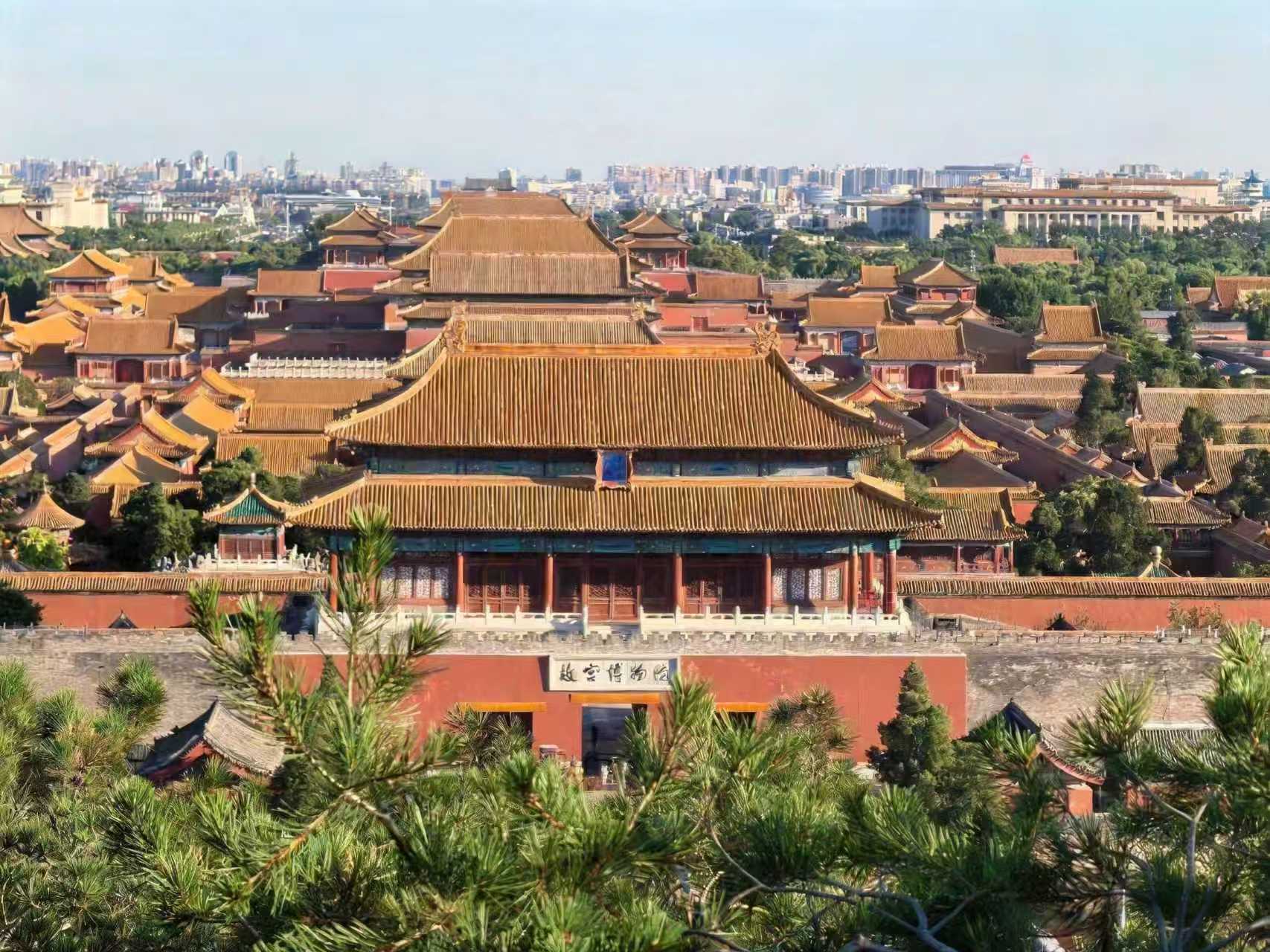
Stand on top of the hill in Jingshan Park at five in the afternoon and you get the one view that explains Beijing: a golden roofline of the Forbidden City stretching south along a dead-straight axis, drum towers behind you, and a modern city of 20 million wrapped around all of it. Entry to that view costs ¥2 in winter, ¥10 in summer. Some of the best things in this city are nearly free — and some of the most famous ones will eat a full day if you point yourself at the wrong version of them.
I live in China and I've walked visiting friends through Beijing enough times to know exactly where first trips go wrong. It's almost never the sights themselves — it's the stuff English guides gloss over: half the major museums close on Mondays, the Forbidden City sells out seven days ahead at exactly 20:00 Beijing time, and there are two competing Great Wall day trips with very different outcomes.
So when friends ask me what to do in Beijing, I don't send them a list of forty attractions. I send them this shortlist, with the booking mechanics and the honest warnings attached. If you want it arranged into days, the 4-day Beijing itinerary does that; this article is about what deserves your time and why.
Start with the imperial core — and pay ¥2 for the best view in the city
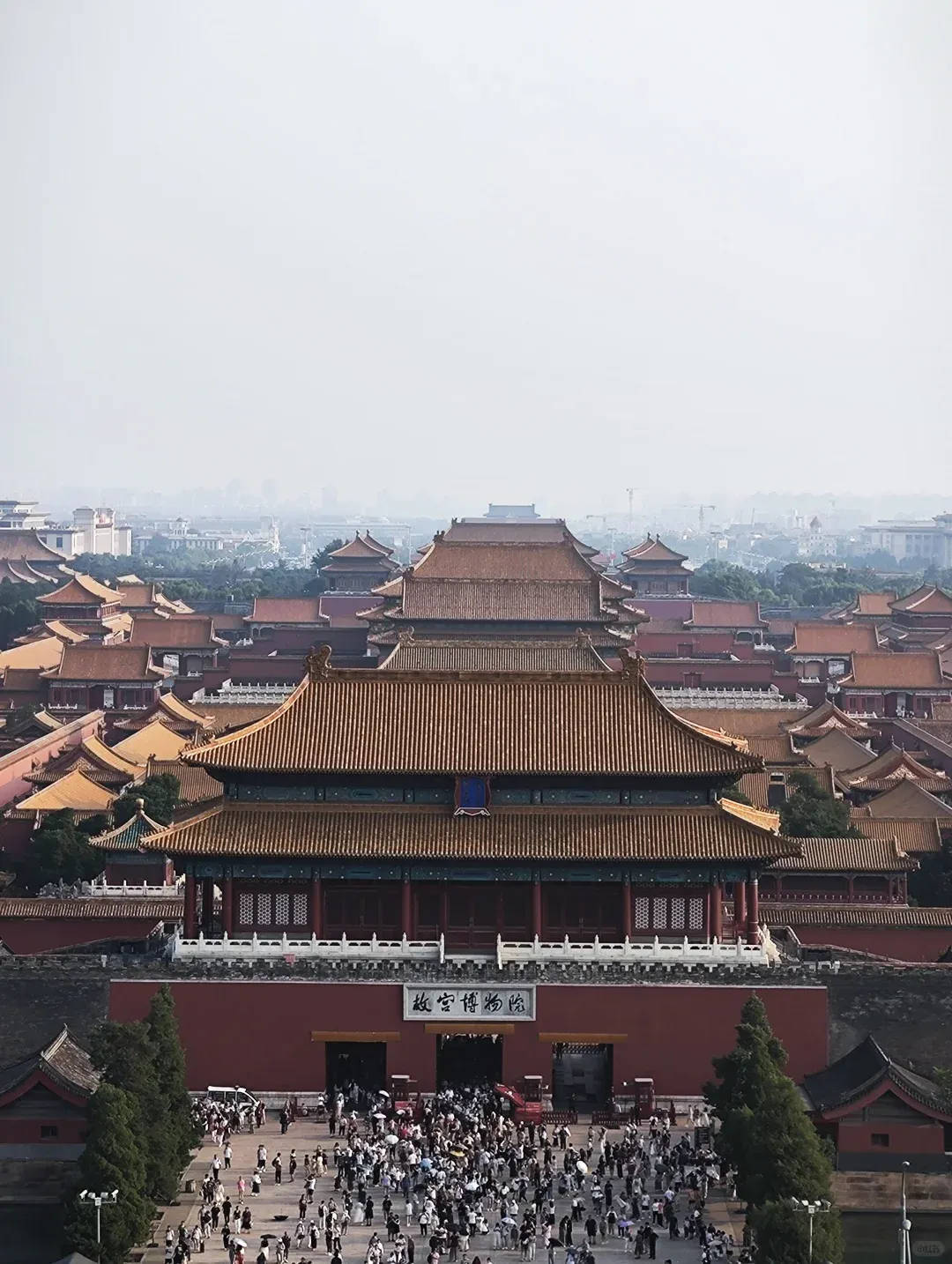
The Forbidden City is the one thing you cannot skip, and it's also the one thing you cannot improvise. Tickets go on sale seven days in advance at 20:00 Beijing time on the official site (ticket.dpm.org.cn), and weekend slots disappear within minutes. ¥60 in peak season (April–October), ¥40 off-peak, and it's closed on Mondays except during Chinese public holidays. You enter from the south at Wumen (午门) and exit north at Shenwumen (神武门) — the flow is one-directional, so don't plan to double back.
Give it a full morning, at minimum three hours. The palace is genuinely enormous — it's not a museum you walk through, it's a small walled city you cross.
Then do the move most tourists miss: exit at the north gate, cross the street, and climb Jingshan Park (景山公园). Fifteen minutes uphill, pay at the gate, no reservation. From the pavilion at the top, the entire Forbidden City lays itself out below you — this is the postcard shot, and it costs less than a bottle of water in the off-season.
Tiananmen Square sits just south of the palace and needs its own reservation now (free, but book about a week out). The dawn flag-raising ceremony is a question I get constantly — my honest answer is in the FAQ below.
Note for international visitors: your passport is your ticket everywhere in this city. The number you book with must match the document you carry at the gate. For how the real-name booking system works across China, see the attraction booking guide.
Do one Great Wall day — and pick your section deliberately
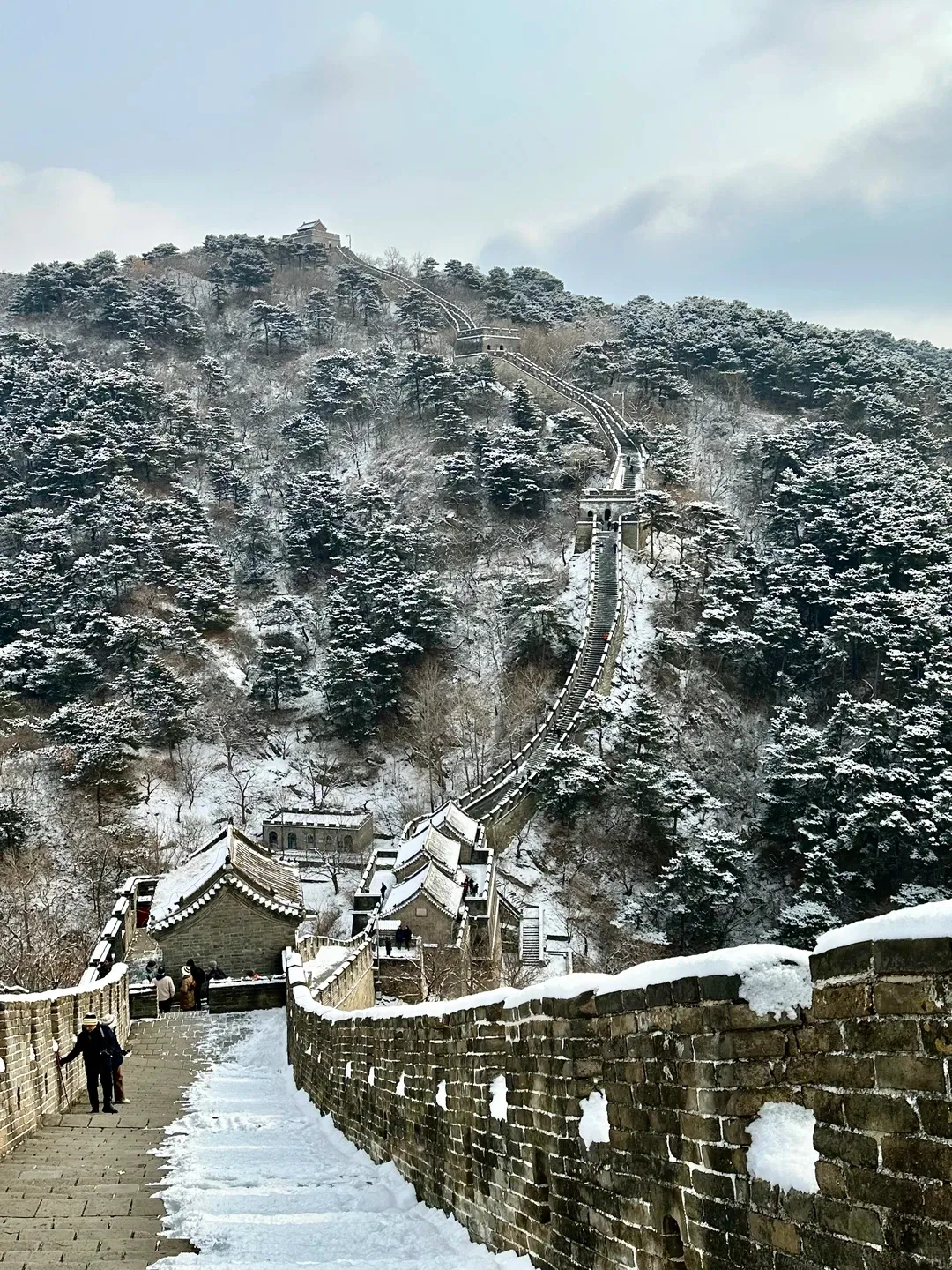
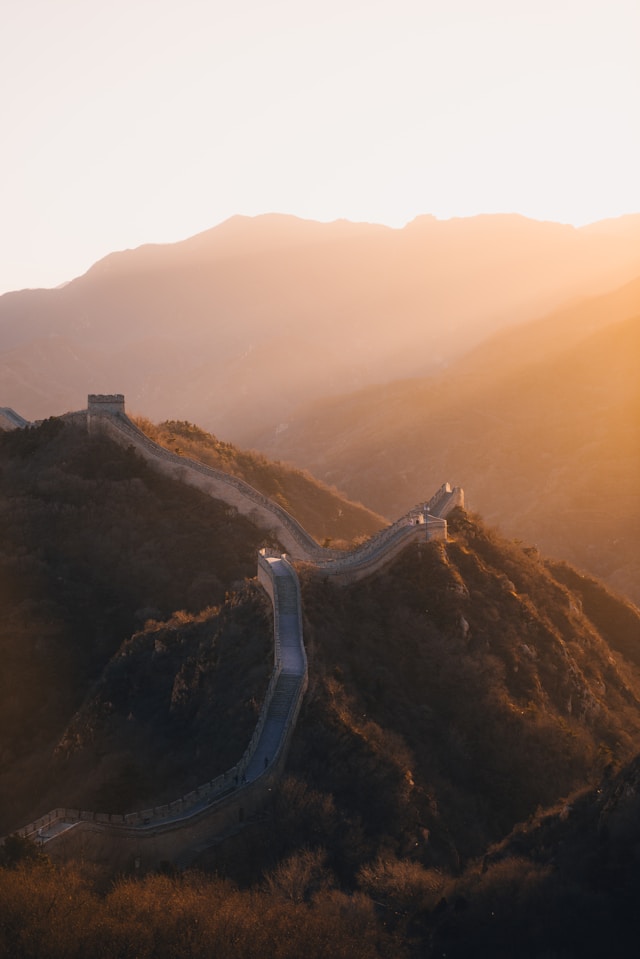
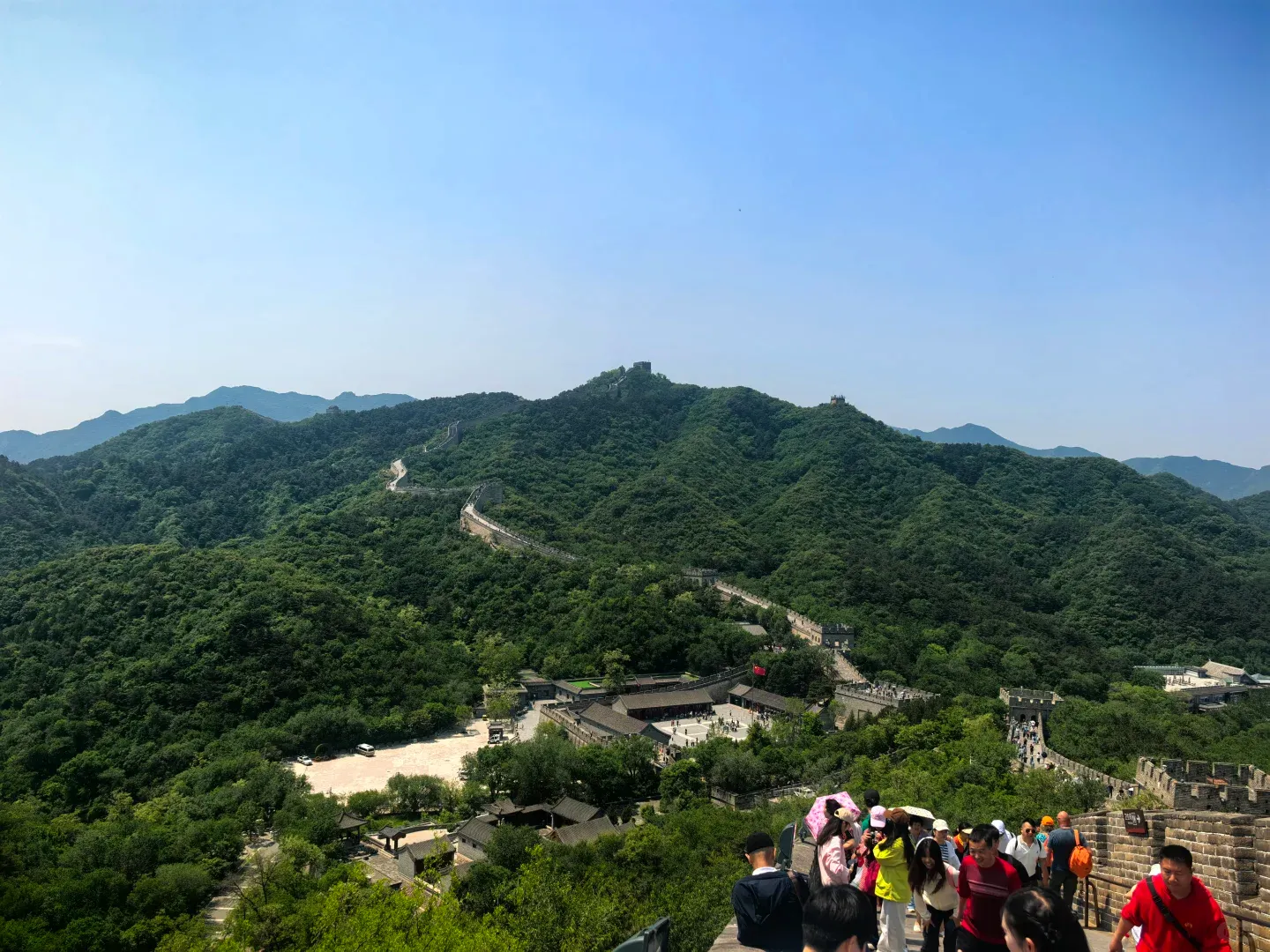
Every first-timer asks "which Great Wall?" and the real answer is: Badaling if you want infrastructure, Mutianyu if you want photos with fewer strangers in them. I've broken the full comparison down in the Great Wall section guide, but here's the short version.
Badaling (八达岭) is the famous one, and its unfair advantage is the bullet train — about 30 minutes from Qinghe or Beijing North station, and you walk out of the station straight to the foot of the Wall for around ¥18. Buy your return ticket at the same time as the outbound; trains sell out, and getting stranded at the Wall at closing time is a bad way to end a great day. Entry is ¥40, plus a cable car if you don't want to hike up — worth it, take it to Tower 7 and walk one more tower for the view without the knee damage. The tradeoff for all that convenience is crowds: expect them basically always, worse on holidays.
Mutianyu (慕田峪) is the one I actually recommend to most people — restored but not overrun, greener, and it has a toboggan slide down. The classic loop is cable car up, walk the ridge, toboggan down, and here's the catch nobody mentions: the cable car and the toboggan are run by two different companies, so budget around ¥200 total for the combo, not the ¥55–60 entry alone. It closes in rain or snow, so check the weather first. Getting there without Chinese is the real friction — a hotel-arranged driver is worth the money on a first trip.
Either way: be at the base by 8–9 AM. Crowds and heat both stack up fast after that, and the difference between an 8 AM wall and an 11 AM wall is the difference between a memory and an endurance event.
Walk the hutongs — but skip the famous one's main drag
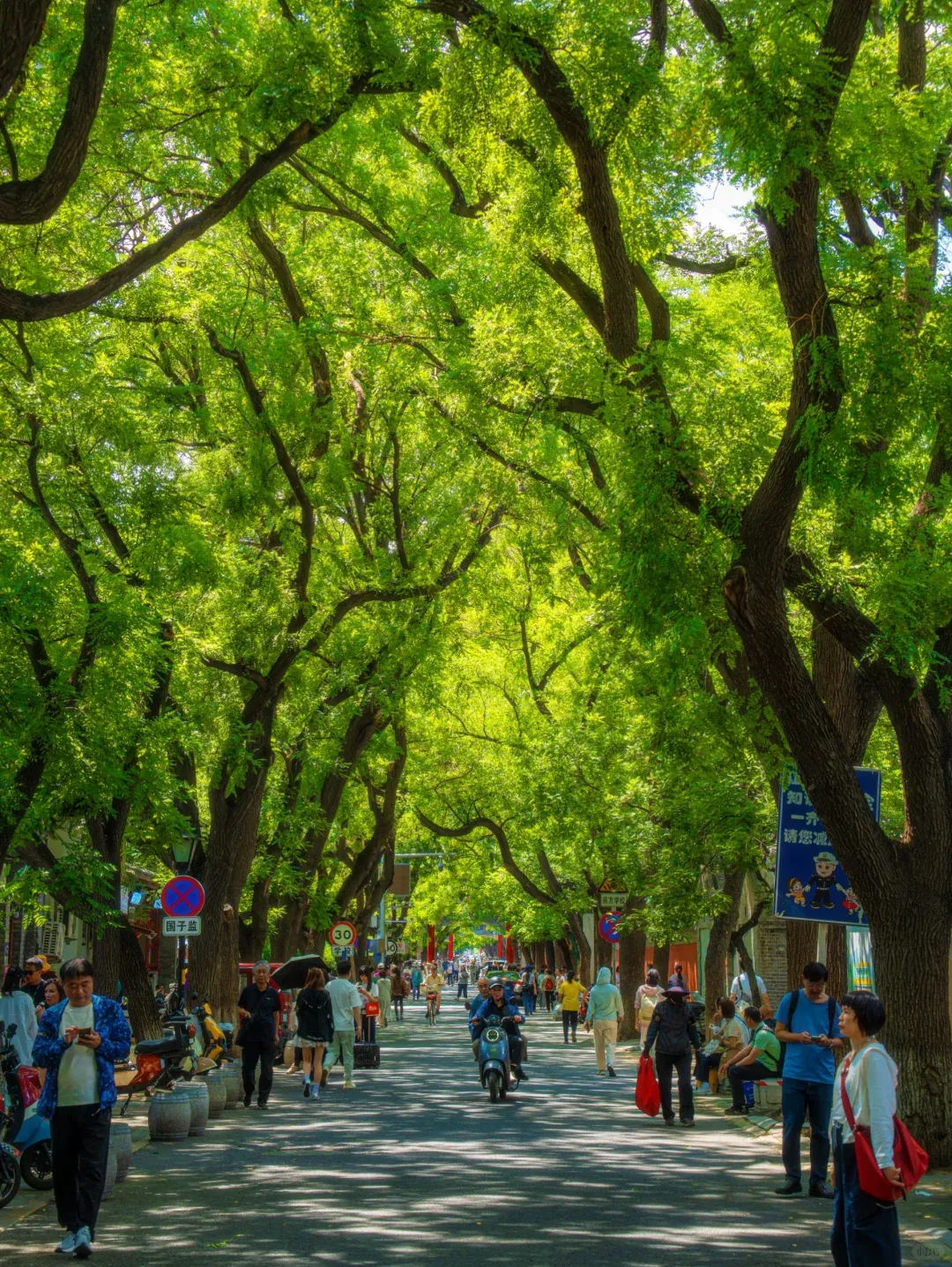
Beijing's hutongs — the low grey-brick alley neighborhoods — are where the city stops performing and just lives. The catch: the hutong everyone gets sent to, Nanluoguxiang (南锣鼓巷), has a main street that's now a wall-to-wall snack mall. Fine for twenty minutes, not the real thing.
The walk I actually recommend runs through the northeast of the old city: start on Guozijian Street (国子监街) under its canopy of centuries-old scholar trees, poke into the Confucius Temple and the old Imperial College, then drift to Wudaoying Hutong (五道营胡同) — rooftop cafés, small design shops, full tree cover in summer — and finish in Fangjia Hutong (方家胡同). The whole line sits next to the Lama Temple (雍和宫, ¥25), Beijing's most atmospheric working Buddhist temple. Local rhythm worth copying: worshippers go at 9 AM sharp; if you're going for the architecture and the incense smoke, after 4 PM is quieter and cooler.
Rent a shared bike for this (Alipay unlocks them) — the alleys are flat, shaded, and built for slow rolling. Shichahai (什刹海), the lake district just west, makes a good sunset endpoint.
Temple of Heaven at night — the trick almost nobody's guidebook mentions
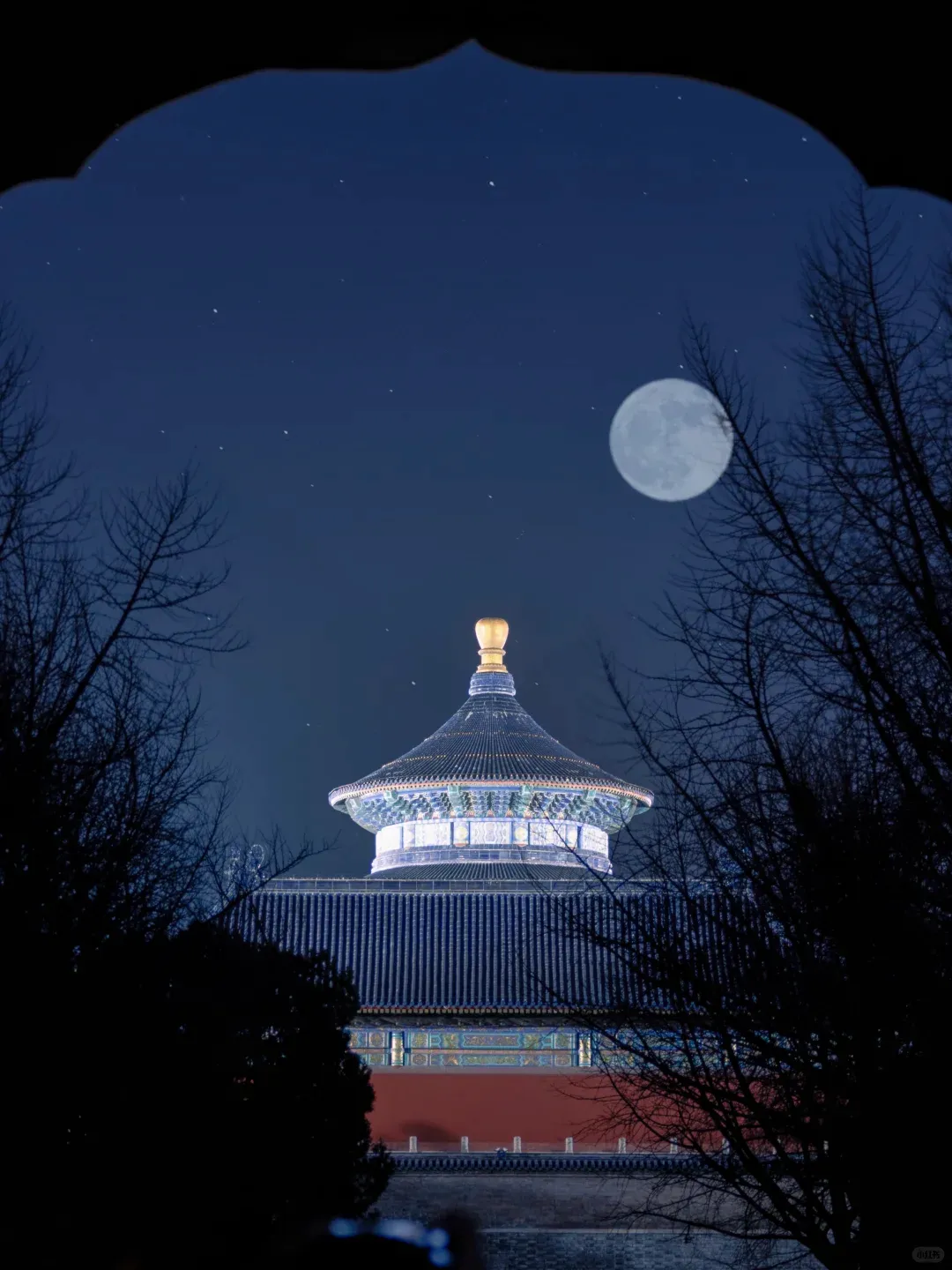
Everyone visits the Temple of Heaven (天坛) by day — it's the blue-roofed circular hall on half of Beijing's souvenirs, and the ¥15 park ticket (get the combo ticket if you want inside the inner halls) buys you one of the great morning scenes in China: locals doing tai chi and ballroom dancing under 600-year-old cypresses.
Here's what almost no English guide tells you: on Friday and Saturday nights (plus holidays), the Hall of Prayer is illuminated — the lights come on around 20:30 in summer, a bit after full dark. The inner gates are closed by then, but you don't need them: the lit hall towers over the inner wall, and the park's ¥15 entry is all it takes to shoot it. Go in through the north or east gate (both a short walk to the hall — the other gates mean a long hike across the park; metro Line 5 to Tiantandongmen serves the east side), get there around 20:00 to pick your angle while the sky still has color, then wait for the switch-on. It's the least crowded world-class sight in the city, purely because most visitors have already gone to dinner.
The Summer Palace half-day
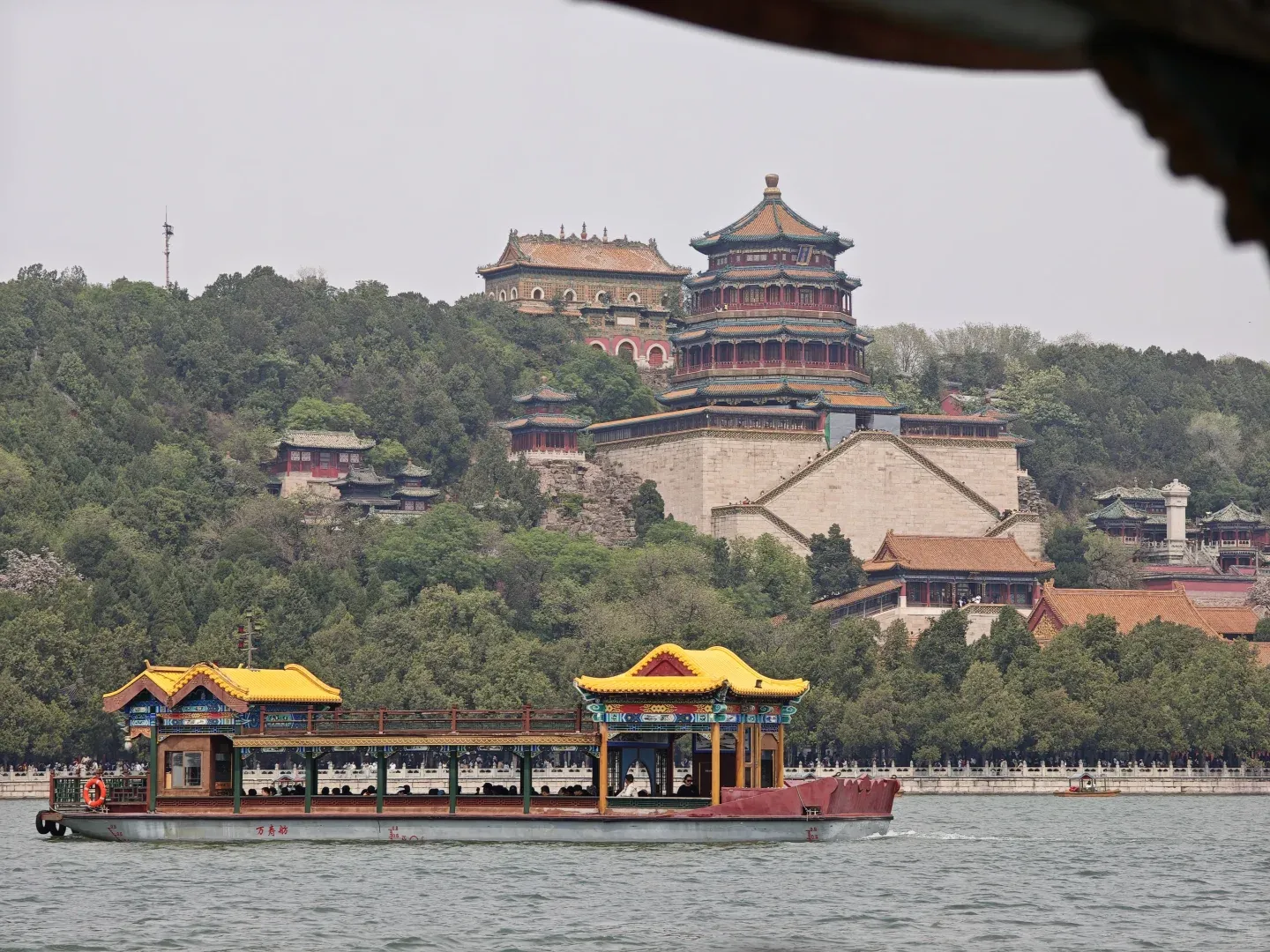
Northwest of the city, the Summer Palace (颐和园) is the imperial family's lake garden — a real lake you can cross by boat, with the Tower of Buddhist Incense stacked up the hillside behind it. It photographs like a classical painting, and of all the big-ticket things to do in Beijing, it's the most relaxing. Book ahead (it has daily caps and same-day tickets at the gate are a gamble), get the combo ticket that covers the inner sights, and give it half a day.
The nearby Old Summer Palace (圆明园) — ruins of the European-style palaces burned down in 1860 — is a quieter, heavier place; add it only if the history interests you, and read up before you go so the rubble means something. Peking University and Tsinghua sit in the same district if you're curious what China's Ivy League looks like (both need advance registration to enter).
Eat like you're staying a month
Beijing food is unsubtle and wonderful, and the classics are classics for a reason.
Roast duck first. I've eaten both ends of the argument: Quanjude (全聚德) is the historic name — expensive, touristy, but genuinely classic — while Siji Minfu (四季民福), with a branch right by the Forbidden City's east side, is the value pick with the crispier-skin fan club. My Beijing friends roll their eyes and call Siji Minfu "not authentic"; I think it's delicious and the queue of locals outside suggests I'm not alone. Go early or expect a serious wait.
Copper-pot mutton hotpot (铜锅涮肉) is Beijing's other signature meal — paper-thin lamb swished through clear broth, then dragged through sesame paste, which is the actual soul of the dish. The famous spots around the Temple of Heaven don't take online reservations; you show up and queue like everyone else.
Then there's the street-level stuff: luzhu (卤煮) — pork offal and flatbread in dark broth — and zhajiangmian noodles, both worth a stop. But the one you have to try even though you'll probably hate it is douzhi (豆汁), fermented mung-bean milk that ambushes first-timers with how sour it is. Most people surrender after two sips; do it anyway, it's a rite of passage. Chase it with naipizi yogurt (奶皮子酸奶) from a halal chain like Ziguangyuan — the exact opposite experience, and probably the thing you end up craving weekly.
One calibration note: these are the famous names, and a Beijing local will tell you their neighborhood joint beats every one of them. They're right, and it doesn't matter — for a first trip, these deliver.
The Monday problem, and other booking traps
This is the section that saves trips, so I'll be blunt:
- Closed on Mondays: the Forbidden City, the National Museum, the Capital Museum, the Military Museum, Tiananmen Gate tower, and the Chairman Mao Memorial Hall. If your itinerary has a Monday, that's your Great Wall day or your hutong-and-Summer-Palace day.
- Booking windows are staggered and specific. The Forbidden City releases 7 days out at 20:00; the National Museum (free, and its bronze and jade halls are world-class) 7 days out at 17:00; Badaling about 10 days out; the Lama Temple and Prince Gong's Mansion have their own windows. Nothing major is walk-up-and-buy anymore except parks like Jingshan and the Temple of Heaven.
- Everything is real-name. Passport number at booking, passport in hand at the gate. The full mechanics — including which platforms take foreign passports smoothly — are in the booking guide.
- Payments: set up Alipay or WeChat Pay with your Visa/Mastercard before you land (setup guide here) — it runs the bike rentals, the metro, the drink stands, all of it.
- Getting around: metro plus the occasional DiDi covers everything in this article. Ignore anyone offering a "special car" outside attraction gates.
Before you fly, run through the Beijing trip preparation checklist — and if you haven't confirmed whether you even need a visa, check your visa eligibility here; many nationalities now get 30 days visa-free or 240-hour transit.
FAQ
How many days do I need in Beijing?
Four is the sweet spot for everything on this page without sprinting — the reasoning is in How Many Days in Beijing?. Three works if you drop the Summer Palace; five lets you add a museum day.
Is the Tiananmen flag-raising ceremony worth getting up for?
Once, yes — with caveats. It happens at sunrise, security lines open an hour before, and in winter that means standing in serious cold in the dark for a five-minute ceremony. Summer, when sunrise is early but the wait is warm, is the better season for it. If you're only mildly curious, sleep in and see the square by day.
Badaling or Mutianyu, in one sentence?
Badaling for the 30-minute bullet train and full infrastructure, Mutianyu for lighter crowds and the toboggan — the full comparison is here.
Where should I stay?
Qianmen / Dashilar is the first-timer's answer — walking distance to the Forbidden City and Tiananmen, well-connected metro. Shichahai / the hutong belt trades convenience for atmosphere (courtyard hotels, lake at your door). Wangfujing / Dongdan is the practical middle: big hotels, every metro line you need.
Is Beijing doable without Chinese?
Yes — more than most visitors expect. Metro signage is bilingual, attractions scan passports, and translation apps close most gaps. The two places language friction actually bites are taxis (use DiDi's in-app translation instead of explaining addresses) and smaller restaurants (point at the picture menu, or at other people's tables — a time-honored technique).
Is winter worth it?
If you can handle -5°C, honestly, yes. The crowds thin dramatically, the light goes clean and golden, and if you catch snow on the Great Wall you'll get photos that look like ink paintings. Pack for real cold on the Wall — it's windier and several degrees colder than the city.