China Travel Essentials: Tipping Rules, Tap Water Safety, Power Plugs & Public Restrooms
Tipping is not expected in China, tap water must be boiled or bottled, outlets run 220V Type A/I sockets, and pocket tissues are a must for public restrooms. Here are the practical everyday rules to know before packing.
· By Yunjie
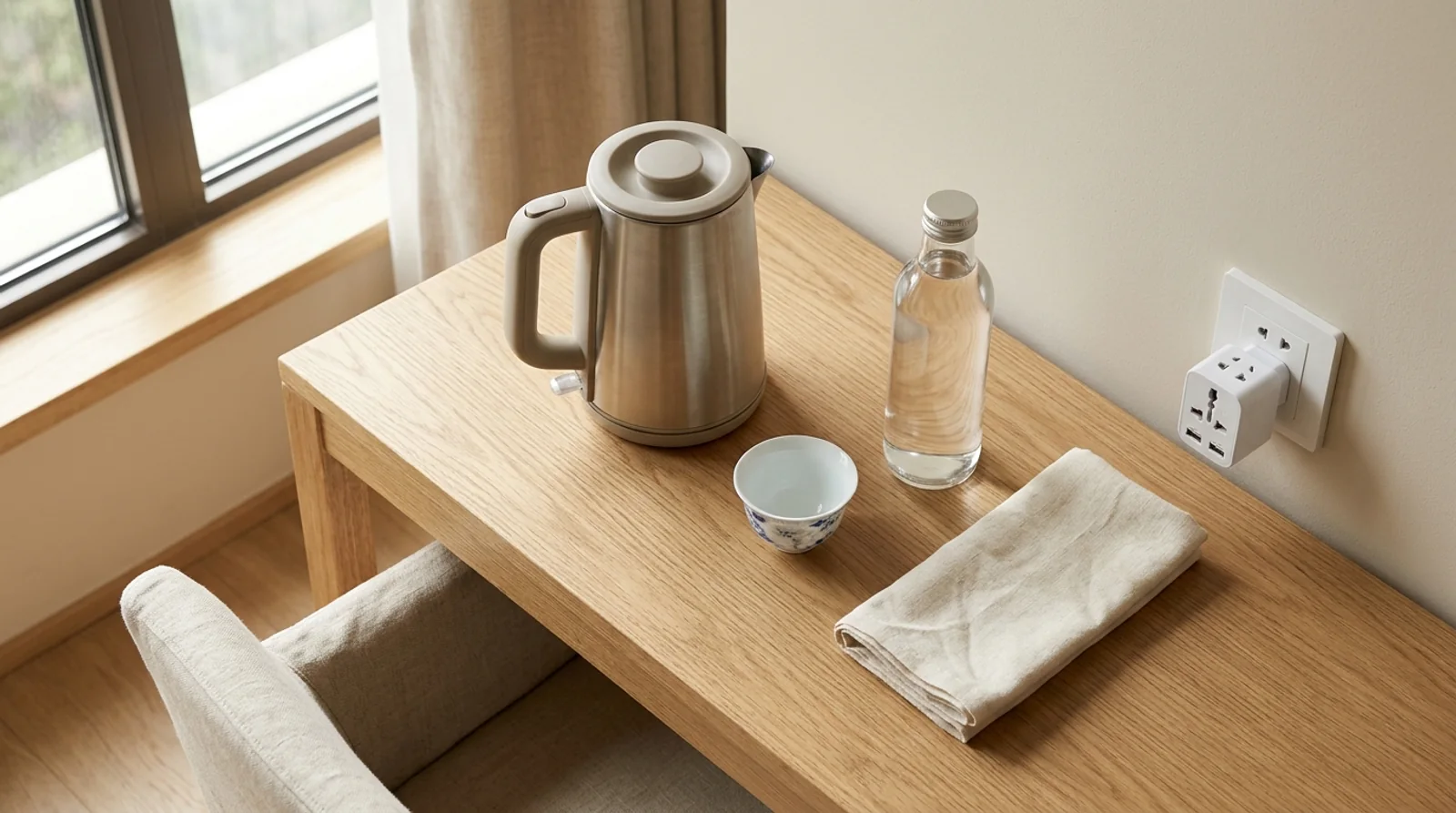
Tipping in China is not expected at restaurants, taxis, or hotels; do not drink unboiled tap water (boil it or buy CNY 2–3 bottled water), bring a universal adapter for 220V Type A/I sockets if you use UK or grounded 3-prong US plugs, and always carry pocket tissues for public restrooms.
Most travel friction in China does not come from big logistics—it comes from small everyday habits that work differently from North America or Europe. Knowing these four basics before you pack prevents awkward restaurant moments, fried hair tools, upset stomachs, and stressful restroom surprises.
Here is the straightforward, no-nonsense breakdown of tipping, tap water, electricity, restrooms, and everyday etiquette across mainland China.
Quick-Reference Sheet: Daily Rules in China
| Topic | Quick Rule | What to Pack / Do |
|---|---|---|
| Tipping | 0% expected at restaurants, bars, taxis, DiDi, and hotels | Pay the exact bill via Alipay/WeChat; optional only for private tour guides |
| Tap Water | Not safe to drink straight from the tap | Use the hotel electric kettle or buy sealed bottled water (CNY 2–3) |
| Power & Plugs | 220V / 50Hz; Type A (2 flat) & Type I (3 angled) (& Type C in most modern sockets) | Bring a universal adapter for UK Type G / US 3-prong Type B plugs; leave 110V hair tools home |
| Public Restrooms | Mix of Western seated & squat stalls; paper often missing | Carry pocket tissues and hand sanitizer daily; flush in modern hotels/airports unless warned, bin paper in older restrooms |
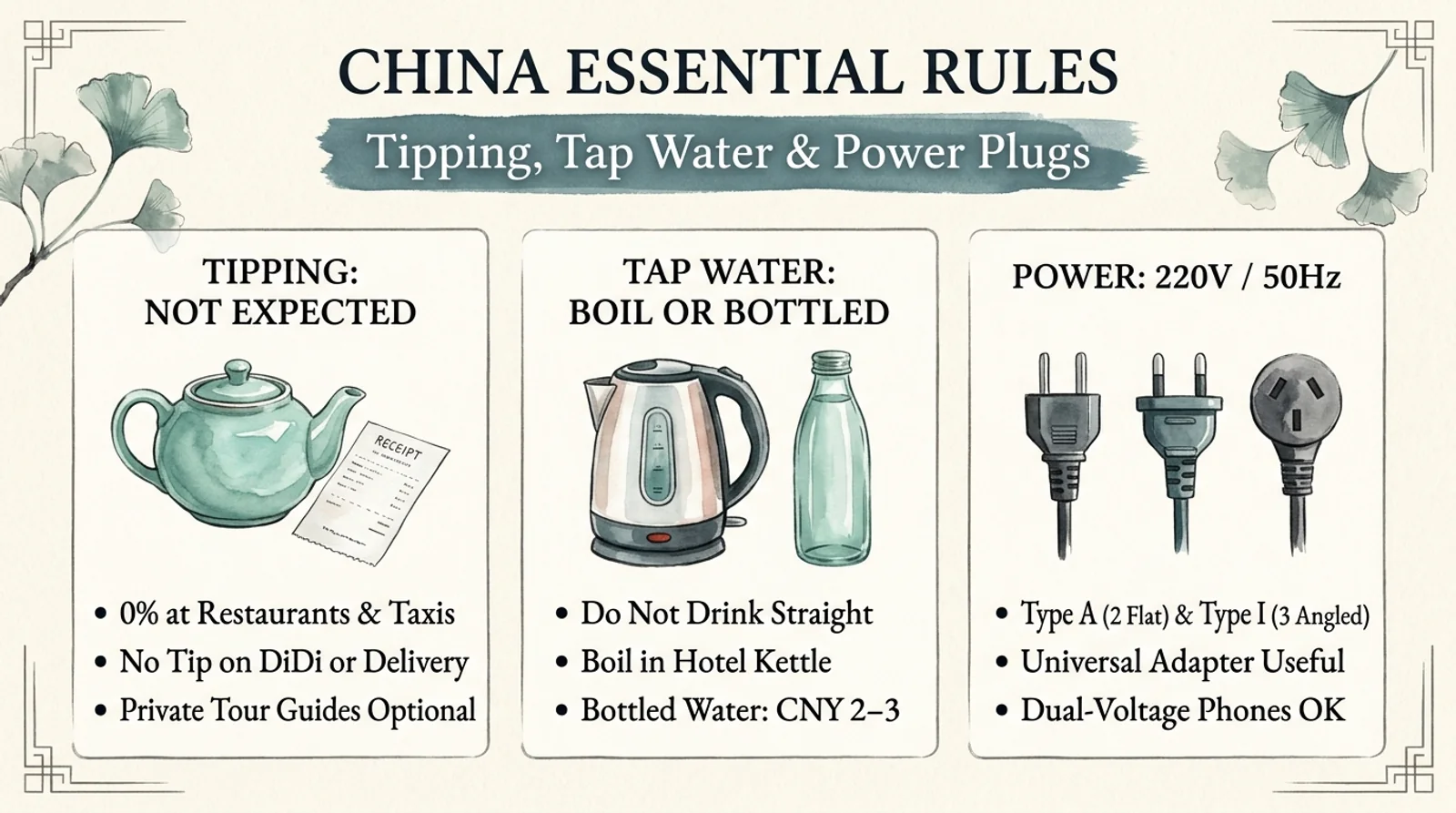
1. Tipping in China: When to Pay Exact Change (And the Only Exception)
Unlike the United States or Canada, tipping is not part of mainland China's service culture.
- Restaurants, cafes, and street stalls: Pay the exact menu total (almost always scanned via Alipay or WeChat Pay—see our Alipay and WeChat Pay setup guide). If you leave cash coins on the table, waitstaff will often run after you assuming you forgot your change.
- Taxis, DiDi, and food delivery: Zero tip expected. DiDi automatically bills the exact fare plus any highway tolls (see our how to use DiDi in China guide).
- Hotels and upscale dining: International five-star hotels and fine-dining venues sometimes add a
10%–15%service charge directly to the receipt. Even then, no extra tip is expected on top. - The one optional exception: If you hire a private English-speaking tour guide or private chartered driver for a full-day excursion (such as a private Great Wall transfer), a modest cash tip (
CNY 100–200per day for a private guide,CNY 50–100for a driver) is optional and warmly appreciated—never mandatory.
2. Tap Water in China: Safe to Drink or Not?
Do not drink unboiled tap water anywhere in mainland China, including major cities like Beijing, Shanghai, Chengdu, and Guangzhou. Although municipal treatment plants purify water before distribution, aging neighborhood and building pipes mean locals themselves never drink straight from the faucet.
- Bottled water is everywhere and cheap: Convenience stores (
7-Eleven,FamilyMart,Lawson) and street kiosks sell 500 ml bottles of sealed mineral or purified water (such asNongfu SpringorC'estbon) for CNY 2–3 (~USD 0.30). - Free hot water everywhere: Almost every hotel room provides an electric kettle (and usually 2 complimentary bottles of water per day). High-speed trains, railway waiting halls, and airports also feature free boiling-water dispensers—bring a reusable insulated thermos if you drink tea or coffee on the go.
- Brushing your teeth: Using tap water to brush your teeth is fine for the vast majority of travelers as long as you spit it out. If you have a particularly sensitive stomach, use your hotel's complimentary bottled water instead.
- Ice and washed fruit: Modern chain coffee shops, international hotels, and reputable restaurants use commercially purified ice. At tiny rural street stalls, skip iced drinks and peel raw fruit yourself.
3. Power Plugs and Voltage in China (220V / 50Hz)
Mainland China runs on 220 volts at 50 Hz. Most modern Chinese wall outlets are built as dual-standard sockets with two slots on top and three angled slots underneath:
- Type A (two flat parallel pins, ungrounded): Fits standard two-prong US, Canadian, and Japanese chargers directly with no adapter.
- Type I (three flat angled pins): Identical to Australian and New Zealand plugs.
- Type C (two round European pins): Fits into the upper two-pin slot of most modern hotel universal sockets, though a loose fit can happen in older walls—pack a compact adapter just in case.
- Plugs that DO NOT fit: UK 3-pin (Type G) and US 3-prong grounded plugs (Type B) will not enter Chinese outlets without a travel adapter.
- Voltage warning for North American hair tools: Smartphones, tablets, laptops, camera batteries, and electric shavers almost always read
INPUT: 100–240Von the brick and work safely with a simple plug adapter. Single-voltage 110V/120V hair dryers, flat irons, and curling wands will overheat or blow a fuse in China—leave them at home and use the hotel hair dryer.
For hotel check-in rules and what foreign guests can expect in Chinese hotels, see our can foreigners stay in any hotel in China guide.
4. Public Restrooms: Squat Toilets, Tissues & the Paper Bin
Public restrooms in China are free and easy to find inside every subway station, shopping mall, park, and museum, with three practical quirks to prepare for:
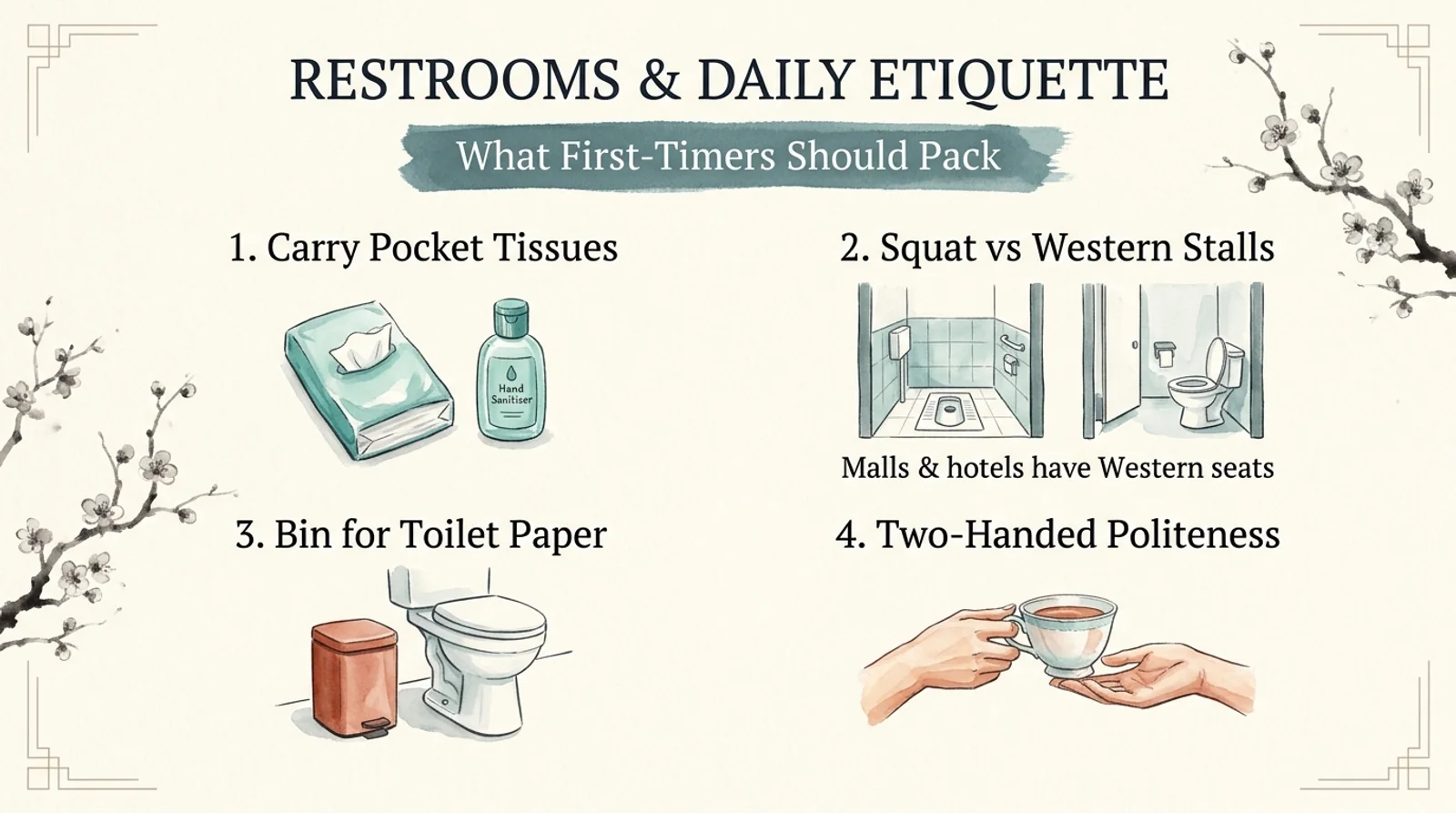
- Always carry a pack of pocket tissues and hand sanitizer: Modern shopping malls, airports, and museums usually stock toilet paper and soap, but neighborhood parks, older subway stations, and scenic trail restrooms frequently do not—or put a single shared tissue dispenser outside the stalls near the entrance.
- Squat vs Western seated toilets: Hotels, upscale malls, airports, and newer museums have Western seated toilets. Older public restrooms and railway stations often feature mostly squat stalls plus one or two Western seated stalls (look for the seated toilet or wheelchair/accessible stall icon on the door).
- Use the wastebasket in older restrooms: In modern international hotels and major airports, flushing toilet paper is generally fine unless a warning sign says otherwise. In older restaurants, trains, and public restrooms, place used tissue in the covered wastebasket beside the toilet because narrow pipes clog easily.
5. Four Everyday Etiquette Rules That Go a Long Way
You do not need to memorize strict formal rules—locals are forgiving of foreign visitors—but four small habits earn immediate goodwill:
- Use two hands when giving or receiving: Handing over a business card, passport, cash, or accepting a cup of tea with both hands (or one hand supported lightly at the wrist) is a classic sign of respect.
- Never stick chopsticks upright into a bowl of rice: Vertical chopsticks resemble incense burned at funerals; rest them horizontally across your bowl rim or on the chopstick rest instead.
- Keep your passport handy for major sights: Real-name ticketing applies to high-speed trains, museums, and major landmarks like the Forbidden City (see our Beijing trip preparation checklist).
- Expect lively, direct crowds: Queuing in busy train stations or street markets can feel tighter than in Europe or North America—keep calm, stay polite, and hold your spot gently rather than taking personal offense.
Putting your full route together? Start with our China 2-week itinerary for first-timers.
Frequently Asked Questions
Do you tip in China?
No. Tipping is not expected at restaurants, cafes, bars, taxis, DiDi rides, or hotels in mainland China. The only common optional exception is tipping a private English-speaking tour guide or private driver on a dedicated day tour.
Can foreigners drink tap water in Beijing or Shanghai?
No. Do not drink straight from the tap anywhere in mainland China, even in five-star hotels in Beijing or Shanghai. Boil tap water using your hotel kettle or buy sealed bottled water (CNY 2–3) at any convenience store.
Do US plugs work in China?
Two-prong ungrounded US plugs (Type A) fit directly into almost all Chinese wall sockets. Three-prong grounded US plugs (Type B) and UK 3-pin plugs (Type G) require a travel adapter. Always check that your device supports 220V before plugging it in.
Are there Western toilets in China?
Yes. All hotels, airports, shopping malls, and modern museums have Western seated toilets. Older public parks, train stations, and rural scenic areas may have mostly squat stalls alongside at least one accessible Western stall.
Should I flush toilet paper in China?
In modern international hotels and major airports, flushing toilet paper is usually fine if no warning sign is posted. In older restaurants, trains, and public restrooms, place used toilet paper in the small wastebasket next to the toilet to avoid clogging narrow pipes.
Last checked: November 21, 2026.