This is a realistic preparation checklist for a first Beijing trip, organized from 2–3 weeks out all the way down to your first hour on the ground. Follow it in order and you'll land with the Forbidden City booked, payments working, and a plan for getting from the airport to your hotel without panicking.

2–3 weeks before your trip
1. Check visa and entry rules
China's visa situation has changed a lot recently, so don't rely on older blog posts or outdated travel guides — go to the source.
- Fastest way to check: run your passport and trip through our visa eligibility checker — it tells you in a minute whether you qualify for visa-free entry, the 240-hour transit policy, or need a full visa.
- The official sources, if you want them: the 240-hour transit visa-free policy page on english.www.gov.cn (it replaced the old 144-hour policy in December 2024 and covers both Beijing airports), plus the expanding list of 30-day visa-free agreements that now cover many European, Southeast Asian, and Latin American countries.
- If it turns out you need a full tourist visa (L), start now and don't wait for the 2–3 week mark — consulate appointments and processing eat time, and this is the one item on the list you can't compress.
Do this first — everything else is easier once you know whether you need a consulate visit.
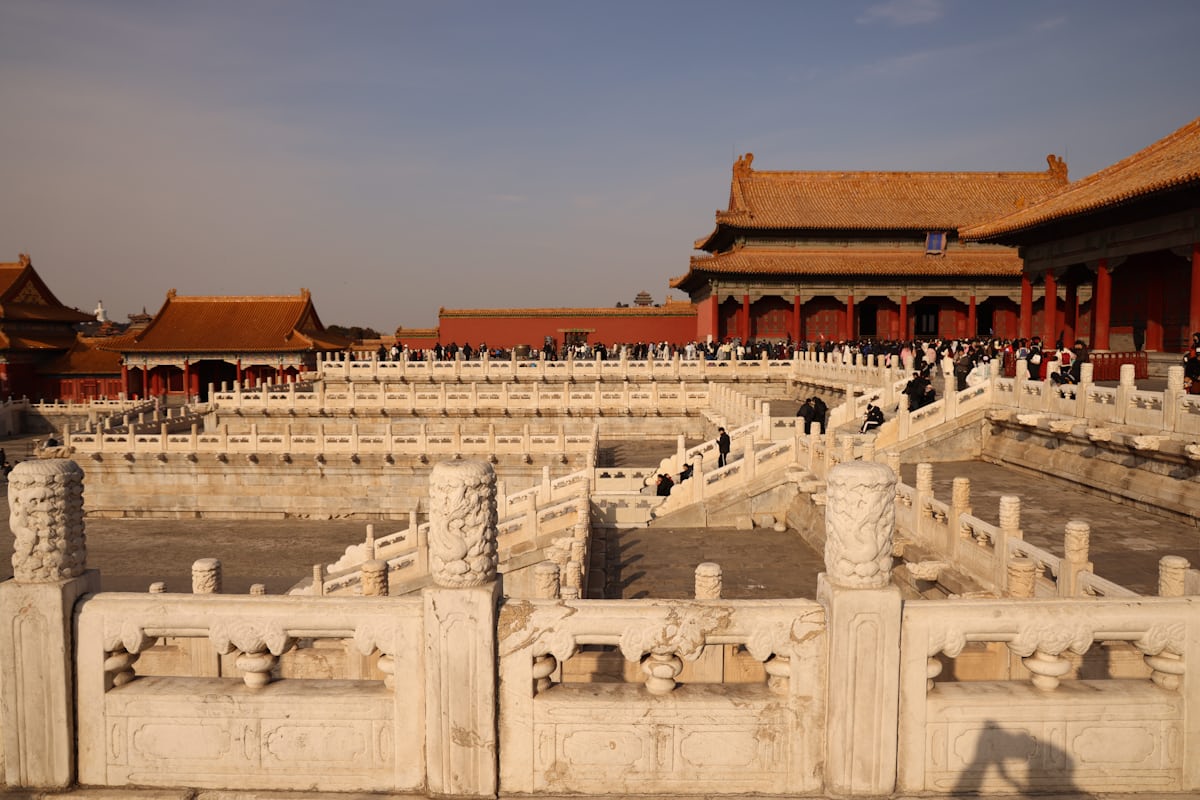
2. Book your Forbidden City ticket
This is the single step most first-time Beijing trips get wrong. The Forbidden City does not sell walk-in tickets — you must book online, with the passport you'll travel with, and the site sells out.
- Official booking site: ticket.dpm.org.cn. Not Trip.com, not a third-party — book directly on the official Palace Museum portal.
- Tickets release 7 days in advance at 20:00 Beijing time. Log in slightly before 20:00 on the release day for your preferred date. Summer weekends and Chinese holidays sell out within minutes.
- Closed every Monday except on Chinese public holidays. If your planned visit lands on a Monday, put the Forbidden City on another day.
- Prices: ¥60 peak (April 1 – October 31), ¥40 off-peak (November 1 – March 31). The optional Treasure Gallery (珍宝馆) adds ¥10 and is worth it for first-time visitors.
- Use your passport number exactly as it appears on the passport you will travel with. A single-character mismatch and the gate will turn you away.
- Entry is one-way: Meridian Gate (午门) in the south, Shenwumen (神武门) out the north. You cannot loop back through.
Do this step before booking hotels — if your preferred date is sold out, you may need to shift your whole itinerary around it.
3. Reserve major hotels
- Central locations near Wangfujing, Qianmen, or the hutong districts save hours of transit over four days. Pick a hotel within a 10-minute walk of a Line 1, Line 2, or Line 5 metro station.
- Any hotel you can book on Trip.com can accept international guests — the old restriction on which hotels could host foreigners has largely been phased out, and Trip.com listings are filtered on your behalf.
- If you're booking outside Trip.com or Booking.com, confirm with the hotel directly that they accept international passports before paying.
1 week before your trip
4. Set up payment apps
Install both Alipay and WeChat Pay before you fly. Do it calmly at home — the verification texts go to your home number, and if your bank flags the foreign transaction, its fraud line is a phone call away — not in an arrivals hall on 8% battery.
- Both apps now accept direct international card binding (Visa, Mastercard, JCB) in the main app — no separate "Tour Pass" workaround needed.
- Every visiting friend I've walked through this found the binding and payments smooth. Per-transaction and daily limits exist but are rarely a problem for normal tourist spending.
- Install both. They don't take up much space, and different merchants prefer different apps — having both means you never have to ask.
Without these, daily life in Beijing — restaurants, metro top-ups, ride-hail, convenience stores — becomes frustrating. Cash is increasingly awkward; many small vendors no longer take it.
5. Install essential apps
- DiDi — the dominant ride-hail app in China. English interface is available in settings.
- Amap (高德地图) or Baidu Maps — Google Maps loads fine on a travel eSIM, but its China map data is thin — missing businesses, patchy walking routes. Download Amap with English toggle enabled; it's what locals actually navigate with.
- Google Translate — download the Chinese offline pack so you can translate menus and signs without internet.
- WeChat — for communicating with hotels, tour guides, and occasionally for booking services that only exist as WeChat mini-programs.
- Trip.com or 12306 — for train tickets if you're continuing to Xi'an, Shanghai, or other cities. Trip.com is easier for foreigners; 12306 is the official Chinese rail app.
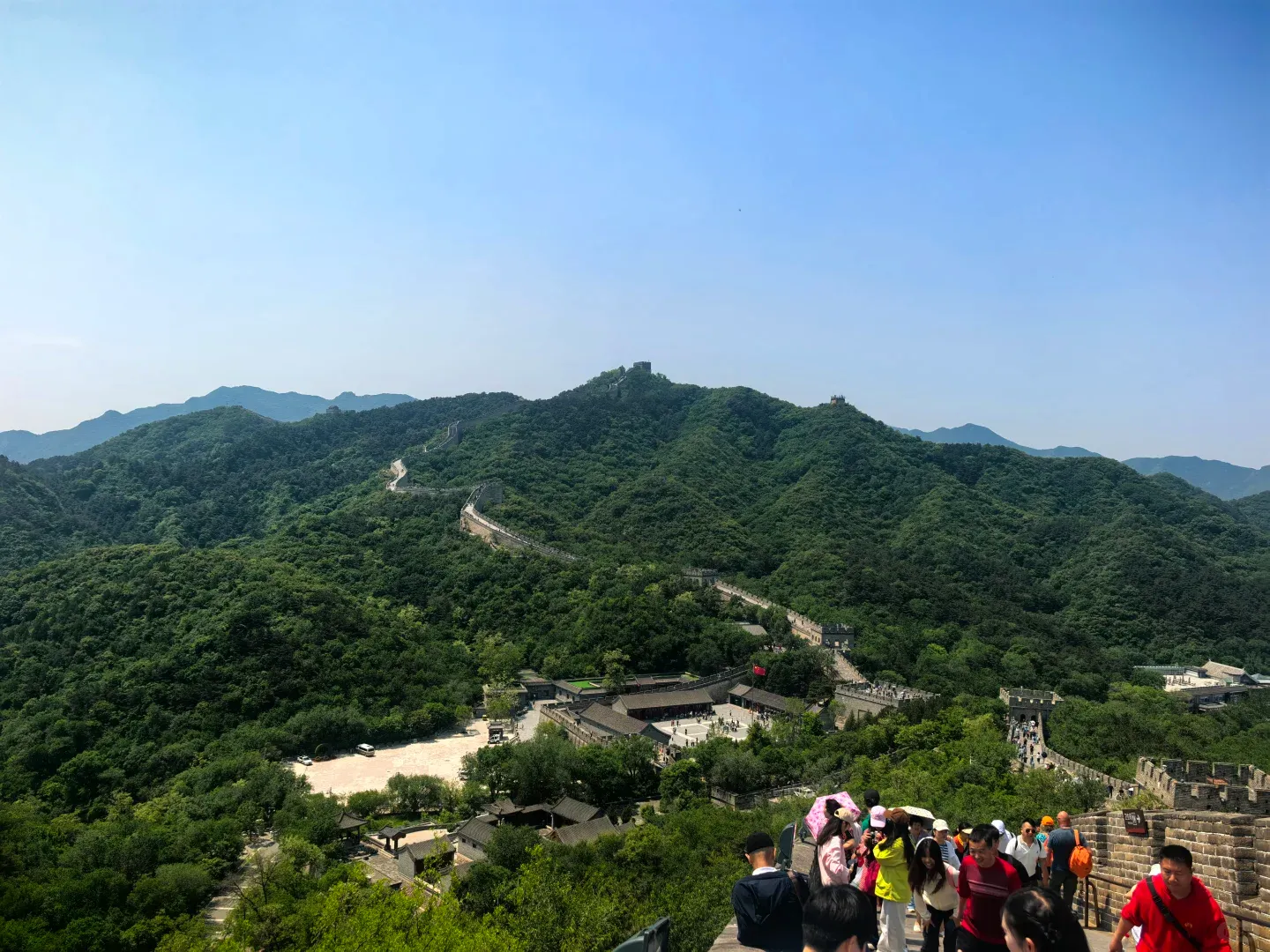
6. Arrange Great Wall logistics
To be clear, this isn't a booking deadline — Mutianyu tickets can be bought the day before (2–3 days ahead for weekends and holidays), and a hotel car can be arranged after you check in. What you want settled a week out is the decision: which section, and how you're getting there. It sets that day's wake-up time and lets the rest of your itinerary lock around it.
- Mutianyu (慕田峪) is the recommended first-timer section. The easiest way to get there is a round-trip taxi or private car arranged through your hotel, typically ¥500–800 shared between travelers. Simple, door-to-door, and you don't spend the morning figuring out transfers.
- A small-group tour via Trip.com or Klook (~¥300–500 per person including transport, ticket, and cable car) is a reasonable alternative if you don't want to organize your own car.
- The tourist bus from Beijing Tourist Distribution Center also runs to Mutianyu with tickets sold via a WeChat mini-program — cheaper but harder to navigate if you don't read Chinese.

2–3 days before your trip
7. Confirm all bookings
- Forbidden City ticket confirmation saved to phone (screenshot, not just email)
- Great Wall transport arranged and confirmed with driver or tour
- Hotel confirmation screenshotted
- Passport number matches all bookings
8. Organize your first-day arrival
This is where tired travelers lose 2–3 hours. Sort it before you fly.
- Check which airport you're arriving at. Beijing Capital (PEK) is closer to the city and has a direct Airport Express metro line to Line 2 / Line 10. Beijing Daxing (PKX) is the newer airport far south of the city — most travelers take the Daxing Airport Express metro line, which is cheapest and most predictable.
- If you land at PKX late at night, the metro may have stopped running. I've done the late-night Daxing arrival, so take this one from experience: your only option becomes a taxi or ride-hail, and the move is to follow the English signs inside the terminal to the official taxi queue — not the drivers who approach you inside the building, some of whom will take the long way around and pad the fare. Have your hotel's Chinese-character address on your phone ready to show.
- Save your hotel address in Chinese characters — copy the Chinese name from Trip.com and screenshot it. Most non-English-speaking drivers need the address in Chinese, not pinyin, to navigate.
- Keep your first meal simple — pick something within a 5-minute walk of your hotel. Day 1 is not the night to hunt down a famous restaurant.
The day before departure
9. Pack the essentials
- Passport + a copy saved to phone (separate from your physical passport)
- Chinese yuan cash — a small amount (¥200–500) for hutong vendors, some taxis, and the rare place that doesn't accept mobile pay. No need to exchange at home: an airport ATM with your regular international debit card is the easiest way to get it on arrival
- Comfortable walking shoes — Beijing days are walking-heavy, especially around the Forbidden City and the Great Wall
- Layers — temperatures on the Great Wall are noticeably colder than in the city, and the wind on the ridge is no joke outside of summer
- Portable battery — translation, maps, QR codes, and payment apps will drain your phone faster than you expect
- Universal adapter for Chinese outlets (Type A, C, and I are common)
- Small daypack for water, a layer, and a portable battery
10. Screenshot everything
Offline access matters. Many apps freeze or refuse to load without internet.
- Forbidden City ticket QR code
- Hotel confirmations (in Chinese, if possible)
- First-day itinerary and key addresses
- Emergency contacts and your embassy's Beijing address
- Passport photo page
First day in Beijing
11. Switch on your travel eSIM
If you followed the eSIM guide, you bought and installed a travel eSIM (Nomad, Airalo, Trip.com, etc.) on home Wi-Fi before you flew — that part can't be done after landing, so if you haven't, do it now, tonight, before the flight. On day one the job is just: turn off airplane mode, switch your data line to the eSIM, and enable data roaming on that line.
The payoff is that Google Maps, Gmail, WhatsApp, and Instagram simply work — travel eSIMs route through Hong Kong or Singapore, outside the Great Firewall, so you don't need a VPN at all. If your laptop needs the same access, hotspot it from your phone rather than fighting with the filtered hotel Wi-Fi.
A local SIM from the airport carrier desks (¥100–200 with a local number) only makes sense if you're staying a couple of months and need a Chinese phone number — it puts you inside the firewall, which means adding a VPN on top, and reliable VPNs in China are a moving target. For a normal trip, skip both.
12. Test your apps before you need them
Do a small test run on your first afternoon, before you're tired and trying to get to dinner:
- Order a short DiDi ride from the airport to the hotel (or hotel to a nearby landmark) — this confirms your ride-hail works
- Pay with Alipay or WeChat at a convenience store — confirms card binding is working
- On eSIM data, load Gmail or Google Maps — confirms your eSIM routing is working and you're outside the firewall
Sorting these out when you're rested and near your hotel is much easier than discovering them broken at 9 PM when you're hungry.
Your "day zero" status check
Before you fly, you should have:
- ✅ Visa or visa-free / 240-hour transit entry confirmed
- ✅ Forbidden City ticket booked with the passport you're traveling with
- ✅ Alipay and WeChat Pay installed, with cards bound and tested
- ✅ DiDi, Amap, and Google Translate installed
- ✅ Travel eSIM bought and installed on home Wi-Fi (the profile can't be downloaded after you land)
- ✅ Great Wall transport arranged
- ✅ Hotel confirmation saved offline in Chinese
- ✅ Packing complete
Get this far and you can actually enjoy Day 1, instead of burning your first afternoon on admin.
Continue planning
- For the trip structure: The Perfect 4-Day Beijing Itinerary
- For mistakes to avoid: 7 Common Mistakes First-Time Visitors Make in Beijing
- Not sure how long to stay? How Many Days in Beijing?
- Back to the Beijing destination overview