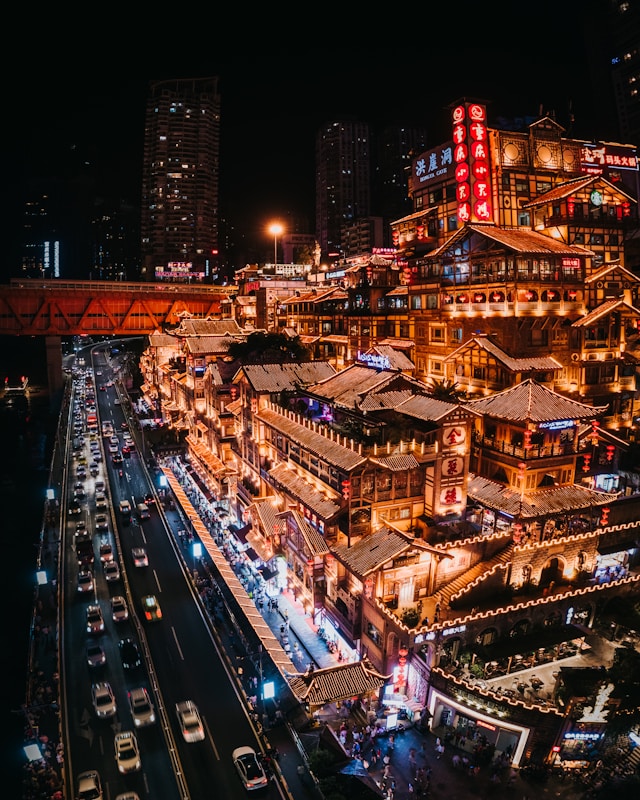
Chongqing is the city most first-timers don't expect — a 32-million-person megacity built on mountains where the metro runs through an apartment building, the river cuts the city in two, and dinner is usually hotpot so spicy your lips go numb. If Beijing is imperial China and Shanghai is skyline China, Chongqing is the version that feels most like the future arrived early and decided to live on a cliff.
This overview covers the shape of a Chongqing trip. For the hotpot decoder, day-by-day plan, and the Wulong / Dazu day trips, the detailed articles linked below go deeper.
Why Chongqing surprises people
Three things make Chongqing different from anywhere else on a standard China route:
- The terrain. Chongqing is the only major Chinese city seriously built on hills. A building you enter on the "1st floor" might have its other side on the "15th floor." Google Maps' walking time often lies.
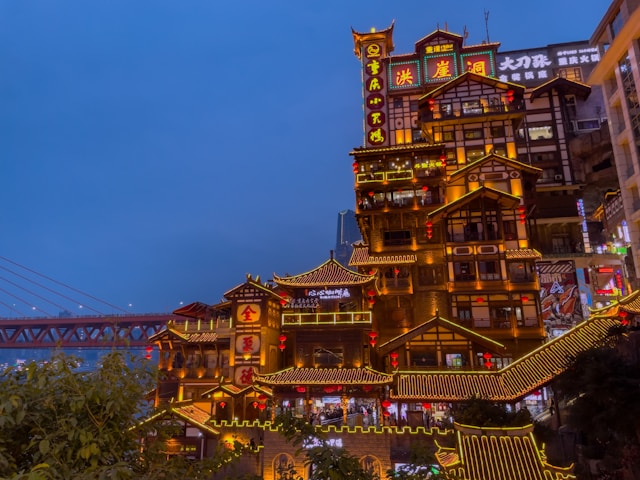
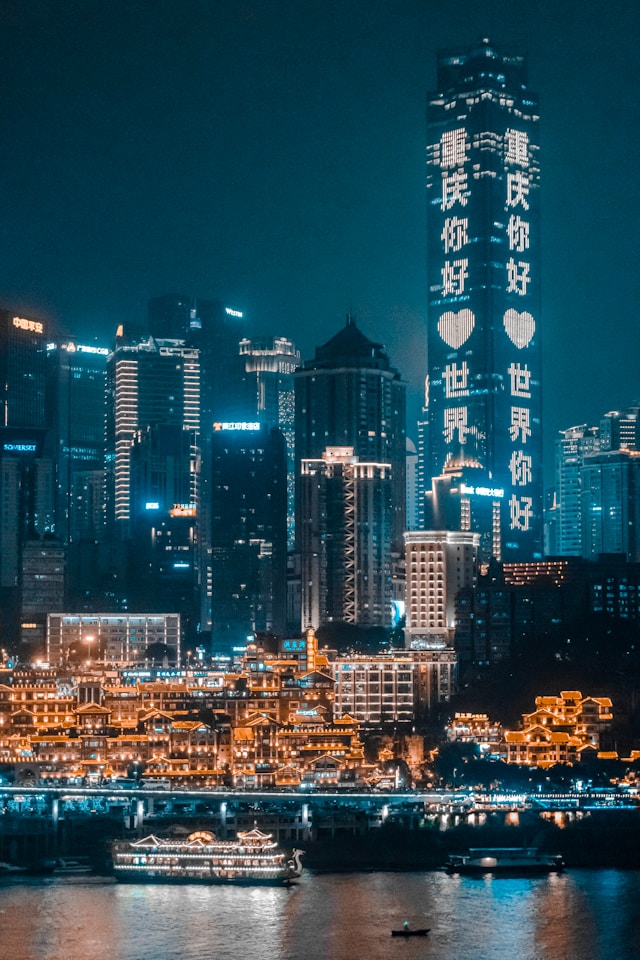
- The night view. Hongya Cave at night is the closest thing China has to walking into a Studio Ghibli set. Crowded, still worth it.
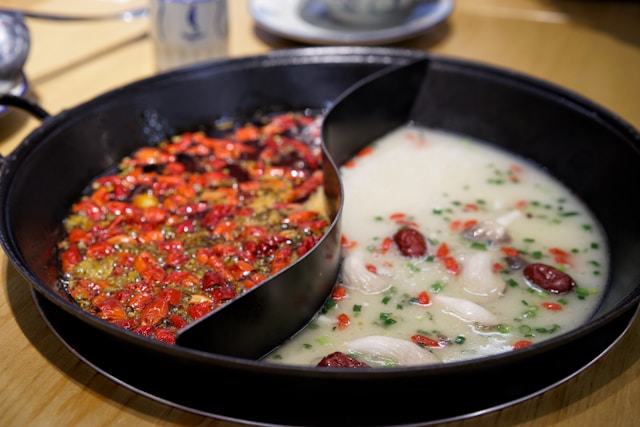
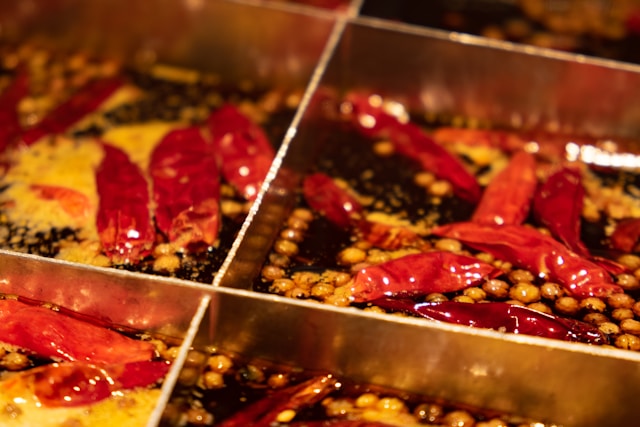
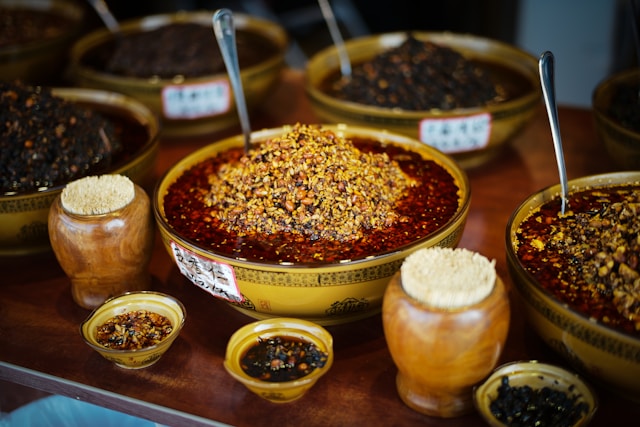
- Hotpot is the city's social life. This isn't a "must-try local dish" line — Chongqing genuinely runs on hotpot. The 麻辣 (mala — spicy + tongue-numbing) flavor you'll find across China traces back to here.
You don't need to speak Chinese to enjoy Chongqing, but pointing at pictures is sometimes the most reliable ordering strategy.
Who Chongqing suits best
Chongqing is a strong stop if you want:
- A megacity that feels nothing like Beijing or Shanghai — vertical, neon, river-cut
- Spicy food at a level Chengdu actually scales down from
- A natural pairing with Chengdu (high-speed rail, ~1.5h) or as the starting point of a Yangtze River cruise down to the Three Gorges
If your trip is mostly about history and imperial sites, Chongqing isn't the strongest pick — its character is modern + dramatic geography + food. Pair it with Chengdu for the full Sichuan-Chongqing arc, or with a Yangtze cruise if you have 4 extra days.
Signature experiences
Most first-time visitors build their Chongqing stay around these:
- Hongya Cave (洪崖洞) at night — the stilted folk-style building stack lit up over the Jialing River. Free. Shoot it from Qiansimen Bridge on the opposite bank; lights look best after 20:00.
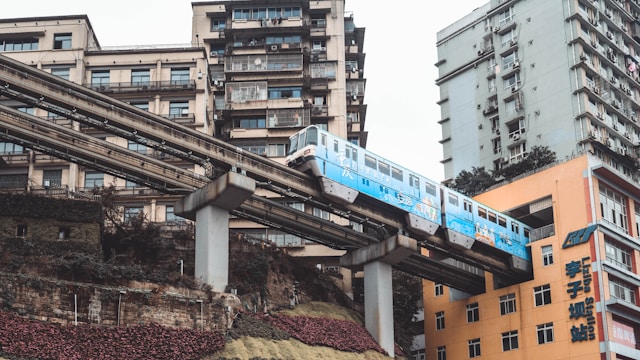
- Liziba Light Rail Station (李子坝) — Line 2 metro that runs through a residential building. The free viewing platform across the road is the only sensible spot.
- Liberation Monument (解放碑) area — the original downtown core, dense with hotpot, malls, and street life.
- Ciqikou Ancient Town (磁器口) — a 1000-year-old riverside village, now mostly snacks and souvenir shops. Free, busy on weekends.
- Chongqing Zoo pandas (重庆动物园) — one of the biggest panda populations in any Chinese zoo. ¥25, metro Line 2 to Dongwuyuan. Easier panda fix if you're skipping Chengdu.
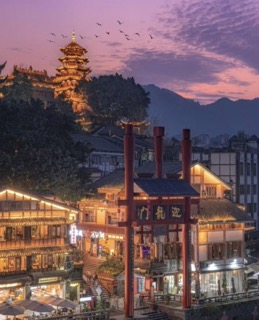
- Eling Park (鹅岭公园) / Yikeshu (一棵树) — the two best places to see Chongqing's skyline from above.
- Chongqing hotpot — pick a 鸳鸯锅 (yuanyang — split pot, half spicy half clear broth) on your first night if you're not used to mala. Big local chains like Liuyishou and Xiaolongkan are safer than random spots when you can't read the menu.
Each of these has a detailed write-up in the articles below.
Day trips and the Yangtze cruise
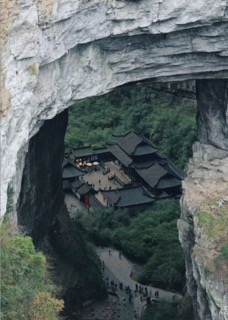
Two UNESCO day trips are worth it: Wulong Three Natural Bridges (武隆天生三桥) — the Transformers 4 / Curse of the Golden Flower karst landscape, ~38 min by high-speed train from Chongqing East — and Dazu Rock Carvings (大足石刻), Tang/Song Buddhist cliff sculpture that's much calmer than Mogao or Yungang.
Chongqing is also the standard start of the Three Gorges cruise — 4 days / 3 nights downstream from Chaotianmen Pier. Book cabins in advance; it's not a walk-up dock.
How many days
Most first-timers do Chongqing in 2–3 days: one for the central spine (Hongya Cave, Liziba, Liberation Monument, hotpot), one for Ciqikou plus a skyline viewpoint, and an optional third for Wulong, Dazu, or the zoo. Add 4 more if you're doing the Yangtze cruise.
Quick orientation
- Best time to go: late March to early May, and October to mid-November. Chongqing is one of China's "Three Furnaces" — July and August regularly hit 40°C with heavy humidity. Winters are mild but grey.
- Getting around: metro covers most of the city — Line 2 along the Jialing is one of the most scenic routes in China. Walking inside a neighborhood is fine; cross-district walks are deceptively brutal because of the hills. DiDi for everything else. Don't trust map walking estimates — vertical distance isn't in them.
- Airport: Chongqing Jiangbei (CKG). Metro Line 10 plus one transfer to Liberation Monument runs around an hour; DiDi is ~28 minutes / ¥30 in light traffic.
- Payment: set up Alipay and WeChat Pay before you fly. Both now let foreign visitors link Visa / Mastercard / JCB.
Before you get into the details
A few practical basics are worth locking in before landing:
- Visa and entry rules (China's visa-free list has expanded significantly in 2024–2026, including the 240-hour transit policy)
- Alipay and WeChat Pay setup
- Essential apps — Didi for ride-hail, Dianping for restaurants, Amap or Baidu Maps, a VPN if you need Google
- High-speed rail booking if you're chaining with Chengdu or continuing to Xi'an
For deeper reading — hotpot decoder, day-by-day itinerary, Wulong logistics, and the Yangtze cruise — scroll down to the related articles below.