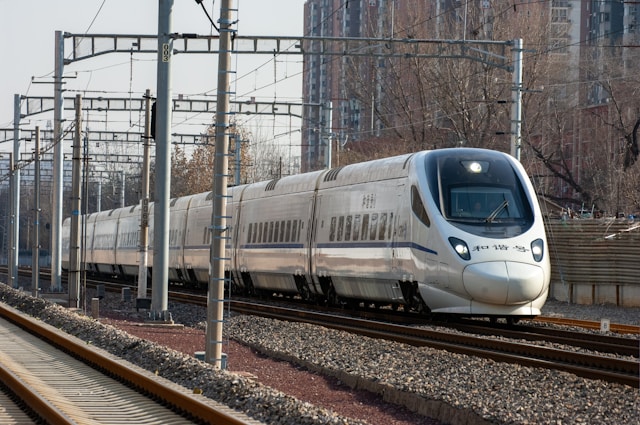
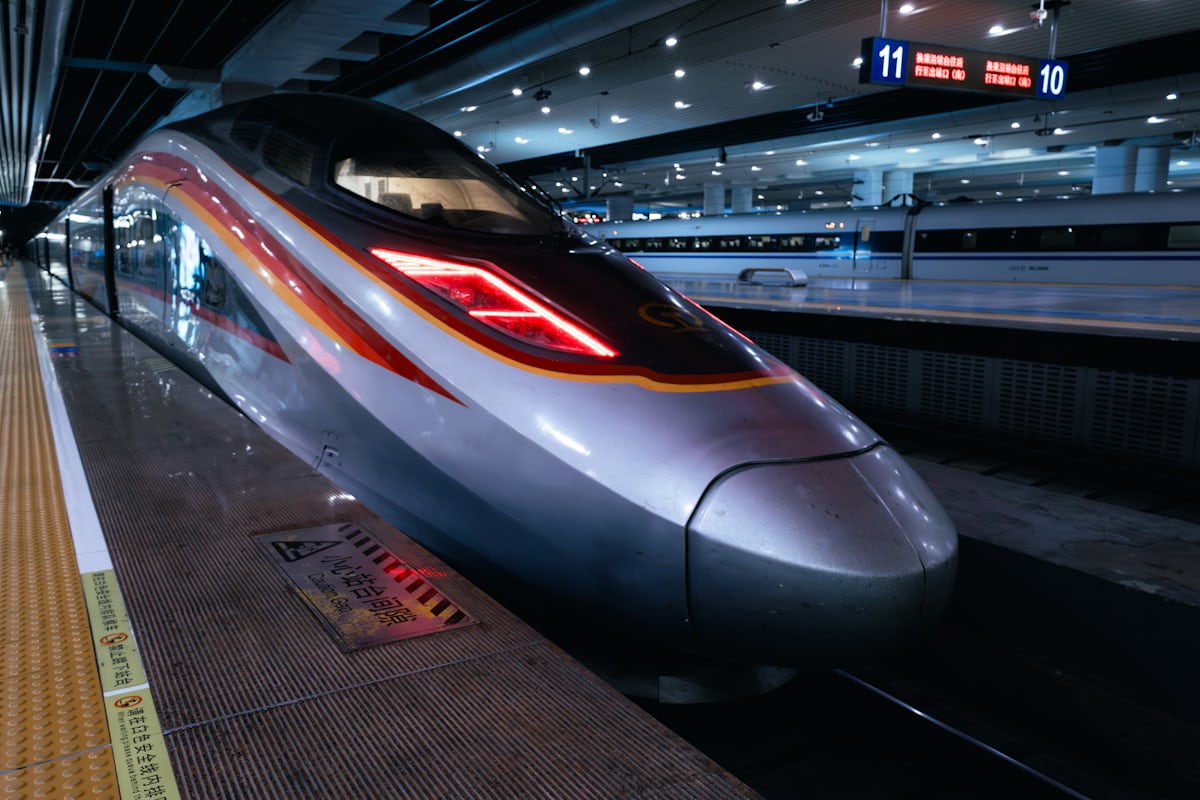
Beijing to Xi'an is the classic first-China-trip leg — capital to Terracotta Warriors, about 1,200 km, roughly New York to Chicago. The bullet train does it in 4 to 5.5 hours depending on the departure (the fastest morning train does it in about 4 hours 10 minutes, touching 350 km/h on the open stretches), and a second-class seat runs around ¥575.
Here's the thing that makes the train the default answer on this route: the price is fixed. Train fares in China don't fluctuate — the 9:55 tomorrow costs the same as the 9:55 three weeks from now. Flights between these two cities swing from ¥400 promo fares to over ¥1,000 for a convenient afternoon slot. Add the fact that the train lands you inside Xi'an's metro network instead of at an airport 40 km out of town, and it takes a specific reason to fly this one.
The one mistake that actually ruins this trip: the wrong station
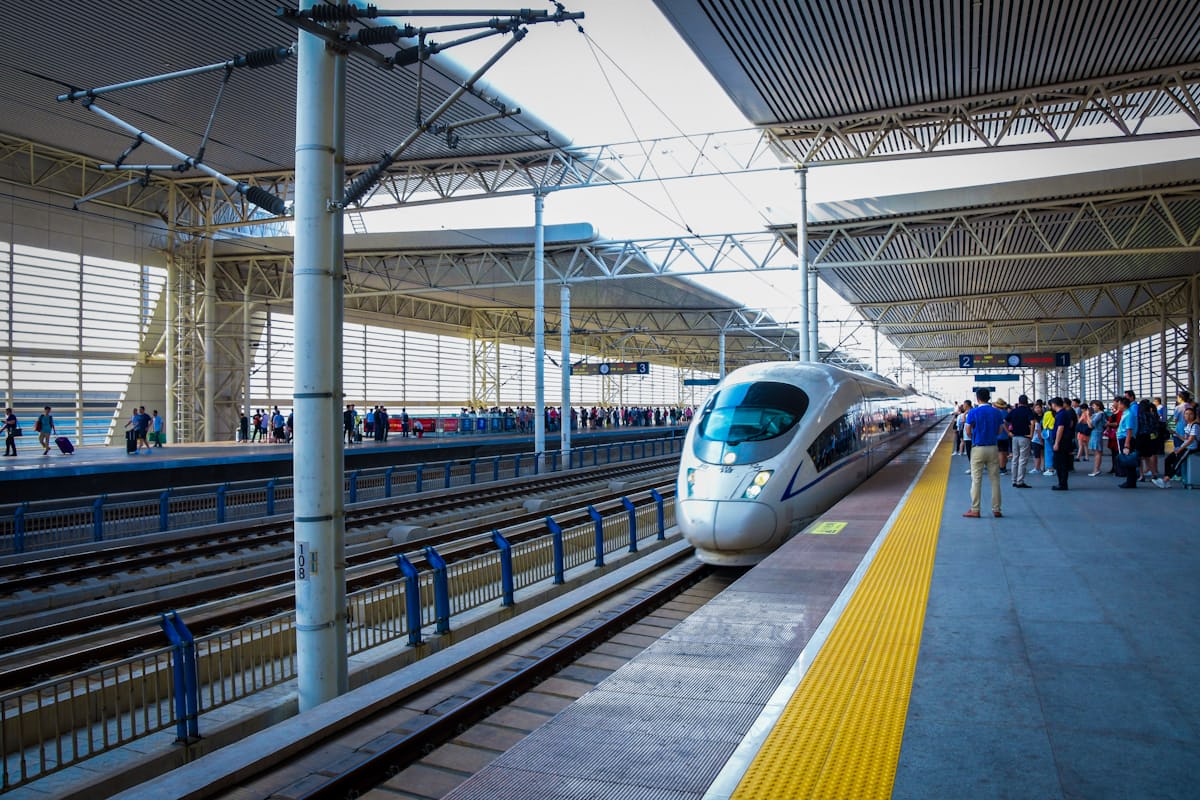
Chinese cities don't have "one" train station, and this is where first-timers get burned. Beijing has four major stations — most Xi'an trains leave from Beijing West (北京西), some from Beijing Fengtai (北京丰台), and "Beijing" station is a completely different building half a city away. Read the station name on your ticket like it matters, because it does.
Getting to Beijing West: Metro Lines 7 and 9 stop directly inside the station; a DiDi from a central hotel takes 45–60 minutes and longer in rush hour. Either way, the station itself is enormous — give yourself 20 minutes just to get from the entrance to your waiting area.
On the other end you'll almost certainly arrive at Xi'an North (西安北), about 12 km from the old city walls. Metro Line 2 runs straight into the center in about 40 minutes and is honestly the smarter choice — a DiDi is ¥32 on the fixed-price option and takes half an hour on paper, but traffic into the walled city is chronic and it can easily become an hour. If you're arriving at rush hour, take the metro and don't look back.
Book a hotel inside the old city walls — the station area itself is nothing but station.
Booking
Two apps cover it. Trip.com has a full English interface, takes international cards, and charges a small service fee — easiest for a first booking. 12306, the official rail app, is fee-free and lists every train, with English support that's serviceable but not polished. Get the ticket as soon as your dates are fixed; this is a busy corridor and the good departure times go first, especially around Chinese holidays.
Look for the G-prefix trains — those are the fast ones. (There's also an overnight D-train sleeper that takes about 11 hours, which is a legitimate budget move: a bunk costs less than a hotel night and you wake up in Xi'an. But for most first trips, the 4-hour daytime run wins.)
At the station: your passport is your ticket
There's no paper ticket and nothing to print. The passport number you booked with is the ticket — bring the physical passport, not a photo of it.
The flow, once inside:
- Arrive 45 minutes early. Security is airport-style but faster; no lighters, and power banks over 100Wh get confiscated.
- Find your train on the big departure board — it shows the waiting area and boarding gate.
- At the ticket gate, look for the lane marked "Outside Mainland" (外国人) — at bigger stations the gate reads your passport directly; elsewhere a staff member scans it and waves you through.
- Boarding opens 10–20 minutes before departure and closes a few minutes before the train moves. Chinese trains leave exactly on time — this is not a "they'll hold it for stragglers" system.
The ride
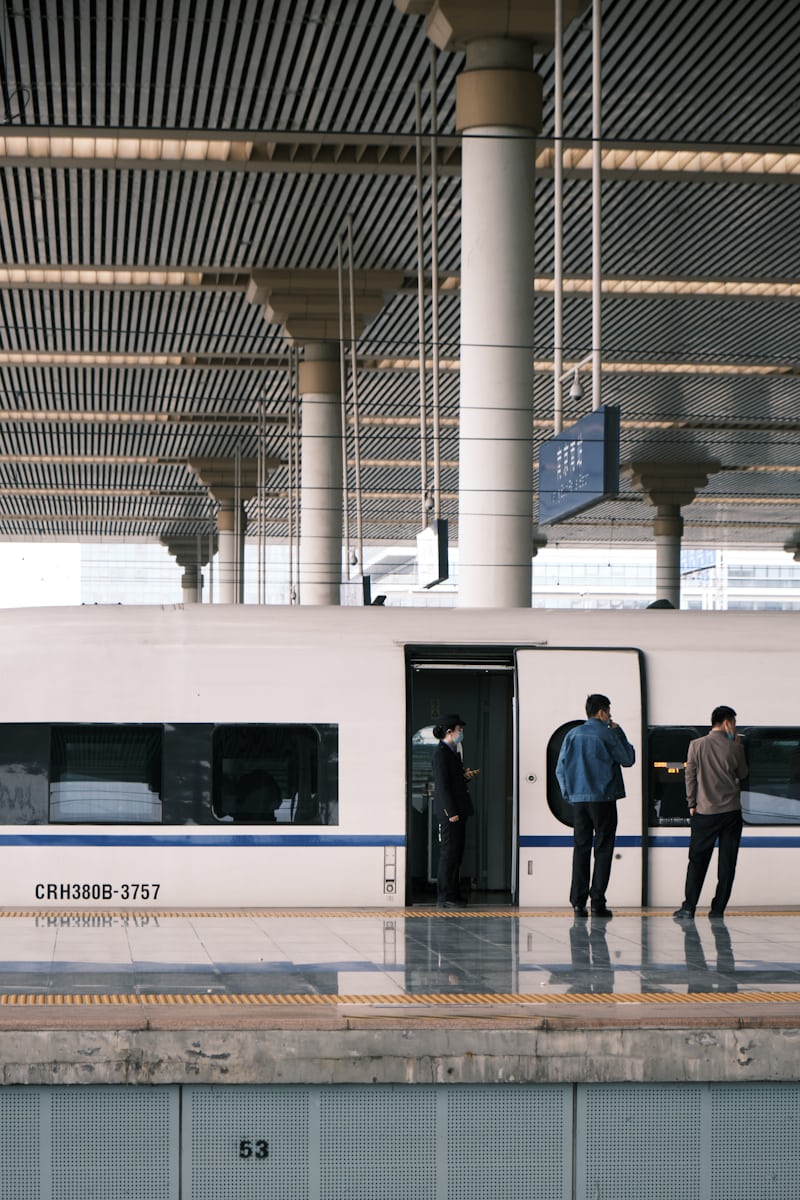
Smooth enough to work through, quieter than a plane, power outlets at every seat. Don't count on the Wi-Fi — download what you need beforehand. A cart rolls through with boxed meals, snacks and coffee at mildly inflated prices, and every carriage has a free hot-water dispenser at the end — bring tea bags or instant coffee and you're set. (The classic Chinese train ritual of a cup of instant noodles is technically allowed but has become a mild controversy — the smell carries in a sealed cabin, and some trains now politely discourage it over the PA. You'll likely still see people doing it; just know what you're signing up for.)
The scenery is honest north-China farmland — the Yellow River crossing and the loess hills of Shanxi are the two moments worth looking up for. This is a transit leg, not a scenic railway; treat it as four hours of catching up on your trip notes.
When flying actually makes sense
Almost never on this route, but for completeness: promo fares (around ¥400 before fees) can undercut the train, and the flight itself is only two hours. What eats the savings is everything else — Xianyang Airport sits 40+ km from central Xi'an (a ¥58 DiDi or an hour on the airport line), you'll want to be at the airport 90 minutes early, and delays on this corridor hit planes far more often than trains. Door to door, the train wins on time, and its fixed pricing wins on predictability. Fly only if a rock-bottom fare lines up perfectly with your schedule.
Continue planning
- For the Beijing side of the trip: The Perfect 4-Day Beijing Itinerary
- The Xi'an side: The Perfect 2-Day Xi'an Itinerary
- For everything to sort before you fly: Beijing Trip Preparation Checklist
- Back to the Beijing destination overview