Two days in Hangzhou is enough for West Lake, the original Longjing tea village, and Lingyin Temple — the three things almost every first-time visitor actually wants to see. This plan assumes you arrive from Shanghai by high-speed rail (1 hour to Hangzhou East) on the morning of Day 1 and leave Day 2 evening. If you have three days, swap one of Day 1's afternoon stops for a half-day at Xixi Wetland or a Qiantang River detour.
Where to stay: the Hubin (湖滨) area on the east shore, or Wulin Square (武林广场) five minutes north by metro. Both put you within a 10-minute walk of West Lake. Skip cheap deals out in Future Sci-Tech City (城西) — those hotels are 40 minutes from the lake by taxi and you'll burn an extra hour each way.
Day 1 — West Lake on foot, Leifeng at sunset
Morning: Bai Causeway and Broken Bridge
- Walk from Hubin to Broken Bridge (断桥) at the lake's northeast corner — about 10 minutes
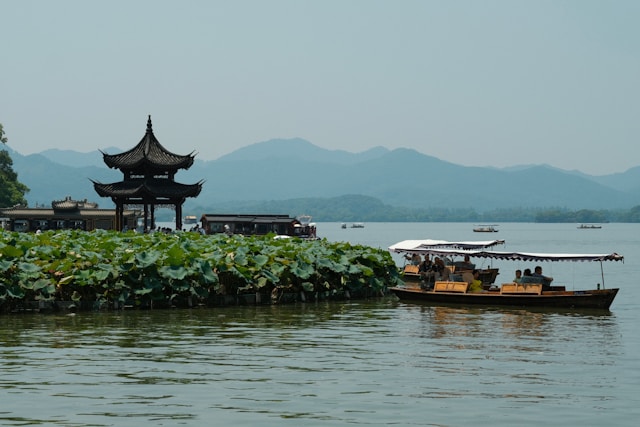
- From Broken Bridge, follow the Bai Causeway (白堤) west across the lake. The causeway is named after the Tang poet Bai Juyi, who governed Hangzhou in the 820s and made the lake famous in his poetry. Successive dynasties kept rebuilding the earthwork as a tribute, and today it's the busiest and most-photographed stretch of West Lake — go early to beat tour groups
- Causeway ends at Gushan Island (孤山), a small lake-island. The interesting stop here is the Xiling Seal-Engraving Society (西泠印社), founded 1904 — one of the last living traditional Chinese calligraphy and seal-carving societies, still operating from its original hilltop garden. Skip the larger Provincial Museum unless you specifically came for ceramics
- Time: 1.5–2 hours
Late morning: cross the lake
Two ways from Gushan to the south shore, and the obvious one is the wrong one:
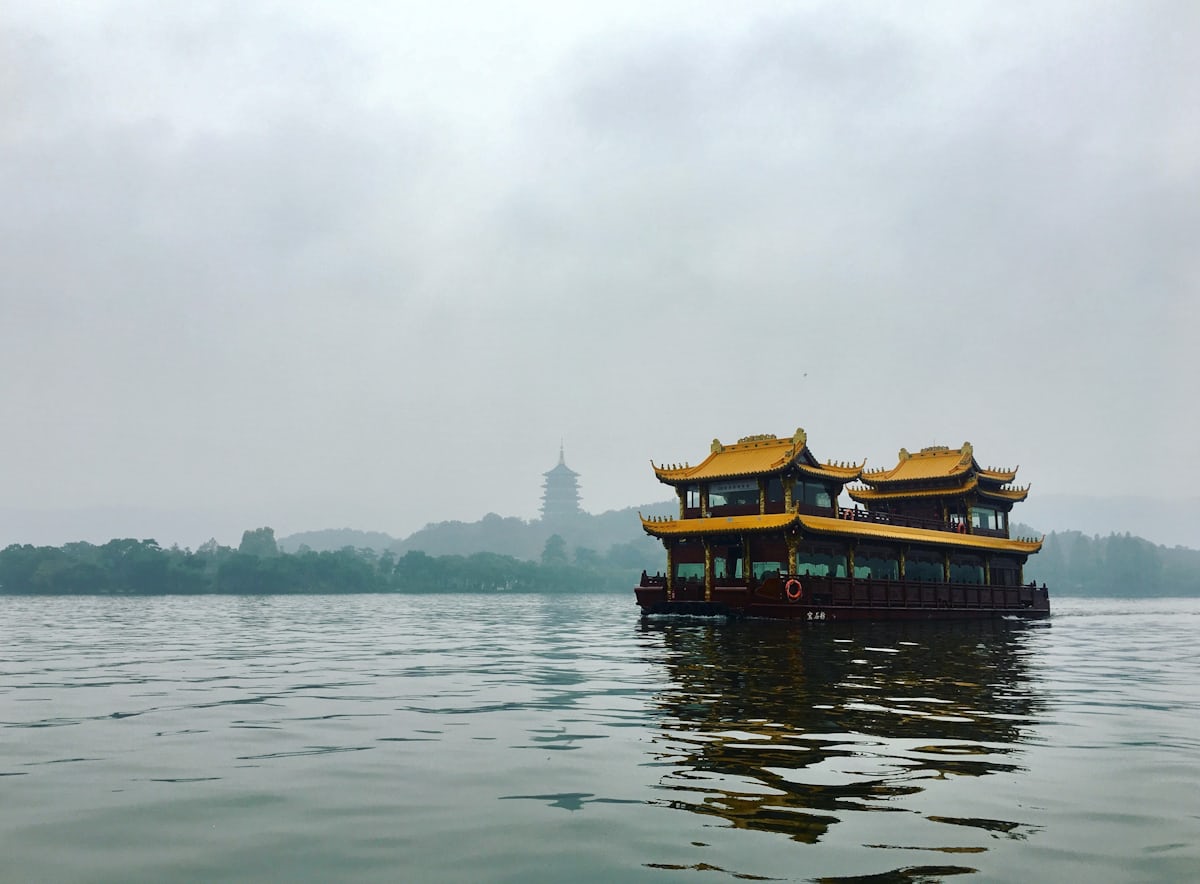
- The public commuter boats — ¥6 per stop. West Lake has a network of small water buses running fixed routes across the lake, with several stops you can hop off at. Scan the QR code on board to pay; ride one segment for ¥6, or chain a couple together if you want to see more of the lake from the water. This is what locals use, and most foreign visitors miss it entirely
- Don't take the ¥30 "sightseeing boats" that boatmen near the docks will steer you toward — they're aimed at tour groups, route is fixed, and you can't hop off mid-lake
- Or walk the Su Causeway (苏堤) south — 2.8 km, about 40 minutes. Su Dongpo built this in 1090 when he dredged the lake during his second posting as Hangzhou's governor. Longer than Bai Causeway and noticeably emptier; rent a share-bike at the north end if you don't want to walk
Lunch: calibrate your food expectations first
One thing about Hangzhou that no English guidebook tells you: among Chinese travelers, the city has the half-joking nickname "food desert" (美食荒漠) — a verdict my Sichuan palate endorses, with affection. Chinese food culture ranks regional cuisines by intensity and identity — Sichuan numbness, Cantonese seafood, Beijing duck, Shanghai red-braised — and Hangzhou cooking (杭帮菜) lands at the subtle end: lightly sweet, lightly sauced, more about ingredient delicacy than punch. Come to Hangzhou for the lake, not for a culinary highlight. Once you've adjusted that expectation, the food is fine — even genuinely lovely in spots — but it's a peaceful tier below Chengdu or Shanghai.
The famous lakeside spot Lou Wai Lou (楼外楼), founded 1848, is right here on the south shore. Honest take: prices are 2–3× what you'd pay at a normal restaurant, and the signature West Lake fish in vinegar sauce (西湖醋鱼) is genuinely polarizing — the sweet-sour vinegar sauce on bony grass carp lands well for some people and falls flat for others, regardless of where you grew up. Worth one visit for the 178-year-old heritage dining rooms and to say you've tried the Hangzhou icon — but don't expect this to be your favorite meal of the trip.
Walk back along Nanshan Road (南山路) and pick a smaller restaurant with locals inside. Two Hangzhou dishes worth trying:
- Dongpo pork (东坡肉) — slow-braised fatty pork belly in soy sauce and rice wine, named after the same Su Dongpo who built the causeway. Pricing reality check: at a touristy lakeside restaurant, a single 5cm cube of dongpo pork can run ¥20. Hangzhou cooking is not a cheap cuisine even at simple-looking restaurants, and the lakeside markup is real
- Longjing-tea river shrimp (龙井虾仁) — small river shrimp stir-fried with fresh Longjing tea leaves, much better than it sounds
Safer middle-ground option: Green Tea Restaurant (绿茶 / Lǜchá). A Hangzhou-born chain now in most major Chinese cities, reliable jiangzhe cooking at fair prices. Don't miss their signature dessert Bread Temptation (面包诱惑) — a hollowed-out bread loaf filled with vanilla ice cream, served warm on the outside and cold inside. It's the rare Hangzhou dish that even people who normally prefer bold spicy cuisines (Sichuan, Hunan) end up genuinely loving — a useful tiebreaker if your group is split on Hangzhou food.
Afternoon: Leifeng Pagoda
- Ticket: ¥40
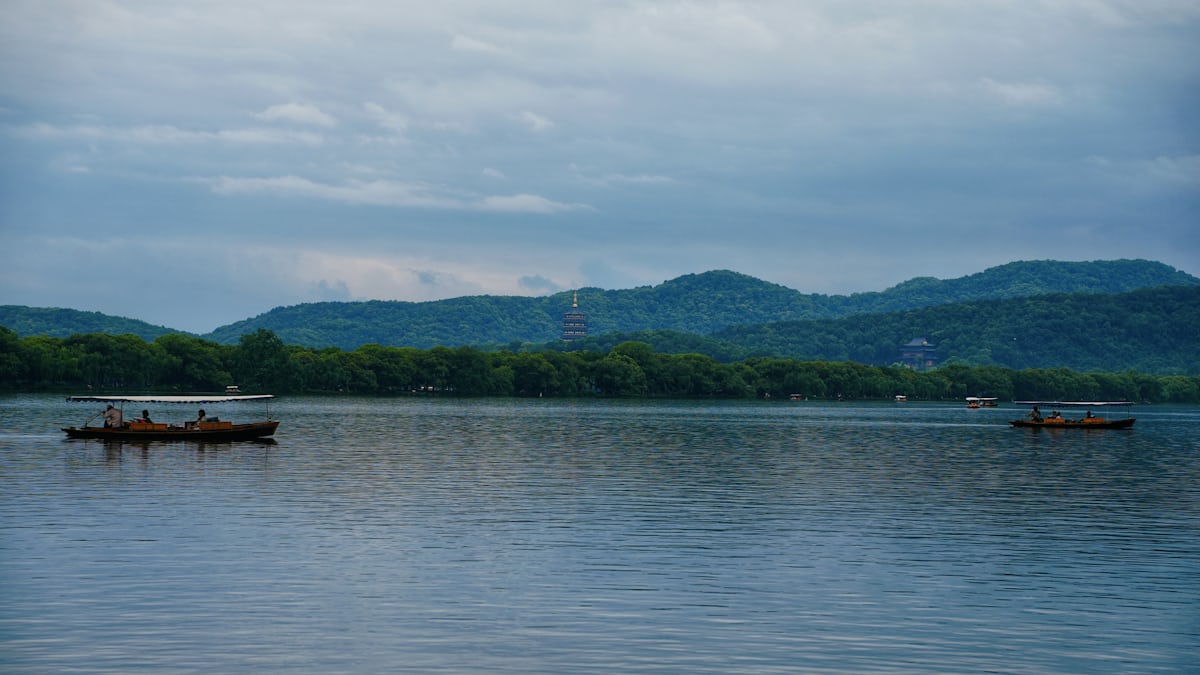
- The current pagoda was rebuilt in 2002 with an interior escalator — the original Song Dynasty wooden tower collapsed in 1924, so don't go expecting an ancient temple. The reason to go up is the panoramic view of West Lake from the top floor, especially in the hour before sunset, looking north over the lake with Bai Causeway and the city skyline framed against the water
- Time: 1.5 hours including the climb and view time
Evening: dinner near the lake
- Walk back toward Hubin and pick a side-street restaurant off Nanshan Road or Pinghai Road — almost any one will be cheaper and better than lakeside tourist spots
- Hefang Street (河坊街) is 15 minutes east — Hangzhou's official "old street," but mostly souvenir stalls and rebuilt facades, similar to Beijing's Nanluoguxiang or Chengdu's Jinli. Worth a 30-minute stroll if you've never seen one of these in China; safe to skip if you have
- Back to your hotel by 9:30 — Day 2 starts early
Day 2 — Tea country and Lingyin Temple
Morning: Longjing Village and the 18 Imperial Tea bushes
- DiDi from your hotel to Longjing Village (龙井村) — 25–30 minutes, ¥30–45
- This is the original-origin village for Longjing (Dragon Well) green tea, the most famous green tea in China. In 1762, on his third southern tour, the Qianlong Emperor stopped at the village's Hugong Temple (胡公庙), drank tea brewed from the bushes growing in front of it, and declared 18 of those bushes "Imperial Tea (御茶)." The 18 bushes are still there today, fenced off and labeled, and tea farmers around the village still claim direct lineage from them — which is why a jin (500g) of Longjing-village tea can cost several times the same grade grown elsewhere
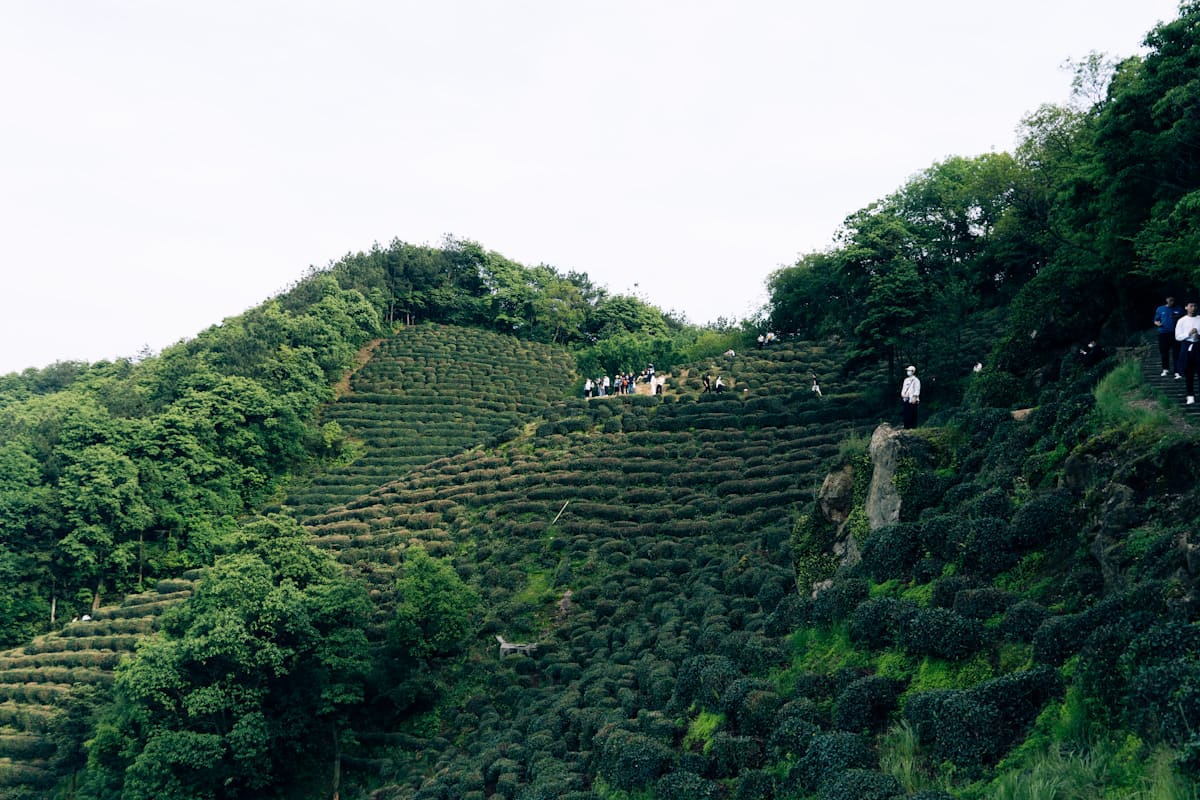
- Walk the tea-terrace paths above the village (no entry fee), then back down for a tasting at one of the family-run tea houses on the main street
- Tasting price reality check: ¥80–200 for a flight of three grades is normal at family tea houses. The price ladder goes much higher — ¥500, ¥1,000, ¥3,000+ per jin (500g) for "Master grade" or "pre-Qingming first picking." But here's the honest part: most casual drinkers, including Chinese locals, struggle to tell the top grades apart in a blind side-by-side taste. The high-end pricing is mostly driven by China's gift-and-business-favor market, not by a dramatic flavor difference. Stay in the ¥80–200 range and you'll get essentially the same experience for 1/10th the price
- Time: 2.5 hours including a tasting
Optional add-on: Jiu Xi 18 Streams hike
For an extra hour and a "non-tourist" Hangzhou experience, hike from Longjing Village down to Jiu Xi Shi Ba Jian (九溪十八涧) — a forested stream valley that locals walk on weekends. The path drops gradually southwest through tea hills and bamboo to the stream, ending near the Qiantang River. Roughly 4 km, 2 hours easy walking. DiDi back from the Jiu Xi end. Skip if it's been raining heavily — the streams flood the lower path.
Lunch: tea-village farmhouse
Family restaurants on the village main street serve tea-infused chicken (龙井鸡), fresh bamboo shoots, and another round of Longjing-tea river shrimp if you didn't have it Day 1. ¥80–150 per person, much cheaper than lakeside.
Afternoon: Lingyin Temple
- DiDi 15 minutes from Longjing to Lingyin Temple (灵隐寺)
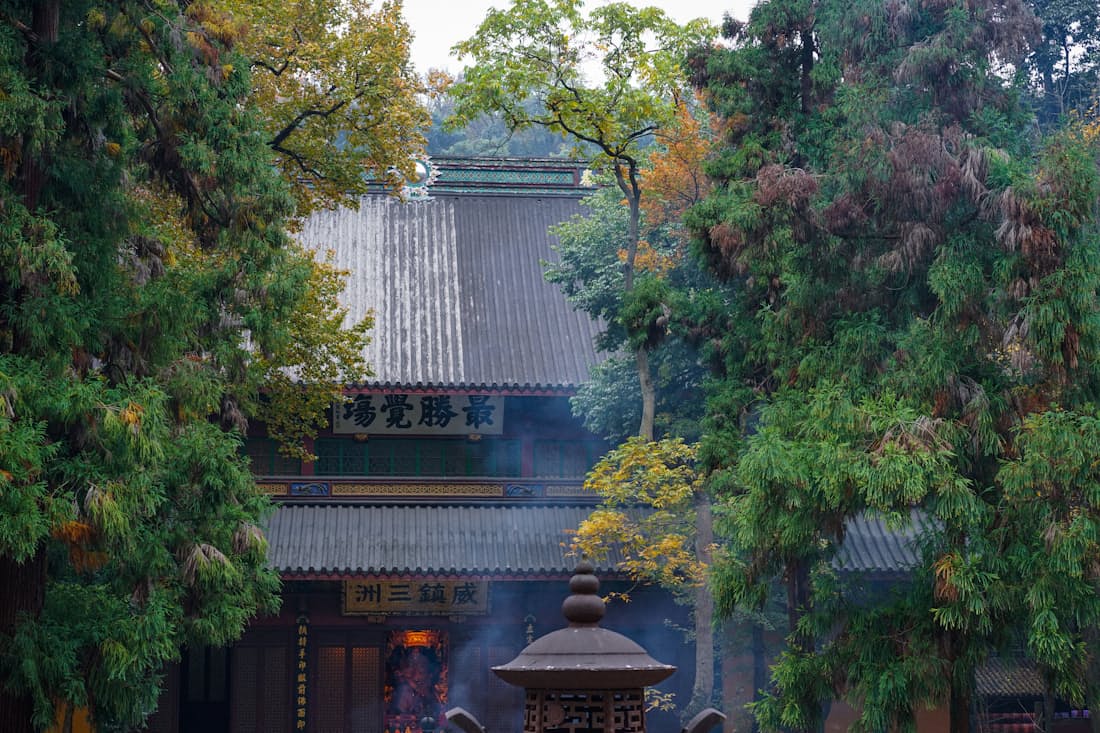
- Important update for 2026: as of December 2025, Lingyin Temple itself is free, but you must reserve a free entry slot in advance through the "潮玩杭州" (Chao Wan Hangzhou) WeChat mini-program — the city's official tourism reservation platform. Walk-ins without a reservation are turned away at the gate. Book the day before
- The surrounding Feilai Feng (飞来峰) scenic area also reserves through the same mini-program, with a separate paid ticket (~¥45). It's worth pairing — the 1,000-year-old rock-carved Buddhas along the stream there are some of the best-preserved Buddhist stone sculpture in southern China. Start at Feilai Feng (outer area), then walk through to the temple grounds beyond
- How to use the mini-program: open WeChat → search "潮玩杭州" in the mini-program directory → select Lingyin / Feilai Feng → pick a time slot → enter passport name and number. No payment needed for the temple slot itself
- Time: 2 hours for both
Late afternoon: back to West Lake
- DiDi back to Hubin (~30 minutes) — Lingyin is on the city's western edge with no metro, so taxi is the only practical return option
- If you have energy and clear weather, rent share-bikes for a sunset loop along the south shore — the full lake circumference is 15 km / about 90 minutes by bike
- Otherwise just walk the lakeside one more time at golden hour
Evening: dinner and departure
- Dinner around Hubin or Wulin Square
- Hangzhou East Station to Shanghai Hongqiao runs every 10–15 minutes during the day; last trains around 22:30. Buy via Trip.com or 12306 in advance — same-day tickets sometimes sell out in peak season
- Don't accidentally book a ticket from Hangzhou West or Hangzhou South — these are newer suburban stations 30+ minutes from the lake by taxi
Common mistakes
- Showing up at Lingyin Temple without an advance reservation — turned away at the gate (post-2025-12 rule). Reserve the day before via the 潮玩杭州 mini-program, as described above
- Trying to walk the full 15 km of the West Lake perimeter on foot — that's a full day's walk on its own. Bike or split it across two morning strolls
- Going to Lingyin or Longjing on the first day of a Chinese national holiday (Oct 1 / May 1 / Spring Festival week) — both get crowd-controlled and lines stretch for hours. If your dates fall on these, reverse the itinerary so Day 2 lands after the holiday peak
- Stopping at Meijiawu instead of Longjing Village — most tour buses go to Meijiawu because it's bigger and easier to park. The actual heritage point is the 18 Imperial Tea bushes at Hugong Temple in Longjing Village
- Eating only at Lou Wai Lou and similar tourist-trap restaurants — Hangzhou's better-value food is in side-street family places or at the Hangzhou-born Green Tea Restaurant (绿茶) chain, not at the famous-name lakeside spots that charge 2–3× for the same dishes
Getting to and from Hangzhou
- Shanghai Hongqiao → Hangzhou East: 1 hour, every 10–15 minutes, ~¥73–120 second class
- Suzhou → Hangzhou East: 1.5 hours by HSR
- Beijing → Hangzhou East: 5–6 hours by HSR, or 2 hours by flight (Beijing Daxing → Hangzhou Xiaoshan)
For step-by-step ticket booking instructions: see our China Attraction Ticket Booking Guide.
Continue planning
- Back to the Hangzhou destination overview
- Pair with: Shanghai or Suzhou for a full Jiangnan week