Suzhou is 30 minutes from Shanghai by bullet train, and it's the day trip I push on every friend who visits. If Yu Garden in Shanghai felt small and elbow-to-elbow, Suzhou is where classical Chinese gardens actually deliver — bigger, older, and calm enough that you can hear the water.
The day, compressed: one great garden in the morning, the Suzhou Museum next door, an afternoon drifting along a canal street, and you're back in Shanghai for dinner. That's genuinely it. Don't try to stack three gardens into one day — by the third one they all blur together, and you'll remember none of them.
One thing to check before anything else: the Suzhou Museum is closed on Mondays. It's the best free hour in the city, so if your only Shanghai gap is a Monday, shift the trip.
Getting there
Trains leave from Shanghai Hongqiao every 15–30 minutes, take about half an hour, and cost around ¥40 for second class. Book the night before on Trip.com or 12306 — and book your return leg at the same time, because evening trains back fill up.
One thing to actually pay attention to: get off at Suzhou Station (苏州站), the old one right by the historic center. Some trains go to Suzhou North instead, which is a suburban station a metro ride away from everything you came for. Check the ticket before you buy.
From Suzhou Station, a DiDi to the Humble Administrator's Garden takes about 15 minutes. Once you're in the old town, stop using cars — the lanes are narrow, traffic crawls, and everything on this itinerary is walkable from there.
Morning: Humble Administrator's Garden (拙政园)
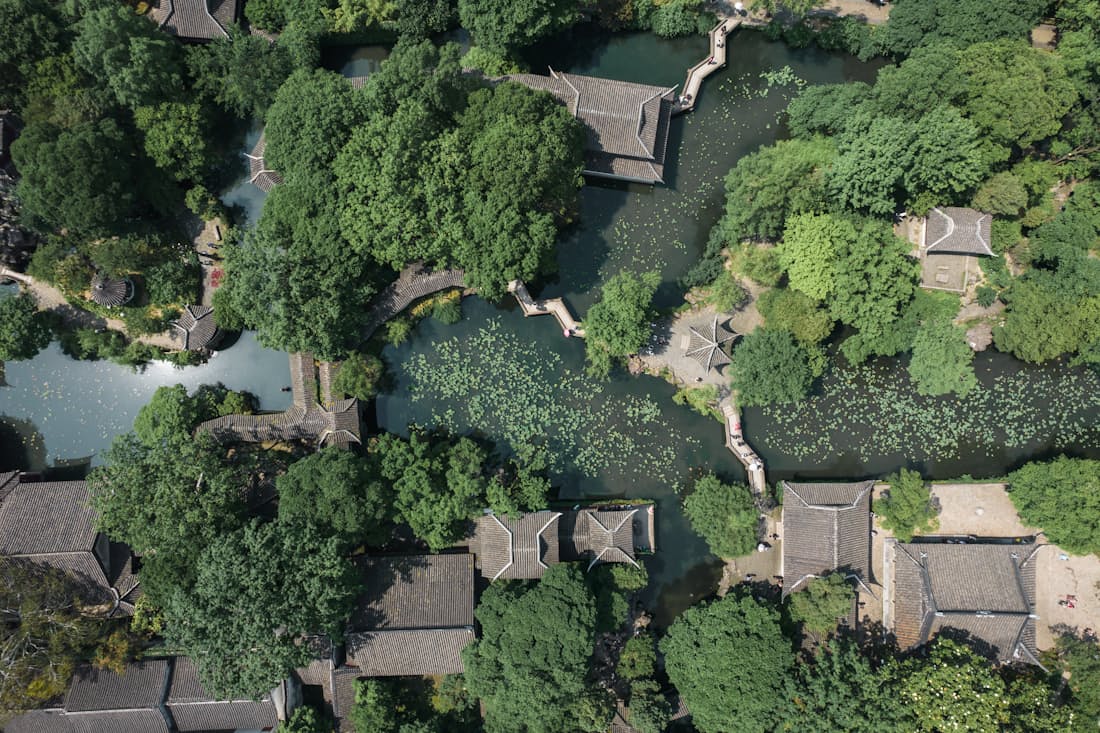
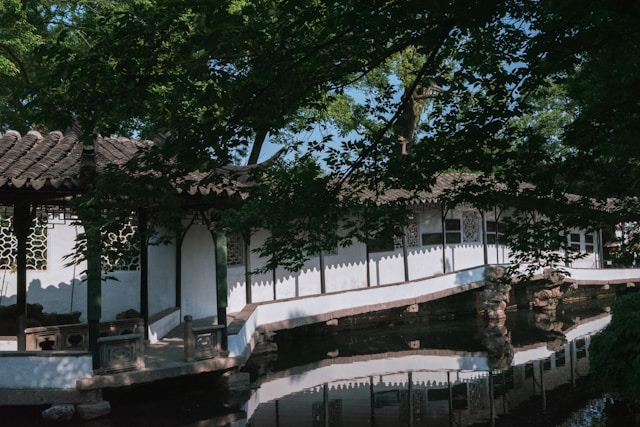
This is the garden — the largest and most famous of Suzhou's classical gardens, a UNESCO site, and the reason to make the trip. Tickets are ¥80 in peak season (April–October), ¥70 off-peak, and they cap daily entry, so book online the night before.
The move that changes the whole experience: be at the gate for the 7:30 opening. For the first hour you get ponds, pavilions, and reflections with almost nobody in the frame. By mid-morning the tour groups arrive and the garden becomes a queue. There's a free audio guide you can scan a QR code for at the entrance — worth it, because the design has intentions (borrowed views, framed scenes) that you'll walk straight past otherwise.
Give it about two hours of slow walking. There's no correct route; wander toward whatever the light is doing.
Late morning: Suzhou Museum
It's literally next door — a five-minute walk — and it's free. I.M. Pei designed it late in his career as a homecoming — the Louvre pyramid architect spent childhood summers in Suzhou — and honestly the building itself outshines the collection: white walls, grey lines, and a central pond that reads like a modern ink painting. Go before noon if you can — morning light through those geometric windows is the whole show.
The catch is booking. Reservations run through a WeChat mini-program and slots go fast — book a couple of days ahead, not the morning of. And again: closed Mondays.
An hour to an hour and a half is plenty. If you're short on time inside, the second-floor celadon lotus bowl is the piece the museum is proudest of.
Lunch and the afternoon: Pingjiang Road (平江路)
Ten minutes' walk south and you're on Pingjiang Road — a kilometer and a half of canal, stone bridges, and whitewashed houses that's been on the same street plan for 800 years. This is the most "Suzhou" stretch of the day, and it's where I'd spend the whole afternoon: duck into a teahouse, cross every bridge that looks good, let it be slow.
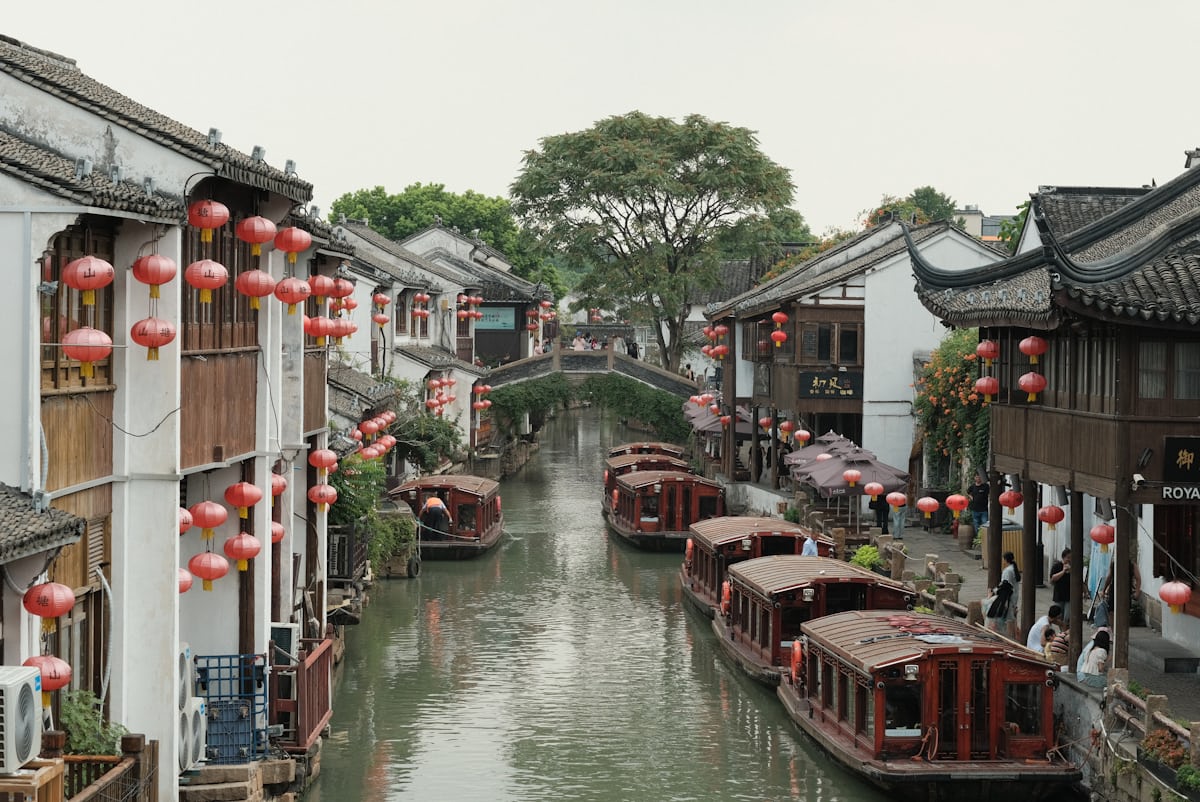
For lunch, the crab-roe noodle shops on Pingjiang Road are the local move — rich, worth it. If you'd rather sit down properly, Songhelou (松鹤楼) is Suzhou's grand old restaurant, famous for the squirrel-shaped mandarin fish; lunch is usually walk-in friendly.
If you want to get on the water, take the hand-rowed wooden boat (about ¥60 per person), not the motorized sightseeing boats — the slow one with the boatman is the actual experience. Buy tickets at the official kiosk, not from the guys quoting prices on the street.
If you have gas left in the tank
Two decent ways to spend the last stretch before your train, pick one:
Lingering Garden (留园) is my pick — a 20-minute DiDi across town, ¥55 peak / ¥45 off-peak, and dramatically fewer people than the morning garden. It's smaller and tighter, and the afternoon light on the rockery and lattice windows is the best garden photography of the day.
Or skip the second garden entirely and take Metro Line 1 out to Jinji Lake (金鸡湖) for sunset — modern Suzhou, glass towers around a huge lake, the "big pants" Gate of the Orient looming over it. It's the flip side of the city and a good reminder that Suzhou isn't a museum. Then train back from there.
What I'd skip on a day trip: Lion Grove Garden is a fun rock-maze but an hour of your day you could give to a better garden; Tiger Hill has the leaning pagoda but doesn't mean much without a guide; and Hanshan Temple, despite the famous poem, is a small, heavily commercialized stop — the photo at the gate is the visit.
Getting back
Aim for a train around 5–6 PM and you're in Shanghai for dinner. Leave buffer for station security — and if you didn't book that return ticket in the morning, do it now from your phone, not at the counter at 5:40.
If you decide to stay the night
One extra day opens up the water towns — Tongli or Zhouzhuang, about an hour out — and the Master of the Nets Garden, tiny and intimate, which runs atmospheric night tours. Shantang Street is the canal street everyone photographs at night; go in from the Xinmin Bridge end to dodge the worst of the snack-stall crush.
Continue planning
- Back to the Suzhou destination overview
- The Shanghai side of the trip: The Perfect 3-Day Shanghai Itinerary
- Pair with: Shanghai and Hangzhou for a full Jiangnan week