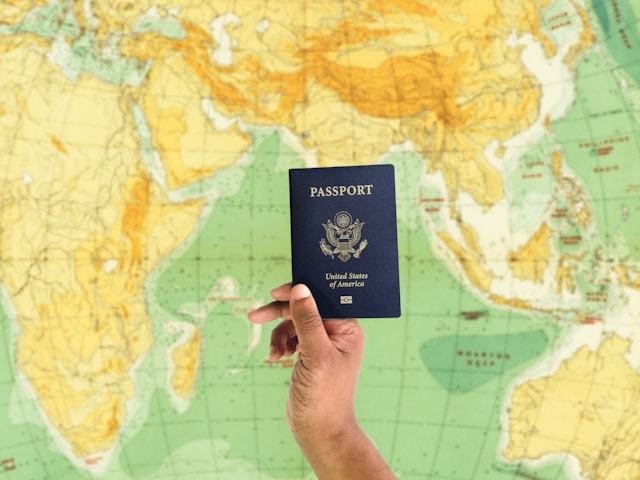
Short answer: yes. US passport holders have two straightforward ways into mainland China, and the on-the-ground reality is far less dramatic than the headlines suggest. I live in China, and the gap between what American visitors expect and what they actually find is the single most consistent thing I hear from them — this article covers the two things that gap is made of: whether it's safe, and how the visa actually works.
Not sure which visa path applies to your trip? Use our free China Visa Eligibility Checker — input your passport, layover details, and destination, get a clear yes/no answer with the official policy URL.

Is it safe? What daily life actually looks like
Set aside the geopolitics for a second, because a tourist doesn't experience geopolitics — they experience streets, metros, restaurants, and hotels. On that level:
Violent crime is very low. Major Chinese cities — Beijing, Shanghai, Chengdu, Hangzhou, Xi'an — consistently rank among the world's safest large cities. Solo female travelers, including from the US, regularly report the comfort level matches northern European cities: late-night metro rides, walking back to a hotel after dinner, riding solo in a DiDi — all routinely fine in the cities most first-time visitors go to.

Tourist scams exist, but they're specific and avoidable:
- The tea ceremony scam (Beijing's Wangfujing, Shanghai's Nanjing Road) — friendly, English-speaking "art students" invite you to a nearby tea house; you leave with a $300 bill.
- Rickshaw / taxi overcharging near major tourist sites — use DiDi (China's Uber-equivalent) instead; it's fixed in-app pricing, no negotiation.
- "Free" calligraphy or art demos — same setup as the tea scam, ends in a hard sell.
All three are well-documented, location-specific, and easy to sidestep once you know the pattern. None of them involve any physical risk.
The actual friction is logistics, not danger. This is what trips up most Americans in practice:
- Google, WhatsApp, and Instagram are blocked unless you're on a travel eSIM that routes around the Great Firewall. See the China eSIM guide.
- Small vendors don't take Western credit cards. You'll need Alipay or WeChat Pay linked to your US card for anything outside big hotels and international chains. See the Alipay & WeChat Pay setup guide.
- English signage thins out fast once you leave the major tourist zones. Apple Maps plus offline Google Translate covers most of what you'll run into.
- DiDi, not a taxi you flag down, is the reliable way to get around — English interface, fixed pricing, takes foreign cards through Alipay.
Plan for these ahead of time and the trip runs smoothly. Skip the prep and day one feels chaotic — but it's friction, not danger.
Getting the visa sorted
What you need depends on the shape of your trip:
| Your trip shape | Best entry path |
|---|---|
| Flying via China to a third country (e.g., US → Beijing → Tokyo) | 240-hour visa-free transit — free, no application, covers 24 provinces and 65 entry/exit ports |
| Entering China to visit Chinese cities, then flying home | Standard L tourist visa — apply at a Chinese consulate |
| Longer stay (work, study, family) | Other visa types (Z, X, S) — outside the scope of this guide |

A few things worth knowing before you pick:
- The 240-hour transit is the path most US travelers actually use — it's free, needs no application, and Hong Kong counts as a "third country," which makes the routing easy: fly US → China, exit China → Hong Kong (or Tokyo, Seoul, Bangkok), then connect home. The full mechanics — eligibility, the third-country rule, how the 240 hours are counted, and the police-registration step people miss — are in the 240-hour transit deep-dive.
- The L visa fee for US citizens is a flat $140, regardless of whether you apply for single-entry, double-entry, or the 10-year multiple-entry that most tourists actually want — the entry-type pricing tiers on the embassy's fee table only apply to non-US citizens. This reduced rate is in effect through 2026-12-31 — see the Chinese Embassy's fee notice. If you go this route, find your assigned Chinese consulate and allow 4+ weeks for the appointment and processing.
- China's separate 30-day visa-free program — the one that lets citizens of 50 countries (including the UK and Canada) fly in with zero paperwork — still does not include the US, as of mid-2026. The list has kept expanding since 2024, so it's worth re-checking before you book, but for now Americans use the 240-hour transit or the L visa. Official list: NIA unilateral visa exemption page.
- For consulate routing and document checklists, see the US-specific visa page.
Before you fly
- Use the Visa Eligibility Checker to confirm which entry path fits your trip
- Travel eSIM ordered and installed on home Wi-Fi (don't activate yet) — see the eSIM guide
- Alipay or WeChat Pay installed and tested with your US card — see the Alipay/WeChat guide
- Attraction tickets pre-booked where required — see the attraction booking guide
- Hotel address saved in Chinese characters (screenshot from your booking) for taxi and DiDi drivers
Continue planning your China trip
- 240-Hour Visa-Free Transit: Full Deep-Dive — the visa path most US travelers actually use
- Alipay & WeChat Pay for Foreigners — the payment setup that has to happen before you land
- China eSIM Guide — how to keep using Google + WhatsApp without a VPN
- Booking China Attraction Tickets as a Foreigner — passport real-name rules and the booking channels that actually work
- US-Specific China Visa Page — fees, consulate routing by US state, document checklist
- Free Visa Eligibility Checker — answer 4 questions, get your specific entry path
Last reviewed: 2026-07-16. Visa policies have changed multiple times in the 2024–2026 window — re-check the Visa Checker the week before you fly.